
A charcoal grill gives food a smoky BBQ flavor that many people prefer over gas. With so many shapes and sizes available, choosing the right one can feel difficult.
The best type of charcoal grill for you depends on how you cook: a kettle grill works well for everyday foods like burgers and steaks, while larger barrel grills and offset smokers are better for smoking big cuts of meat. Your space, budget, and experience also matter when choosing a grill.
This guide explains how to compare kettle, kamado, and barrel grills so you can see what each type does well. You will also learn the core features of charcoal grilling that help you control heat and get the most flavor from charcoal.
Compare the Main Charcoal Grill Types
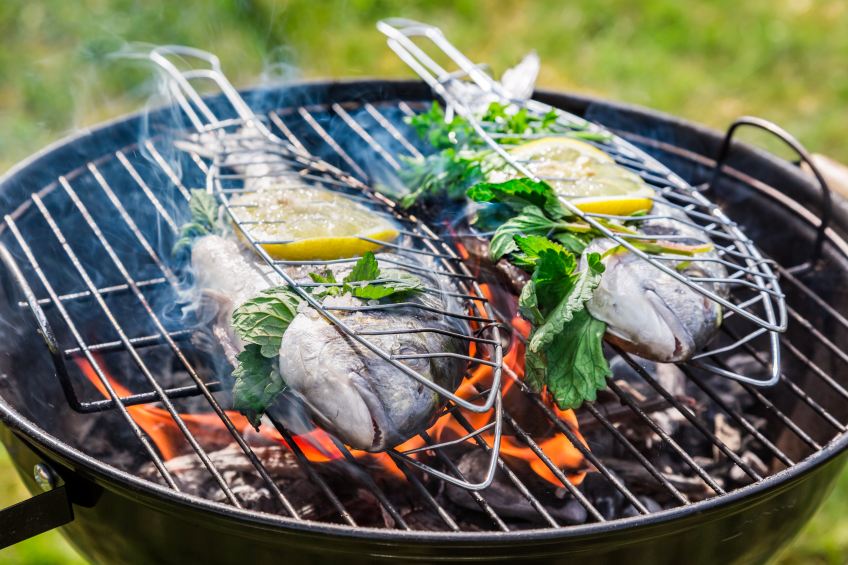 Kettle grills offer flexible cooking at a low price, while kamado grills hold steady heat for smoking and searing. Barrel grills and offset smokers provide more cooking space, while portable and smart grills suit specific needs like travel and temperature control.
| Grill Type | Best For | Main Tradeoff |
|---|---|---|
| Kettle | Everyday grilling | Smaller cooking area |
| Kamado | Smoking and searing | Heavy and costly |
| Barrel / Offset | Large groups and smoking | Uses more charcoal |
| Portable | Travel and small spaces | Limited cooking space |
| Smart | Hands-off temperature control | Needs power |
Kettle Grills for Versatile Everyday Cooking
A kettle grill is the round, dome-shaped grill many people picture when they think of charcoal grilling. The Weber Original Kettle is a well-known example. Many models have a 22-inch grate.
Kettle grills are versatile because you can control heat with the top and bottom vents. Pile coals on one side to create a hot zone and a cooler zone. This lets you sear a steak over direct heat, then finish it over indirect heat.
Kettle grills are easy to clean, simple to use, and quick to master. They also perform well across all three areas, making them a versatile choice for both beginners and experienced grillers.
For millions of backyard cooks, the classic Weber kettle remains the standard choice for everyday charcoal grilling.
Kamado Grills for Smoking and High-Heat Searing
Kamado grills are egg-shaped cookers, often made of thick ceramic. Popular brands include Big Green Egg and Kamado Joe. Their thick walls retain heat very well.
This design offers two key strengths:
- Low-and-slow smoking at around 225°F for many hours
- High-heat searing at 700°F or more
Kamados also use less charcoal than many other grills because they retain heat so well. Ceramic kamado grills are one of the main types of charcoal grills, along with kettle and barrel models.
Because it seals tightly and holds steady low temperatures, an egg-shaped cooker serves as an exceptional charcoal smoker that produces authentic BBQ flavor.
The main downsides are cost and weight. Ceramic models can weigh over 200 pounds. They can also crack if dropped, so many buyers place them in a cart or table.
Barrel Grills and Offset Smokers for Larger Cooks
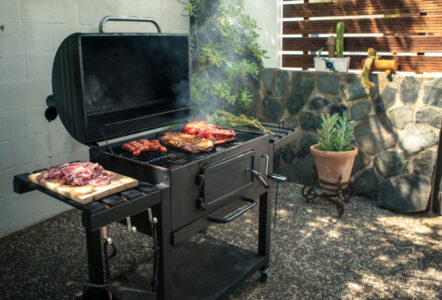
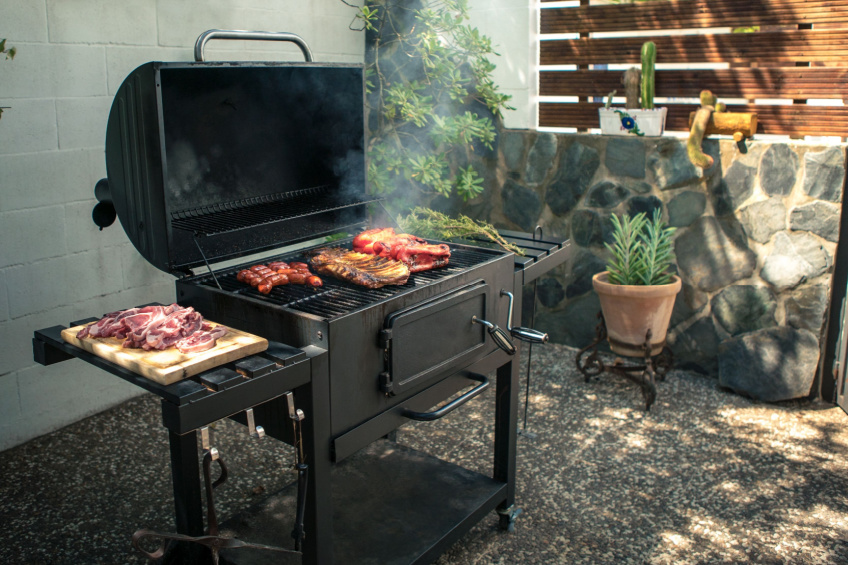
A barrel grill is shaped like a metal drum lying on its side. It provides a wide cooking area, making it a good choice if you often cook for large groups.
Many barrel grills include an adjustable charcoal tray. You can raise the coals for searing or lower them for gentler heat.
An offset smoker has a small firebox beside the main cooking chamber. Heat and smoke travel from the firebox through the chamber and around the food, away from direct flame. The Oklahoma Joe’s Longhorn Offset Grill is a top-rated offset smoker in this category.
A dedicated horizontal charcoal smoker gives you authentic pit-style BBQ flavor and deep smoke rings. However, barrel grills and offset smokers can take more practice to manage.
You may need to add fuel often and monitor the temperature closely. They also generally use more charcoal than kamado grills.
Portable and Smart Grills for Specific Needs
A portable charcoal grill fits in your car for camping, tailgating, or trips to the beach. A small charcoal grill also works well on a patio or balcony with limited space. The Weber Go-Anywhere and Weber Smokey Joe are common options.
Keep in mind that portable grills have small cooking areas. Most can cook food for two to four people at a time.
A smart charcoal grill uses a digital controller and fan to maintain a set temperature. Some models, like the Masterbuilt Gravity Series, feed charcoal from a side hopper. Many connect to a phone app.
A smart grill can maintain steady heat with less effort. However, it needs a power source and has more parts that could break. You can compare kettle, kamado, barrel, and portable grills side by side to see which features matter most to you.
Match the Grill to Your Cooking Style and Space
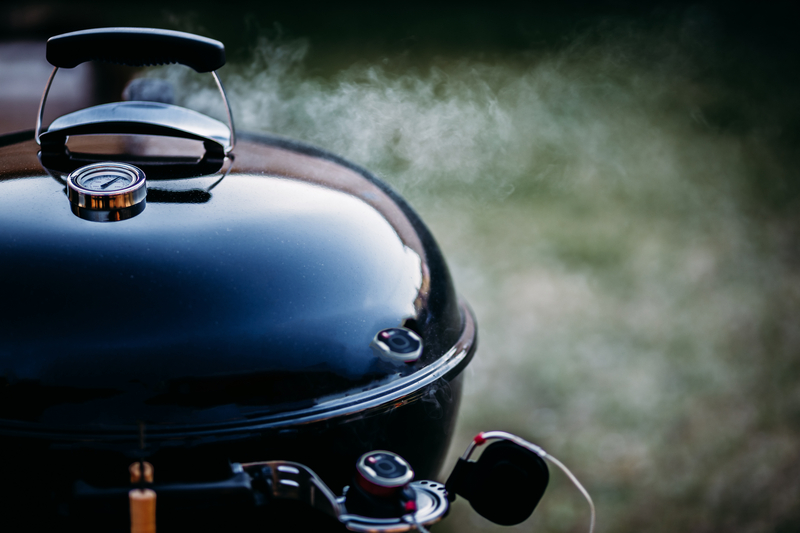
The right charcoal grill depends on how you cook, how many people you feed, and where you will use it. Your cooking style, required cooking area, and available space can help you choose between a kettle, kamado, barrel, or portable grill.
Direct Grilling, Two-Zone Cooking, or Low-and-Slow Smoking
Start with the food you cook most often. Experts suggest you match your primary cooking style to the right grill type before comparing prices.
| Cooking Style | What It Means | Good Grill Types |
|---|---|---|
| Direct grilling | Food sits right over hot coals | Kettle, portable, barrel |
| Two-zone cooking | Coals on one side, no coals on the other | Kettle, barrel |
| Low-and-slow smoking | Steady heat around 225°F to 275°F for hours | Kamado, kettle with a smoking insert, offset smoker |
Two-zone cooking lets you sear a steak, then move it to the cooler side to finish. Many testers found that the best grills handle both grilling and smoking well.
If you plan to smoke brisket or pork shoulder often, a thick-walled kamado or specialized charcoal smoker can maintain steady heat while using less fuel.
Cooking Area for Weeknight Meals and Gatherings
Cooking surface area is measured in square inches and indicates how much food fits on the grate at one time.
- About 150 to 250 square inches: Fits 1 to 4 people. An 18-inch kettle falls in this range.
- About 350 to 450 square inches: Fits 4 to 8 people. A standard 22-inch kettle offers about 363 square inches.
- 500 square inches or more: Works for parties and large cuts. Barrel grills often offer this much space.
Keep two-zone cooking in mind. A cool zone takes up part of the grate, so you need more space than the food alone requires.
Consider your cooking surface area and heat control features together. A larger grill also uses more charcoal when you cook a small weeknight meal.
Footprint, Weight, and Storage
Measure your patio or deck before you buy. Leave enough room around the grill for safe airflow, and keep it away from walls, railings, and overhangs.
Weight varies significantly by grill type:
- Portable charcoal grill: Often 10 to 25 pounds, making it easy to carry for camping or tailgates.
- Kettle grill: Usually about 30 to 40 pounds, with wheels on most models.
- Kamado grill: Ceramic models can weigh over 150 pounds. Plan for a sturdy stand with locking wheels.
Storage matters too. A cover helps protect the grill from rain and rust. Choose a grill size and material that suit your routine, especially if you need to move it into a garage or shed during the off-season.
Check the Features That Affect Cooking Performance
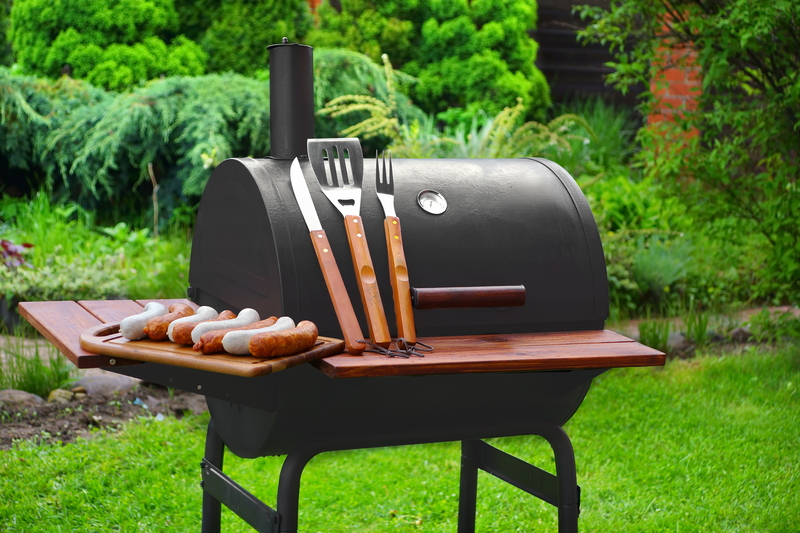 A charcoal grill’s cooking performance depends on airflow control, heat retention, and even heat distribution across the grate.
The materials used for the grill body and cooking grates also affect how evenly food cooks and how long the grill lasts.
Vents and Dampers for Temperature Control
Dampers are vents that regulate airflow to the charcoal. More air makes the coals burn hotter and faster, while less air lowers the temperature and slows the burn.
Most charcoal grills have two types of vents:
- Bottom vents (intake): Let fresh air in beneath the charcoal.
- Lid vents (exhaust): Let heat and smoke escape from the top.
More dampers can provide finer temperature control, but they may be harder for beginners to manage. Testers also noted that multiple dampers can be challenging for beginners. If you are new to grilling, a simple sliding lid vent may be easier to learn.
Heat Retention and Distribution
Heat retention determines how well a grill maintains its temperature, while heat distribution affects how evenly food cooks across the cooking surface. Both are important when smoking meat for several hours.
Thick, heavy materials retain heat better than thin metal. Kamado grills have thick ceramic walls that retain heat well and use less fuel. Thin-walled grills lose heat faster on cold or windy days.
Consistent heat distribution prevents hot spots that can scorch food during everyday charcoal grilling. Dome lids help circulate heat evenly around your meat.
Grill shape also plays a role. Kettle grills work well for burgers and steaks. Longer, oval-shaped grills make it easier to create hot and cool zones for indirect cooking.
The way grill design and charcoal type work together also affects burn time and temperature control.
Body Materials and Cooking Grates
The grill body and cooking grates affect cooking results and durability.
| Material | Main Benefit | Main Drawback |
|---|---|---|
| Porcelain-enameled steel | Resists rust and is easy to clean | Coating can chip if dropped or hit |
| Cast iron grates | Retain heat well and create strong sear marks | Need oiling to prevent rust |
| Stainless steel grates | Resist rust and need little care | Do not retain heat as well as cast iron |
| Ceramic (kamado body) | Retains heat for long cooks | Heavy and can crack |
Upgrading to heavy cast iron grates provides exceptional heat retention and defined sear marks. Seasoned cast iron grates also improve heat distribution directly under your meat.
Look for adjustable or hinged grates. Adjustable grates let you move food closer to the coals for a better sear. Hinged grates let you add charcoal during a long cook without removing the entire grate.
Consider Fuel, Lighting, and Cleanup
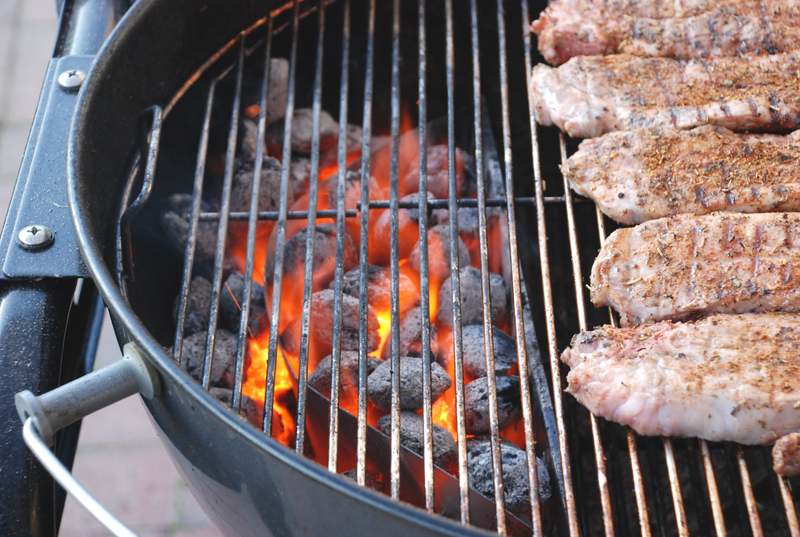 The type of charcoal you burn affects heat, cooking time, and how much ash builds up in the grill. A grill that lights easily and has an effective ash management system can save time before and after cooking.
Lump Charcoal Versus Briquettes
Most charcoal grills can burn either of the two main fuel types. However, grill design and charcoal type work together to affect heat control and burn time.
| Feature | Lump Charcoal | Briquettes |
|---|---|---|
| Made from | Pure charred wood | Pressed wood scraps and binders |
| Heat | Hotter, less steady | Steady and even |
| Burn time | Shorter | Longer |
| Ash | Less | More |
| Shape | Uneven pieces | Uniform size and shape |
Lump charcoal works well for searing steaks at high heat. Briquettes are a good choice for long, slow cooks such as ribs.
As a rough guide, plan on about 30 briquettes or 1½ pounds of lump charcoal per pound of meat. Keep in mind that charcoal fuel costs can add up over time compared with propane.
Starting Coals with a Chimney Starter
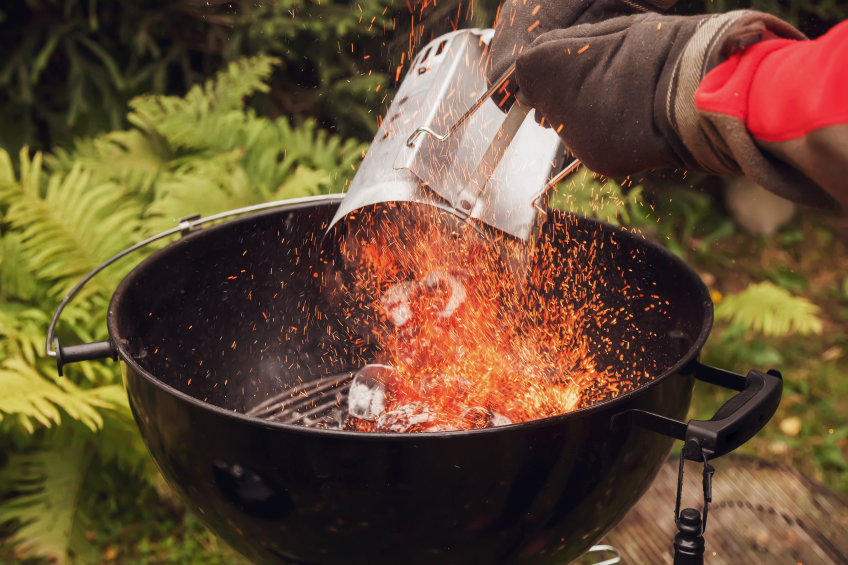
A chimney starter is a metal tube with a handle that lets you light coals without lighter fluid, helping prevent a chemical taste in your food.
Here is how to use one:
- Put a few balls of newspaper in the bottom section.
- Fill the top with charcoal.
- Light the newspaper and wait for the top coals to turn white.
- Pour the hot coals into the grill and arrange them.
Briquettes need about 15 to 20 minutes in the chimney before they are ready. Before cooking, let the coals burn until they have a light layer of gray ash. You can find more tips for lighting a charcoal grill, including advice on electric starters.
When you shop, check that the grill’s charcoal grate is large enough to hold the coals from a full chimney.
Ash Catchers and Other Cleanup Features
Effective ash management makes cleanup faster and safer. Ash left in the grill can block air vents and trap moisture, which may lead to rust.
Look for these features:
- Removable ash pan or bowl: Catches ash beneath the grill so you can lift it out and empty it.
- Built-in sweeper: A lever moves blades that push ash through the vents into the catcher.
- Ash door: Common on barrel and kamado grills, it lets you scoop ash out from the front.
- Enameled or porcelain-coated bowl: Resists rust and is easier to wipe clean.
Some inexpensive grills have no ash catcher, which means you may have to tip the grill to remove the ash.
Always let ashes cool for 24 hours before removing them. The features to look for in a charcoal grill include cleanup tools, so compare them before you buy.
Use Popular Models as Points of Comparison
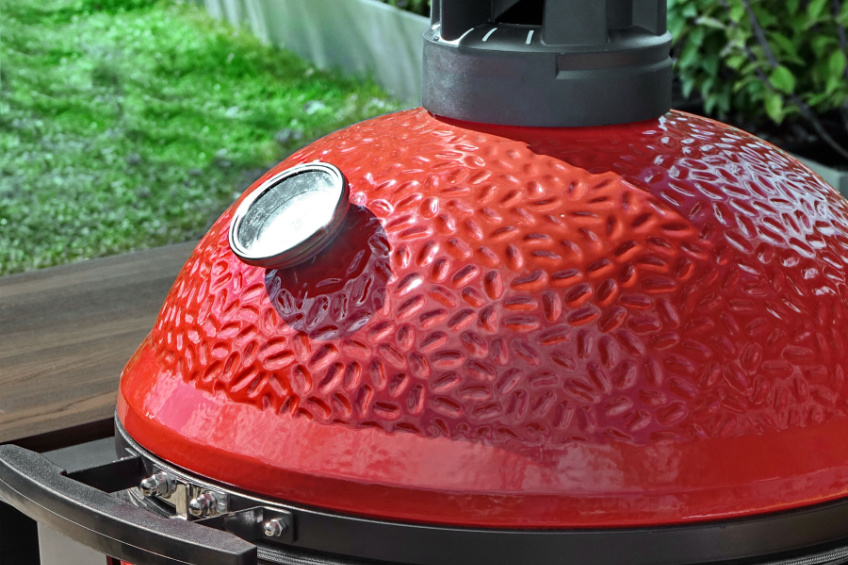 A few well-known grills represent the main styles: the Weber kettle for simple, all-purpose cooking, the Kamado Joe Classic Joe II for ceramic heat retention, and the Masterbuilt Gravity Series 1050 for digital temperature control. Barrel and portable grills offer alternatives for cooking large batches and traveling.
Weber Original Kettle Premium for an All-Purpose Kettle
The Weber Original Kettle Premium Charcoal Grill is a common benchmark for comparing charcoal grills. One review calls it the best charcoal grill for most people because it balances cooking area, dual dampers, and porcelain-enameled steel at a fair price.
In hands-on testing, the 22-inch Weber kettle earned top marks for heating speed and even heat. Testers assembled it in under 15 minutes using two basic tools.
Key details to compare:
- Price: Usually under $250
- Features: Hinged grates for adding charcoal mid-cook, a lid vent, and an ash catcher
- Downsides: The ash catcher can be hard to clean
If another grill costs more, consider what it offers beyond this benchmark.
Kamado Joe Classic Joe II for a Ceramic Kamado
The Kamado Joe Classic Joe II is a useful reference point for ceramic grills. Its thick ceramic walls retain heat, allowing the grill to maintain low smoking temperatures for many hours or reach high temperatures for searing.
The Kamado Joe Classic Joe line includes an 18-inch cooking grate and a multi-level rack system. This setup lets you cook on more than one level or create separate heat zones. A hinge helps lift the heavy dome lid.
Things to keep in mind:
- It weighs more than 200 pounds, so it is hard to move.
- It costs several times more than a basic kettle.
- Ceramic can crack if dropped or handled roughly.
Choose a kamado if you smoke often and want steady heat while using less fuel.
Masterbuilt Gravity Series 1050 for Digital Control
The Masterbuilt Gravity Series 1050 shows how digital controls work on a charcoal grill. Fill the side hopper with charcoal, set a temperature, and a fan feeds air to the fire to help maintain that heat.
| Feature | Detail |
|---|---|
| Cooking space | About 1,050 square inches |
| Temperature range | About 225°F to 700°F |
| Controls | Digital panel plus a phone app |
| Fuel | Lump charcoal or briquettes |
This style works well if you want rich BBQ flavor with less hands-on temperature adjustment. However, it needs electricity and has more parts that can wear out.
Many charcoal grills take 15 to 20 minutes to heat up, while a fan-driven model like this can often heat up faster.
Barrel and Portable Models for Capacity or Travel
Barrel grills offer substantial cooking space for the price. In one test, a Char-Griller barrel model provided 820 square inches of cooking area and weighed 88 pounds; it also had a hinged lid and a 5-year warranty. That is more than twice the cooking area of a 22-inch kettle.
Barrel grills suit people who cook for large groups. Many have side fireboxes for smoking.
Portable grills prioritize compact size and light weight. Models like the Weber Smokey Joe or Jumbo Joe are small enough to carry to a park or campsite.
When comparing these grills, check:
- Cooking area relative to how many people you feed
- Weight and handle design for carrying
- Lid lock and vent quality
Compare features across the best charcoal grills tested by category to see where each style fits.
Make the Final Purchase Decision
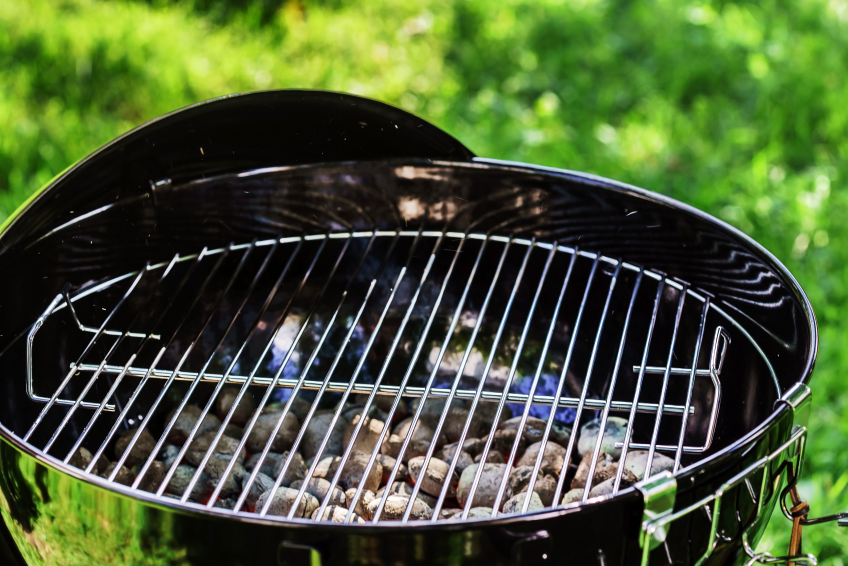 The right charcoal grill offers a fair price, a long service life, and efficient fuel use. It should also have replaceable parts and a warranty that covers the parts most likely to fail.
Balance Upfront Cost Against Durability and Fuel Use
A charcoal grill usually costs less than a gas grill of similar size and quality. Still, the lowest price is not always the best value.
A kettle grill costs less upfront and works well for most backyard cooking. A kamado grill costs more, with prices that start around $300 and often go much higher. Its thick ceramic walls retain heat well, so it often uses less charcoal during long cooks.
| Grill Type | Upfront Cost | Fuel Use | Durability |
|---|---|---|---|
| Kettle grill | Lower | Moderate | Good with porcelain-coated steel |
| Kamado grill | Higher | Low | High, but ceramic can crack if dropped |
Check the metal thickness and coating. Thin steel can rust or warp within a few seasons.
Check Assembly, Replacement Parts, and Warranty
Before you buy, check how much assembly the grill requires. Kettle grills often take less than an hour to assemble. Kamado grills are heavy, so you may need a second person to help or a delivery service that offers assembly.
Next, confirm that the manufacturer sells replacement parts, including:
- Cooking grates
- Charcoal grates
- Ash pans or ash catchers
- Gaskets and vents (for kamado grills)
Finally, read the warranty closely. Many brands offer longer coverage for the bowl, lid, or ceramic body and shorter coverage for grates and smaller parts. Expert reviews, such as these tested charcoal grill ratings, can help you compare build quality before you decide.
FAQs:What Is the Best Type of Charcoal Grill for Beginners?
 A kettle charcoal grill is an excellent choice for beginners because it is affordable, versatile, and suitable for grilling burgers, steaks, chicken, and vegetables.
Which Charcoal Grill Is Best for Smoking Meat?
Kamado grills are excellent for smoking because their insulated construction retains heat and helps maintain steady temperatures. Barrel grills and kettle grills can also smoke meat when set up for indirect cooking.
Are Kamado Grills Better Than Kettle Grills?
Kamado grills generally retain heat more efficiently and offer excellent temperature control, but they cost more and are heavier. Kettle grills are usually more affordable and provide plenty of versatility for everyday grilling.
What Size Charcoal Grill Do I Need?
A compact grill may be sufficient for one or two people, while a standard 22-inch kettle suits many family meals. If you regularly cook for large groups, consider a larger kettle or barrel grill with more cooking space.
Are Expensive Charcoal Grills Worth It?
They can be worth the investment if you grill frequently and value better insulation, durable materials, or additional features. Occasional grillers may find that an affordable kettle grill meets their needs just as well.
Which Charcoal Grill Lasts the Longest?
High-quality ceramic kamado grills can last for decades with proper maintenance, although their ceramic components can crack if damaged. Well-made metal grills can also last many years, depending on materials, weather exposure, and care.
Is a Charcoal Grill Better Than a Gas Grill?
Charcoal grills offer a traditional charcoal-cooked flavour and suit high-heat grilling and smoking. Gas grills are generally easier to start and control, making them convenient for frequent, quick meals.
What Features Should I Look for in a Charcoal Grill?
Look for adjustable air vents, a well-fitting lid, durable cooking grates, effective ash removal, and enough cooking space for your needs. Availability of replacement parts is also worth checking.
Can All Charcoal Grills Be Used for Smoking?
Not equally well. Kettle, kamado, and suitable barrel grills can all smoke food, but their capacity and temperature stability differ. For frequent long smoking sessions, choose a model designed to maintain low temperatures for extended periods.
Is a Portable Charcoal Grill Suitable for Everyday Use?
It can be, especially if you have limited outdoor space or cook small portions. However, its smaller cooking surface may be restrictive when preparing meals for several people.
What Type of Charcoal Should I Use?
Most charcoal grills accept either charcoal briquettes or lump charcoal, but the best option depends on your cooking needs and the manufacturer’s instructions. Briquettes often provide more consistent burn times, while lump charcoal can heat up quickly and vary more in size and burn characteristics.