
When choosing a gas grill, many people wonder whether a two-burner model provides sufficient cooking power for their needs.
A two-burner grill is enough for small families of 2-4 people and casual grilling, but larger households or frequent entertainers typically need more cooking space and heat zones.
The decision depends on several key factors including family size, cooking style, and available space.
Two-burner grills typically offer around 300 square inches of cooking surface, making them compact and efficient options for many home cooks.
They provide adequate space for basic grilling tasks and allow for simple two-zone cooking methods.
Understanding the capabilities and limitations of two-burner grills helps determine whether this size meets specific grilling requirements.
Factors like cooking capacity, performance features, and how they compare to larger alternatives all play important roles in making the right choice for individual needs.
What Is a Two-Burner Grill?
A two-burner grill features two independent heating elements that provide approximately 200-400 square inches of cooking space.
These grills come in various configurations including portable, freestanding, and built-in models with different fuel types and feature sets.
Overview of Two-Burner Grill Design
Two-burner grills consist of two separate heating elements positioned side by side beneath a cooking grate.
Each burner operates independently, allowing users to create different temperature zones across the cooking surface.
The typical cooking area ranges from 200 to 400 square inches.
This space accommodates 6-12 burgers or equivalent portions for small to medium-sized gatherings.
Key design elements include:
- Two independent gas burners or electric heating elements
- Single cooking grate spanning both burners
- Individual temperature controls for each burner
- Grease management system
- Side tables or prep areas (on larger models)
The dual-zone capability enables direct and indirect cooking methods.
Users can sear meat over one burner while keeping food warm on the other side.
Most two-burner grills feature a compact footprint measuring 24-36 inches wide.
The height typically ranges from 36-42 inches for freestanding models.
Types of Two-Burner Grills
Portable Two-Burner Grills weigh 20-40 pounds and feature folding legs or tabletop designs.
These models often include carrying handles and compact storage capabilities for camping or tailgating.
Freestanding Two-Burner Grills offer permanent outdoor cooking solutions with four legs and side shelves.
They typically include propane tank storage and weather-resistant construction.
Built-in Two-Burner Grills integrate into outdoor kitchen islands or custom installations.
These models require professional installation and permanent gas line connections.
Drop-in Two-Burner Grills fit into pre-built openings in countertops or outdoor kitchen structures.
They offer a seamless appearance without surrounding cabinetry.
Fuel types vary between liquid propane, natural gas, and electric models.
Propane versions use standard 20-pound tanks, while natural gas models connect to permanent gas lines.
Typical Features and Specifications
Most two-burner grills generate 20,000 to 40,000 BTUs total heat output.
Each burner typically produces 10,000 to 20,000 BTUs individually.
Standard materials include:
- Stainless steel construction for durability
- Cast iron or steel cooking grates
- Aluminum or steel fireboxes
- Thermoplastic side tables and handles
Temperature controls feature individual knobs for each burner with multiple heat settings.
Built-in thermometers monitor cooking chamber temperatures between 200-700°F.
Common accessories include:
- Removable drip pans
- Warming racks above main cooking area
- Side burners (on premium models)
- Tool hooks and storage compartments
Ignition systems use piezo electric starters or battery-powered electronic ignition.
These eliminate the need for matches or external lighters.
Price ranges span from $150 for basic portable models to $1,500 for premium built-in units.
Mid-range freestanding grills typically cost $300-600.
Assembly time averages 1-3 hours for most models.
Portable units often require minimal assembly compared to full-sized freestanding grills.
Cooking Capacity and Limitations
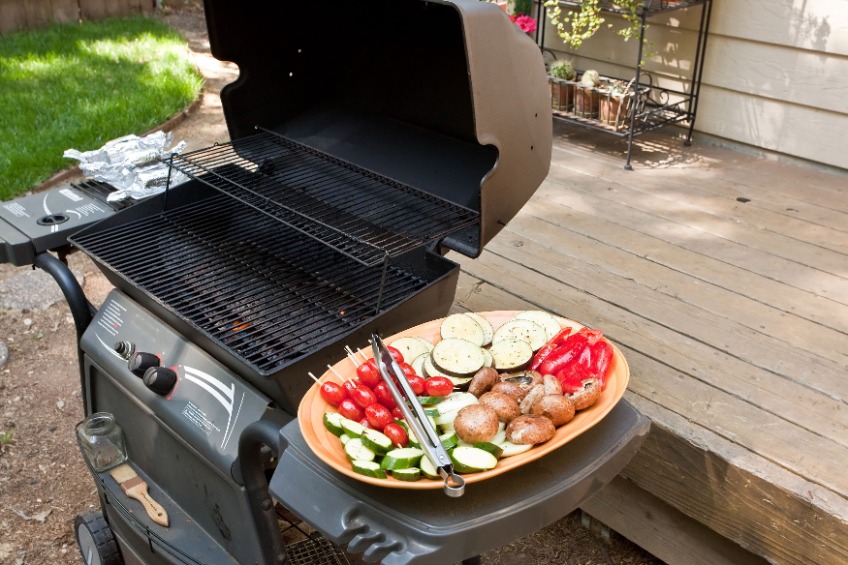
Two-burner grills typically provide 300 square inches of cooking space and create two distinct heat zones.
These dimensions directly impact how many people you can serve and which cooking techniques remain available.
Ideal Number of Servings
A two-burner grill comfortably serves 2-4 people for regular meals.
The 300 square inches of cooking surface accommodates approximately 8-10 burger patties or 4-6 chicken breasts at once.
For larger gatherings of 6-8 people, cooking requires multiple batches.
This extends total cooking time by 30-45 minutes compared to larger grills.
Small families find two-burner grills sufficient for weeknight dinners.
The compact cooking area works well for:
- 2-3 steaks with side vegetables
- 6-8 hot dogs or bratwurst
- 1 whole chicken (spatchcocked)
- 4-5 fish fillets
Weekend entertaining becomes challenging when guest numbers exceed six people.
The limited space forces sequential cooking rather than simultaneous preparation.
Space Constraints for Food Placement
The 300 square inches divides into two zones of approximately 150 square inches each.
This creates tight quarters when cooking multiple food types simultaneously.
Protein placement requires careful planning.
Large items like whole chickens or roasts consume significant real estate, leaving minimal room for sides.
Vegetables often get relegated to foil packets or grill baskets.
Direct grilling of corn, peppers, or zucchini competes with main dishes for prime cooking spots.
Food rotation becomes essential during busy cooking sessions.
Items finish at different rates, requiring constant rearrangement to optimize space usage.
Multi-course meals present logistical challenges.
Appetizers, mains, and sides cannot cook concurrently without overcrowding the grill surface.
Direct vs. Indirect Heat Zones
Two-burner grills create one direct zone and one indirect zone when configured properly.
This setup enables basic two-zone cooking techniques.
The direct zone reaches temperatures of 450-500°F for searing steaks, burgers, and quick-cooking items.
The indirect zone maintains 250-350°F for slower cooking methods.
Indirect cooking limitations become apparent with larger cuts.
Whole chickens, pork shoulders, or briskets consume the entire indirect zone, eliminating space for other foods.
Temperature control proves more challenging than larger grills.
The two zones offer less flexibility for cooking items requiring different heat levels simultaneously.
Heat distribution varies between burner configurations.
Side-by-side burners create left-right zones, while front-back arrangements offer different airflow patterns that affect cooking consistency.
Suitability for Different Needs
A two-burner grill serves specific household sizes and cooking patterns better than others.
Small families benefit most from compact designs, while larger gatherings require different considerations for adequate cooking capacity.
Best Use Cases for Small Households
Two-burner grills excel for households of 1-4 people who cook regularly outdoors.
The cooking surface typically accommodates 6-8 burgers or 4-6 chicken pieces simultaneously.
Ideal scenarios include:
- Couples who grill 2-3 times per week
- Small families with young children
- Apartment dwellers with limited balcony space
- Empty nesters reducing their cooking needs
The compact size fits most patios and balconies without overwhelming the space.
Storage becomes simpler with smaller grills that require less garage or shed space.
Two burners provide adequate heat zones for basic grilling techniques.
One burner handles direct cooking while the other maintains lower heat for warming or indirect cooking.
Entertaining Larger Groups
Two-burner grills face limitations when cooking for groups exceeding 6-8 people.
The reduced cooking surface creates timing challenges for simultaneous food preparation.
Key limitations include:
- Extended cooking times for multiple batches
- Difficulty maintaining food temperature while preparing additional items
- Limited space for diverse food types requiring different temperatures
Hosts must plan cooking sequences carefully to serve hot food to all guests.
Some foods may require finishing in a conventional oven to maintain proper serving temperatures.
Two burners still work for larger groups when cooking simpler menus or when guests arrive in staggered timing.
Pre-preparation and strategic menu planning become essential for success.
Everyday Grilling Versus Occasional Use
Daily grillers benefit from two-burner efficiency through faster preheating and lower propane consumption.
The smaller cooking area reaches target temperatures 3-5 minutes faster than larger grills.
Regular users appreciate the simplified cleaning process with fewer grates and burner components.
Maintenance tasks take less time and effort compared to multi-burner alternatives.
Occasional grillers find two-burner models sufficient for weekend cooking or seasonal use.
The lower initial cost and reduced storage requirements suit infrequent grilling patterns.
Frequency considerations:
- Daily use: Two burners handle routine meal preparation efficiently
- Weekend grilling: Adequate capacity for typical family meals
- Seasonal cooking: Cost-effective option for occasional outdoor cooking
Performance and Versatility
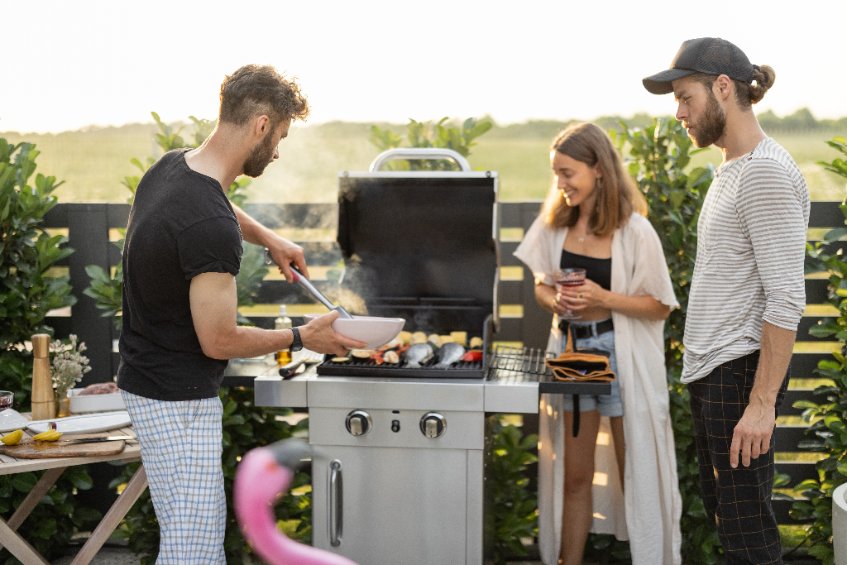
A two-burner grill’s performance centers on its ability to handle diverse cooking tasks, manage multiple food items, and provide adequate heat control for various grilling techniques.
The number of burners directly impacts cooking flexibility and temperature management capabilities.
Grilling a Variety of Foods
Two-burner grills accommodate most standard grilling tasks effectively.
They provide sufficient space for burgers, steaks, chicken pieces, and vegetables for small to medium-sized groups.
The dual-zone setup allows for direct and indirect cooking methods.
One burner can maintain high heat for searing while the other operates at lower temperatures for slower cooking.
Common foods that work well:
- 4-6 burger patties
- 2-3 chicken breasts
- Small to medium fish fillets
- Grilled vegetables in a basket
Two burners handle kebabs, corn on the cob, and smaller cuts of meat without difficulty.
The cooking surface typically ranges from 300-400 square inches, which suits most everyday grilling needs.
Limitations become apparent with larger items like whole chickens or multiple racks of ribs.
These require more cooking space and indirect heat zones that three-burner models provide more effectively.
Managing Multiple Dishes Simultaneously
Two-burner grills offer basic multitasking capabilities but with notable constraints.
Each burner can maintain different temperature zones, allowing simultaneous cooking of items requiring different heat levels.
A typical setup involves using one burner for proteins while the second handles vegetables or maintains a warming zone.
This works well for simple meals but becomes challenging with complex menu planning.
Cooking limitations include:
- Difficulty keeping food warm while grilling additional items
- Limited space for various cooking temperatures
- Reduced efficiency when preparing meals for larger groups
Three-burner models provide a dedicated warming zone while maintaining active cooking areas.
This extra burner significantly improves meal coordination and reduces cooking time for multiple dishes.
The two-burner design requires more sequential cooking rather than true simultaneous preparation.
Cooks often need to finish one item before starting another or use alternative warming methods.
Heat Distribution and Control
Two-burner grills provide adequate temperature control for basic grilling techniques.
Independent burner controls allow for customized heat zones across the cooking surface.
Heat distribution varies by grill design and burner placement.
Side-by-side burners create distinct temperature zones, while some models use H-shaped or tubular burners for more even coverage.
Temperature control features:
- Independent flame adjustment per burner
- Ability to create hot and cool zones
- Option to turn off one burner for indirect cooking
Most two-burner models maintain consistent temperatures within each zone.
However, the center area between burners may experience uneven heating depending on the grill’s construction quality.
Three-burner configurations offer superior heat distribution and more precise temperature gradients.
The additional burner provides better coverage across larger cooking surfaces and eliminates potential dead spots between burners.
Two-burner grills excel at basic high-heat searing and moderate-temperature cooking but may struggle with techniques requiring multiple distinct temperature zones simultaneously.
Comparing Two-Burner Grills to Larger Options
Two-burner grills offer distinct advantages in portability and cost while facing clear limitations in cooking capacity compared to three and four-burner models.
The choice depends on specific cooking needs, available space, and budget considerations.
Advantages Over Three-Burner and Larger Grills
Two-burner grills cost significantly less than larger models.
The price difference ranges from $100 to $300 for comparable quality levels.
Space efficiency makes two-burner units ideal for apartments, condos, and small patios. They require 30-40% less storage space than three-burner alternatives.
Faster preheating occurs due to the smaller cooking chamber.
Most two-burner grills reach cooking temperature in 8-10 minutes compared to 12-15 minutes for larger models.
Lower fuel consumption reduces operating costs.
Two-burner grills use approximately 25-30% less propane per cooking session.
Easier maintenance results from fewer components.
Cleaning takes less time with smaller grates and fewer burner parts to maintain.
Better heat distribution across the cooking surface occurs more easily with two burners.
Hot spots are less common than in larger grills with multiple heat zones.
Limitations Compared to Bigger Models
Cooking capacity presents the primary limitation.
Two-burner grills typically provide 250-350 square inches of cooking space compared to 350-450 square inches on three-burner models.
Limited zone cooking restricts simultaneous preparation of different foods.
Three-burner grills allow for separate temperature zones for various cooking methods.
Smaller groups become challenging to accommodate.
Two-burner grills work best for 2-4 people while larger models handle 6-8 people effectively.
Reduced cooking versatility limits advanced techniques.
Multiple temperature zones enable indirect cooking, smoking, and warming simultaneously.
Lower total BTU output affects cooking power.
Two-burner models typically generate 20,000-30,000 BTUs compared to 36,000-45,000 BTUs in three-burner units.
Portability Benefits
Weight advantages make transportation easier.
Two-burner grills weigh 40-60 pounds compared to 80-120 pounds for three-burner models.
Compact dimensions fit in smaller vehicles.
Most two-burner units measure 24-30 inches wide versus 36-45 inches for larger grills.
Tabletop options exist for two-burner models.
These portable versions work for camping, tailgating, and temporary outdoor cooking.
Setup simplicity requires less time and effort.
Two-burner grills assemble faster with fewer parts and connections.
Storage flexibility allows for garage, shed, or covered patio storage without dedicated space requirements.
Factors to Consider Before Choosing
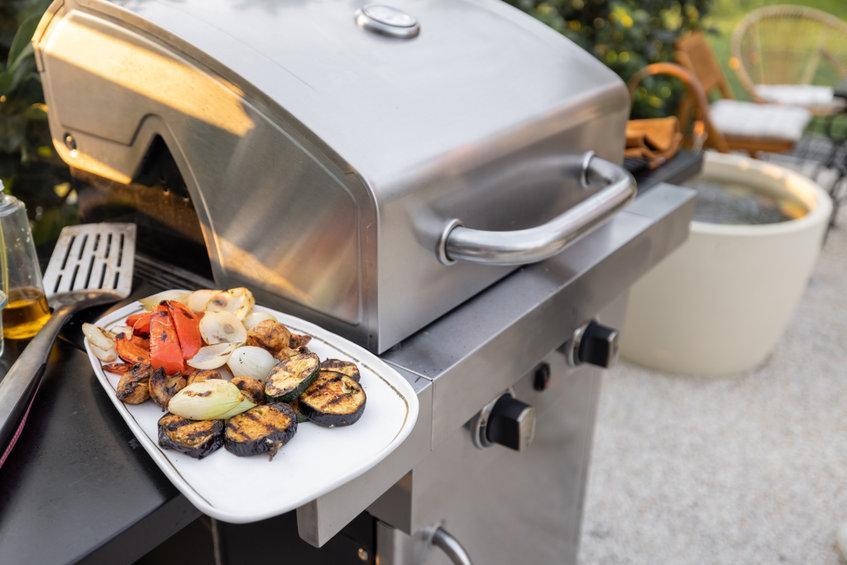
The decision between a two-burner and three-burner grill depends on how often you cook outdoors, the space available in your yard, and your budget constraints.
These three elements will determine whether a smaller grill meets your needs or if you should invest in additional cooking capacity.
Frequency of Use
Occasional weekend grillers find two burners sufficient for their cooking needs.
A family that grills once or twice per month can easily manage with the cooking space provided by two burners.
Regular grillers who cook outdoors multiple times per week may benefit from additional burner capacity.
The extra cooking space allows for more complex meals and reduces cooking time when preparing food for several people.
Weekly usage patterns to consider:
- 1-2 times per week: Two burners typically adequate
- 3-4 times per week: Three burners provide more flexibility
- Daily grilling: Three or more burners recommended
Those who entertain frequently or cook elaborate outdoor meals require more cooking surface.
Multiple burners enable simultaneous cooking of different foods at varying temperatures.
Available Outdoor Space
Deck and patio dimensions directly impact grill size selection.
Two-burner grills typically measure 24-30 inches wide, while three-burner models range from 36-42 inches in width.
Small balconies and compact outdoor areas often accommodate only two-burner models.
Apartment dwellers and condo owners frequently choose smaller grills due to space restrictions and building regulations.
Larger yards and spacious decks can accommodate three-burner grills without crowding.
The additional cooking surface becomes practical when sufficient space exists for safe operation and storage.
Space requirements:
- Two-burner: 4-5 feet of clearance recommended
- Three-burner: 6-7 feet of clearance recommended
Consider storage space during off-seasons.
Smaller grills fit more easily in garages, sheds, or covered areas during winter months.
Budget Considerations
Two-burner grills cost significantly less than three-burner models.
Entry-level two-burner gas grills start around $200-300, while comparable three-burner units begin at $400-500.
Operating costs remain lower with fewer burners consuming propane.
Two burners use approximately 20,000-30,000 BTUs total, compared to 30,000-45,000 BTUs for three-burner models.
Maintenance expenses increase with additional burners and components.
More burners mean more grates to clean, additional gas lines to maintain, and extra ignition systems that may require repair.
Cost comparison factors:
- Initial purchase price differential: $200-300
- Annual propane usage difference: 15-25%
- Replacement parts and maintenance: 30-50% higher for three-burner models
Budget-conscious buyers often find two-burner grills provide better value when cooking needs remain modest.
Popular Two-Burner Grill Models
When it comes to two-burner grills, there are a variety of models available on the market.
Two of the most popular brands are Napoleon Grills and Weber Grills.
Char-Broil Grills
Char-Broil is known for creating durable, user-friendly grills that deliver consistent performance and innovative features at a great value.
Their lineup offers something for everyone—from casual weekend grillers to seasoned BBQ enthusiasts.
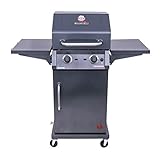 A great example is the Char-Broil Performance Series 2-Burner Grill with Amplifire™ Infrared Technology.
This compact propane gas grill is built with stainless steel and designed to minimize flare-ups while locking in flavor and moisture.
It’s ideal for smaller patios or balconies, offering powerful performance without taking up too much space.
With fast ignition, folding side shelves, and even heat distribution, it’s a top pick in the 2-burner category.
Napoleon Grills
Napoleon Grills is a Canadian company that has been in business for over 40 years.
They are known for their high-quality grills that are built to last. Their two-burner grills are no exception.
 One of their most popular models is the Napoleon TravelQ PRO285.
This grill is designed for portability and is perfect for camping, tailgating, or small outdoor spaces.
It has two burners that can produce up to 12,000 BTUs of heat and can easily be transported with its compact size and built-in handle.
Weber Grills
Weber Grills is an American company that has been in business for over 60 years.
They are known for their innovative designs and high-quality grills.
Their two-burner grills are no exception.
 One of their most popular models is the Weber Spirit II E-210.
This grill has two stainless steel burners that can produce up to 26,500 BTUs of heat.
It also has a warming rack and a built-in thermometer, making it easy to monitor the temperature of your food.
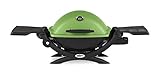 Another popular model is the Weber Q1200.
This grill is designed for portability and is perfect for camping, tailgating, or small outdoor spaces.
It has two burners that can produce up to 12,000 BTUs of heat and can easily be transported with its compact size and built-in handle.
When it comes to choosing between Napoleon, Weber or Char-Broil, it ultimately comes down to personal preference.
Both brands offer high-quality two-burner grills that are built to last.
Napoleon may offer more features and versatility, while Weber may offer more innovative designs and ease of use.
Maintenance and Durability
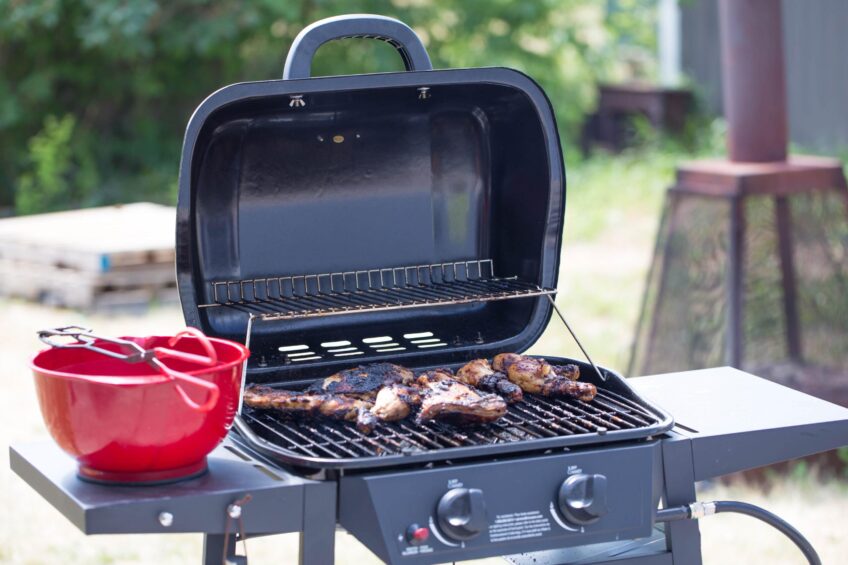
Two-burner grills require regular cleaning of fewer components but may experience more concentrated wear on individual parts.
Quality models typically last 10-15 years with proper care, and replacement parts remain readily available for most major brands.
Cleaning and Upkeep
Two-burner grills simplify maintenance routines compared to larger models.
Users need to clean only two burner assemblies, reducing the time spent on routine upkeep.
The cooking grates require cleaning after each use with a grill brush.
Grease traps should be emptied weekly during active grilling seasons to prevent buildup and potential flare-ups.
Burner tubes need inspection every few months for spider webs or debris that can block gas flow.
A thin wire or pipe cleaner easily clears minor blockages.
Essential cleaning tasks include:
- Wiping down exterior surfaces weekly
- Deep cleaning the firebox monthly
- Checking gas connections seasonally
- Replacing drip pans as needed
The compact size makes it easier to move the grill for thorough cleaning underneath.
Most two-burner models weigh 50-100 pounds, allowing one person to relocate them for maintenance.
Expected Lifespan
Quality two-burner gas grills typically last 10-15 years with regular maintenance.
Premium models from established manufacturers often exceed this range when properly cared for.
The firebox represents the most durable component, often lasting the grill’s entire lifespan.
Stainless steel fireboxes resist rust better than painted steel alternatives in coastal environments.
Burners usually require replacement every 5-7 years depending on usage frequency.
Cast iron grates last longer than chrome-plated alternatives but need more rust prevention care.
Factors affecting lifespan:
- Climate exposure – covered grills last significantly longer
- Usage frequency – daily use accelerates wear patterns
- Material quality – stainless steel components outlast painted alternatives
- Maintenance consistency – regular cleaning prevents premature failure
Two-burner grills may experience faster individual component wear since each burner handles a larger cooking load percentage compared to three or four-burner models.
Replacement Parts Availability
Major grill manufacturers maintain parts inventory for 10-15 years after discontinuing specific models.
Weber, Char-Broil, and Napoleon offer extensive replacement parts for their two-burner lines.
Common replacement parts remain readily available through multiple channels.
Hardware stores stock universal grates, burner covers, and ignition components that fit most standard two-burner configurations.
Easily replaceable components:
- Cooking grates and warming racks
- Burner tubes and heat shields
- Ignition systems and control knobs
- Grease management components
Online retailers provide model-specific parts when local stores lack inventory.
Third-party manufacturers produce compatible alternatives for discontinued models at lower costs than original equipment parts.
Portable two-burner models may have limited parts availability compared to full-sized units.
Users should verify parts availability before purchasing lesser-known brands to avoid future replacement difficulties.
Conclusion: Is a Two-Burner Grill Enough?
A two-burner grill meets the needs of small families and casual grillers who cook for 2-4 people regularly.
The compact design fits well on balconies, small patios, and areas with limited storage space.
The 300 square inches of cooking surface provides adequate room for basic grilling tasks.
Users can prepare burgers, chicken breasts, vegetables, and smaller cuts of meat without difficulty.
Two heat zones allow for both direct and indirect cooking methods.
This flexibility enables proper searing and slower cooking techniques on the same grill.
However, limitations become apparent when cooking for larger groups.
Three-burner grills offer 450-500 square inches of cooking space, making them better suited for entertaining or big families.
Consider these factors when deciding:
- Cooking frequency: Weekend grilling versus daily use
- Group size: Regular number of people served
- Available space: Storage and setup area
- Budget: Two-burner models cost less than three-burner options
A two-burner grill works well for people who grill occasionally and don’t need extensive cooking capacity.
Those who entertain frequently or have larger households benefit more from three-burner models.
The decision depends on individual grilling habits and household size rather than a universal answer.
Two burners provide sufficient functionality for many grillers while three burners offer expanded capabilities for others.