
When comparing premium grill brands, the question of whether Napoleon grills match Weber’s legendary reputation consistently surfaces among outdoor cooking enthusiasts.
Both Napoleon and Weber produce high-quality grills that deliver excellent grilling performance, though each brand excels in different areas depending on specific user needs and preferences.
Weber has established itself as the gold standard in outdoor grilling with decades of proven reliability and widespread market presence.
Napoleon, manufactured in Ontario, Canada, has built a strong reputation for delivering superior heat output and larger cooking surfaces that appeal to serious grillers.
The comparison between these two brands involves examining build quality, cooking performance, available features, and overall value across their respective product lines.
Understanding how each brand approaches design, manufacturing, and customer needs helps determine which grill better suits individual grilling styles and requirements.
Overview of Napoleon and Weber Grills
Weber has dominated the American grilling market for over 70 years with its iconic kettle design, while Napoleon emerged from Canada in 1976 as a premium alternative.
Weber maintains stronger brand recognition globally, though Napoleon has built a solid reputation for quality and innovation.
Brand Histories
Weber began in 1952 when George Stephen cut a metal sphere in half to create the first kettle grill.
This revolutionary design launched from a small Chicago welding company into America’s most recognized grill brand.
The company expanded from charcoal kettles into gas grills during the 1970s.
Weber’s Genesis series debuted in the 1980s, establishing their dominance in premium gas grilling.
Napoleon started in 1976 as a small Canadian fireplace manufacturer.
The Schroeter family founded the company in Barrie, Ontario, initially focusing on wood-burning stoves and fireplaces.
Napoleon entered the grill market in the 1980s.
They shifted focus to premium outdoor cooking equipment, developing their signature wave-shaped cooking grids and innovative heat distribution systems.
Reputation and Market Presence
Weber holds the strongest brand recognition in North America.
 Their black kettle grill became so iconic that many consumers call all kettle grills “Webers” regardless of manufacturer.
Weber grills are available at major retailers like Home Depot, Lowe’s, and Amazon.
The brand maintains a 10-year limited warranty on cooking boxes and lids.
Napoleon commands respect among serious grill enthusiasts despite lower mainstream recognition.
The brand focuses on premium features and professional-grade construction.
Napoleon offers a 15-year limited warranty on fireboxes and lids, exceeding Weber’s coverage.
Their grills are sold through specialty dealers and select big-box retailers.
Build Quality and Materials

Napoleon grills feature premium stainless steel construction with wave-shaped cooking grates, while Weber relies on porcelain-coated cast-iron components with traditional straight grates.
Both brands use high-quality materials designed to withstand extreme temperatures and weather conditions.
Stainless Steel vs. Porcelain-Coated Construction
Napoleon grills prioritize premium stainless steel construction throughout their design.
The cooking grates feature Napoleon’s signature wave-shaped pattern, which creates more surface area for heat distribution and distinctive sear marks.
Weber takes a different approach with porcelain-coated cast-iron cooking grids.
This coating provides excellent heat retention and distribution while protecting the underlying cast iron from rust and corrosion.
The stainless steel construction in Napoleon grills offers superior resistance to weather damage and maintains its appearance longer.
However, Weber’s porcelain-coated system delivers exceptional heat retention properties that many grilling enthusiasts prefer.
Napoleon’s stainless steel components require less maintenance and resist staining better than porcelain surfaces.
Weber’s porcelain coating can chip over time if not handled carefully, potentially exposing the cast iron underneath.
Durability Over Time
Weber grills have established a strong reputation for long-term durability spanning decades of use.
The company uses high-quality materials specifically engineered to withstand extreme temperatures and harsh weather conditions.
Napoleon grills also demonstrate impressive longevity due to their premium stainless steel construction.
The materials resist corrosion and maintain structural integrity even after years of regular use.
Both manufacturers offer comprehensive replacement parts and accessories, making maintenance and repairs straightforward.
Weber’s longer market presence means more readily available parts through various retailers.
The build quality of both brands supports extended warranties.
Napoleon typically offers longer warranty periods on their premium models, while Weber provides solid coverage backed by decades of proven performance.
Performance and Grilling Experience
Napoleon and Weber grills deliver distinct performance characteristics through their heat distribution systems, temperature control mechanisms, and ignition technologies.
Both brands excel in different areas that directly impact cooking results and user satisfaction.
Heat Distribution
Napoleon grills feature wave-shaped stainless steel cooking grates that create distinctive sear marks while promoting even heat distribution.
The wave design channels grease away from food and reduces flare-ups during cooking.
Weber grills utilize porcelain-coated cast-iron grates with traditional straight designs.
Cast iron retains heat exceptionally well and provides consistent cooking temperatures across the surface.
Napoleon’s heat distribution benefits from their proprietary burner designs that spread flames more evenly.
The stainless steel construction heats quickly but may create some hot spots on larger models.
Weber’s Flavorizer bars redirect drippings while distributing heat upward.
This system creates more consistent temperatures but takes longer to reach peak heat compared to Napoleon’s direct approach.
Temperature Control
Napoleon grills offer precise temperature control through their dual-level searing system and multiple burner configurations.
Most models include dedicated searing stations that reach temperatures exceeding 1,800°F.
Weber grills provide reliable temperature management through their tried-and-tested burner systems.
The infinity ignition and consistent gas flow create predictable cooking environments.
Napoleon’s temperature gauges tend to be more responsive and accurate.
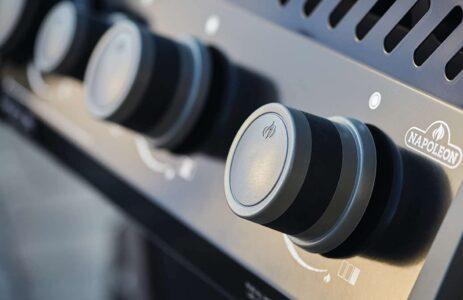
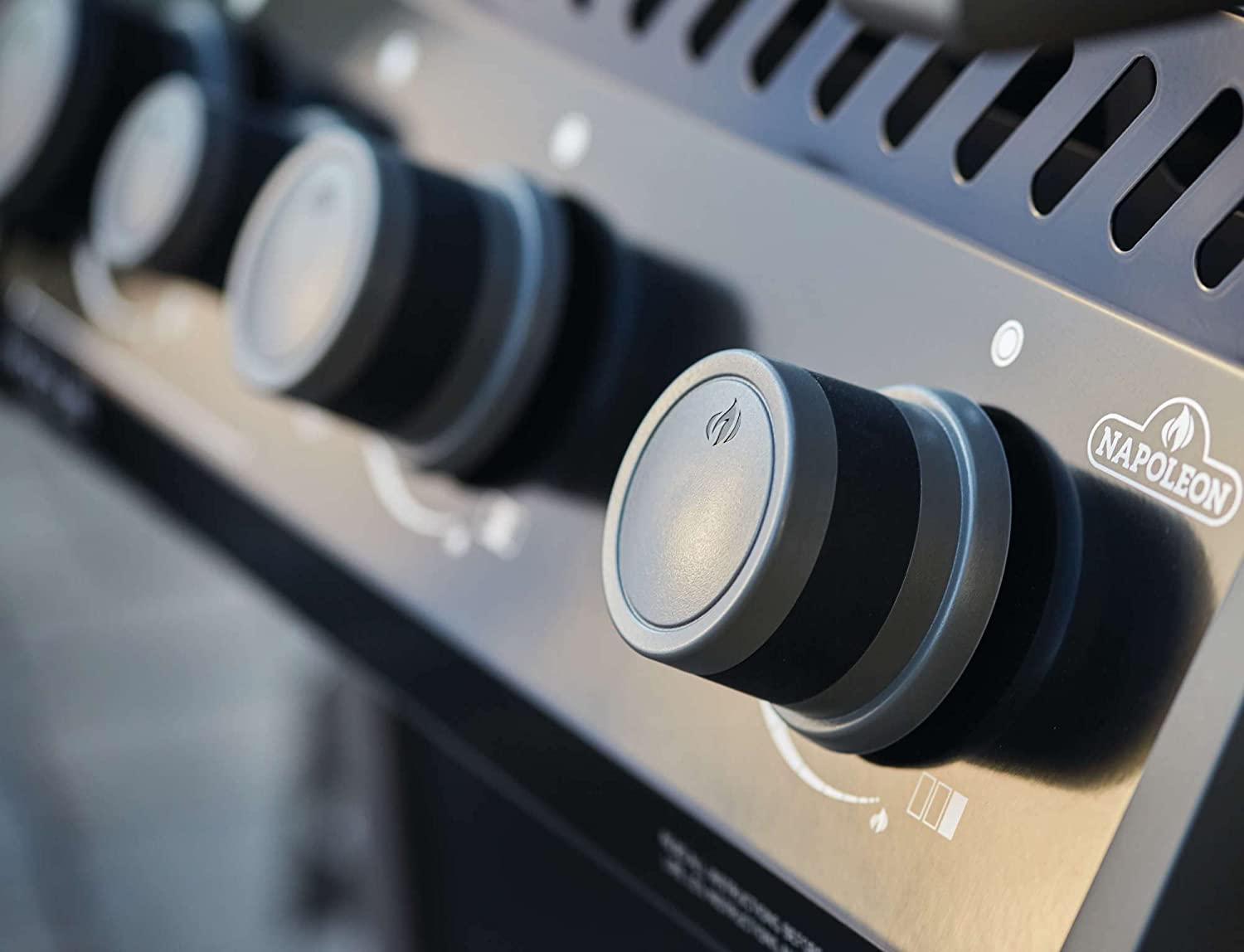
Their control knobs offer finer adjustments for low-and-slow cooking or high-heat searing.
Weber’s temperature control focuses on consistency rather than extreme ranges.
Their systems excel at maintaining steady temperatures for extended cooking sessions.
Ignition Systems
Napoleon grills feature Jetfire ignition systems that light all burners simultaneously with a single button press.
This system proves reliable in various weather conditions and rarely requires maintenance.
Weber grills use infinity ignition technology that continues sparking until burners light.
The system automatically retries if initial ignition fails, ensuring consistent startup performance.
Napoleon’s ignition systems integrate LED lighting for nighttime grilling.
The push-button design requires minimal effort and works effectively even after extended use.
Weber’s ignition technology focuses on durability and weather resistance.
The system performs consistently across temperature ranges and withstands outdoor exposure better than most competitors.
Feature Comparison
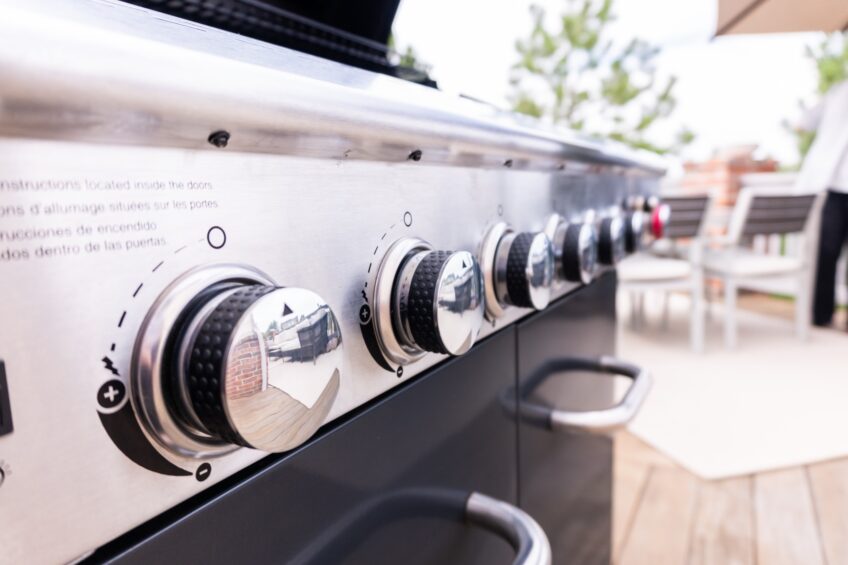
Napoleon grills offer advanced technology like infrared burners and rotisserie systems, while Weber focuses on smart connectivity and precise temperature control.
Both brands provide multiple cooking surface sizes and innovative cleaning solutions.
Cooking Surface and Size Options
Weber offers cooking surfaces ranging from 380 square inches on compact models to over 900 square inches on premium units.
The Genesis series provides 513-669 square inches of primary cooking space.
Most Weber models include warming racks that add 156-274 additional square inches.
Napoleon grills typically provide larger cooking areas in comparable price ranges.
The Prestige series offers 500-900 square inches of main cooking surface.
Napoleon’s TravelQ portable models start at 285 square inches, while their Rogue series provides 425-625 square inches.
Both brands offer three-burner, four-burner, and six-burner configurations.
Napoleon tends to include more cooking accessories as standard equipment.
Weber focuses on modular cooking grates that can be customized with different surfaces.
Special Features and Innovations
Napoleon incorporates infrared side burners and rear rotisserie burners on most mid-range models.
Their JETFIRE ignition system provides instant lighting across all burners.
The ACCU-PROBE temperature gauge offers precise heat monitoring.
Weber emphasizes smart technology with their Weber Connect system on select models.
This feature provides real-time temperature monitoring and cooking guidance through a mobile app.
Weber’s Flavorizer Bars create distinctive grill marks and reduce flare-ups.
Napoleon’s WAVE cooking grids distribute heat evenly and create professional sear marks.
Their SafetyGlow knobs illuminate when burners are active.
Weber’s GS4 grilling system integrates ignition, flavorization, grease management, and infinity ignition.
Ease of Cleaning
Weber’s grease management system channels drippings into removable drip pans.
The Flavorizer Bars are dishwasher-safe and prevent grease from reaching the firebox.
Most Weber models feature porcelain-enameled cooking grates that resist rust and clean easily.
Napoleon uses a full-width drip tray that slides out for simple removal.
Their stainless steel cooking grids can be cleaned in the dishwasher.
The JETFIRE ignition system eliminates the need for battery maintenance.
Both brands offer removable heat plates or flavorizer bars for thorough cleaning.
Weber’s Weber Connect app provides cleaning reminders and maintenance schedules.
Napoleon’s stainless steel construction resists corrosion and maintains appearance with minimal upkeep.
Product Range and Model Selection
Weber maintains a broader product portfolio across multiple grilling categories, while Napoleon focuses primarily on premium gas grills with fewer options in charcoal and portable segments.
Both brands offer distinct advantages depending on the grilling style and budget requirements.
Gas Grills
Napoleon’s gas grill lineup centers around the Prestige and Rogue series, emphasizing high-end features and premium construction.
The Prestige models typically include infrared burners, rotisserie systems, and higher BTU outputs compared to Weber’s offerings.
Weber’s gas grill range spans from the affordable Spirit series to the premium Genesis and Summit lines.
The Genesis series competes directly with Napoleon’s mid-range models, offering side burners and Weber’s signature flavorizer bars.
Napoleon grills generally provide higher BTU ratings and larger cooking surfaces within similar price ranges.
Many Napoleon models include rotisserie kits and infrared rear burners as standard equipment.
Weber focuses on proven technology and widespread parts availability.
Their gas grills emphasize consistent heat distribution and long-term reliability over maximum power output.
Charcoal Grills
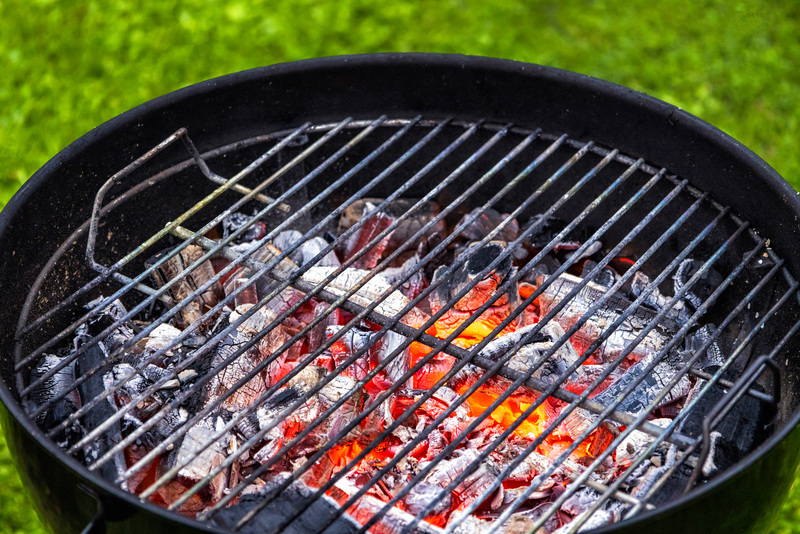 Weber dominates the charcoal grill market with the iconic Kettle series, the Smokey Mountain smokers, and the Ranch Kettle charcoal grill.
The brand offers extensive charcoal options from 14-inch portable units to 37-inch ranch-style grills.
Napoleon’s charcoal selection remains limited compared to Weber’s extensive lineup.
The brand produces the PR022 charcoal kettle grill with a folding cart, which feature some unique design elements but lack the market presence of Weber’s charcoal offerings.
Weber’s charcoal grills benefit from decades of refinement and a robust aftermarket parts ecosystem.
Most replacement components remain readily available for older Weber charcoal models.
Portable Grills
Weber leads in portable grill variety with the Q series, Go-Anywhere charcoal grill, and Smokey Joe models.
These units range from compact tabletop gas grills to lightweight charcoal options for camping and tailgating.
Napoleon’s portable offerings include the TravelQ series.
While well-constructed, Napoleon’s portable lineup contains fewer model variations than Weber’s extensive portable collection.
Weber’s portable grills typically cost less than Napoleon’s equivalent models.
The Weber Q series particularly offers strong value for occasional outdoor cooking and small-space grilling needs.
Value for Money
Napoleon grills typically carry higher price tags than comparable Weber models, but they often include more premium features and construction materials.
Weber focuses on providing solid performance at competitive prices with a broader range of budget-friendly options.
Pricing Across Models
Entry-Level Models: Weber Spirit series grills start around $400-500 for basic two-burner models.
Napoleon’s entry-level Freestyle series begins at similar price points but includes features like infrared side burners that Weber charges extra for.
Mid-Range Options: Weber Genesis models range from $600-1,200 depending on size and features. Napoleon’s Prestige series occupies the $800-1,500 range with standard features like rotisserie kits and infrared rear burners.
Premium Grills: Weber’s Summit series tops out around $2,000-3,000 for high-end models. Napoleon’s Pro series can exceed $4,000 for their largest units with commercial-grade components.
Napoleon consistently prices their grills 15-25% higher than Weber’s equivalent models.
However, Napoleon often includes accessories and features as standard equipment that Weber sells separately.
Warranty and Customer Support
Weber provides a 10-year warranty on cookboxes and lids, with 5 years on burners and 2 years on other components.
Their customer service operates through authorized dealers and direct support channels.
Napoleon offers a 15-year warranty on fireboxes and a lifetime warranty on cast iron cooking grids.
Their burners receive 10-year coverage, exceeding Weber’s protection period.
Both companies maintain extensive dealer networks across North America.
Weber has broader international presence, while Napoleon focuses primarily on North American markets with dedicated customer service teams.
User Reviews and Community Feedback
Napoleon and Weber users share distinct experiences that reveal each brand’s strengths and weaknesses.
Community feedback shows clear patterns in satisfaction levels and common concerns across both grilling brands.
Owner Satisfaction
Weber owners consistently report high satisfaction rates across grilling communities and review platforms.
Many users praise Weber’s reliable customer service and honor warranty claims without significant issues.
Napoleon users express satisfaction with cooking performance and build quality.
However, some report mixed experiences with customer service response times.
First-time gas grill buyers often mention Napoleon’s learning curve compared to Weber’s more intuitive design.
Long-term ownership feedback reveals:
- Weber users frequently keep their grills for 10+ years
- Napoleon owners report solid durability after 5-7 years of use
- Both brands maintain strong resale value according to marketplace data
Reddit grilling communities show Weber receives more recommendations from experienced users.
Napoleon gains praise from users who prioritize cooking features over brand recognition.
Common Praises and Criticisms
Weber receives praise for:
- Consistent heat distribution across cooking surfaces
- Widespread parts availability at retail stores
- Strong warranty support and customer service
- Smart technology integration in Genesis models
Napoleon strengths according to users:
- Superior searing capabilities with infrared burners
- Heavier construction materials
- More cooking features at similar price points
- Better value in mid-range price categories
Common Weber criticisms include:
- Higher prices for comparable features
- Some users report rust issues on certain models
- Limited advanced features in lower-priced lines
Napoleon concerns mentioned by users:
- Parts availability challenges in some regions
- Steeper learning curve for new grill owners
- Inconsistent customer service experiences across different areas
Napoleon is a Good Choice for Large Freestanding Grills
The easiest way to convert your patio into a home cook’s dream kitchen is to purchase a large freestanding grill.
When comparing the price to performance and total cooking area, Napoleon sometimes comes out on top of Weber.
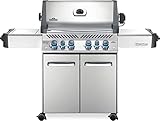

It has four main burners with a total power output rating of 80,000 BTUs.
It has LED lighting, an infrared rotisserie burner, and side, and rear burners.
There are six burners in total and the grill is made almost entirely from heavy-duty stainless steel to offer protection from corrosion.


It does have a built-in thermometer which is a great feature, but you end up losing out in some other areas.
In this case, you can get a Napoleon for a lower price with better features.
It’s an example of how things can change from model to model.
In some cases, you’ll have Weber come out on top, but in this instance, it’s Napoleon that is the better deal for most buyers.
Final Assessment: Are Napoleon Grills as Good as Weber?
 Napoleon grills match Weber’s quality in several key areas.
Both brands deliver reliable performance and durable construction that satisfies most grilling needs.
Weber’s advantages include:
- Warranty coverage: 10-year limited warranty on cooking box and lid
- Price positioning: Generally more budget-friendly options
- Market reputation: Longer-established brand recognition
- Portability: Better suited for camping and mobile use
Napoleon’s strengths are:
- Extended warranty: 15-year limited warranty on firebox and lid
- Cooking capacity: Larger grills like the Prestige Pro 825 with 1,430 square inches
- Home cooking focus: Better designed for residential backyard use
- Build quality: Comparable materials and construction standards
The performance gap between these brands is minimal.
Napoleon grills work well for couples and families who prioritize home cooking.
Weber appeals to users seeking versatility and value.
Both manufacturers offer gas and charcoal options across multiple price ranges.
The choice depends on specific needs rather than overall superiority.
Napoleon grills are as good as Weber in terms of cooking performance and durability.
The decision comes down to warranty preferences, size requirements, and intended use patterns rather than quality differences.