
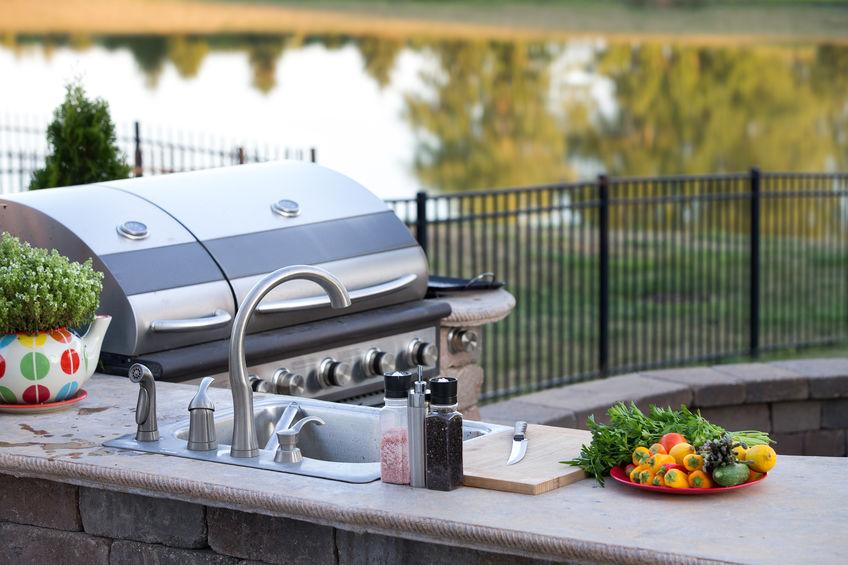
Built-in gas grills cost significantly more than freestanding models—often two to three times as much for similar cooking performance.
This premium comes from stainless steel construction, specialized engineering for permanent installation, and seamless integration into outdoor kitchens.
Their higher price also reflects customization options, enhanced durability, and the added expense of professional installation and custom fitting.
Built-in gas grills are expensive because they use premium materials, require permanent installation, and offer customization options.
Their enhanced durability standards further justify the higher cost compared to portable alternatives.
For homeowners, the investment extends beyond the grill itself to long-term value considerations.
Ultimately, deciding if a built-in grill is worth the cost comes down to weighing its construction quality, installation complexity, and practical benefits.
Homeowners must balance these factors against their cooking habits, entertainment needs, and the potential impact on property value.
Understanding Built-In Gas Grills
Built-in gas grills differ from portable models through their permanent installation design and integration into outdoor kitchen structures.
These units require specific construction considerations and offer distinct advantages over their freestanding counterparts.
What Makes a Gas Grill Built-In
A built-in gas grill lacks the self-contained base and wheels found on freestanding models.
Instead, the cooking components install directly into countertop structures or custom cabinetry.
Key Design Features:
- Permanent installation into outdoor kitchen islands or counters
- Flush mounting that creates seamless integration with surrounding surfaces
- Custom ventilation requirements for proper airflow and safety
- Direct gas line connections to natural gas or propane systems
The installation process requires professional construction work.
Builders must create appropriate openings, install proper ventilation, and ensure adequate clearances around the unit.
Built-in models typically feature stainless steel construction designed to withstand permanent outdoor exposure.
The materials and engineering must handle constant weather conditions without the protection of covers or storage.
Types of Built-In Gas Grills
Built-in gas grills come in several configurations based on fuel type, size, and feature sets.
Each type serves different cooking needs and installation requirements.
Fuel Options:
- Natural gas models connect directly to home gas lines
- Propane versions use refillable tanks stored in adjacent cabinetry
- Dual-fuel systems accommodate both natural gas and propane connections
Size Categories:
- Compact units (24-30 inches) fit smaller outdoor spaces
- Standard models (36-42 inches) provide typical family cooking capacity
- Large grills (48+ inches) serve commercial-grade cooking needs
Premium models include additional features like rotisserie systems, side burners, warming drawers, and advanced temperature control systems.
Some units integrate smart technology for remote monitoring and control.
Comparison With Freestanding Grills
Built-in and freestanding grills serve different purposes and offer distinct advantages.
The choice depends on cooking needs, budget, and outdoor space design.
| Feature | Built-In Grills | Freestanding Grills |
|---|---|---|
| Portability | Permanent installation | Fully portable with wheels |
| Price Range | $3,000-$15,000+ | $300-$5,000 |
| Installation | Professional required | Ready to use |
| Customization | High integration options | Limited modification |
Freestanding grills offer immediate usability and lower upfront costs.
Users can move them for cleaning, storage, or relocation.
Built-in units provide seamless outdoor kitchen integration and potentially increase property values.
They require significant upfront investment in both the grill and installation costs.
The cooking performance between quality built-in and freestanding models remains comparable.
The primary differences lie in installation permanence, aesthetic integration, and overall outdoor kitchen functionality.
Key Factors Driving the High Cost

Built-in gas grills command premium prices because they use commercial-grade stainless steel construction, sophisticated control systems, and precision-engineered components.
These features deliver consistent high-temperature performance.
Premium Materials and Construction
Built-in gas grills utilize 304 or 316 stainless steel throughout their construction, unlike portable grills that often feature painted steel or aluminum components.
This marine-grade stainless steel resists corrosion and maintains its appearance in outdoor environments.
The chassis and cooking surfaces are typically 12-14 gauge stainless steel, significantly thicker than standard grills.
This heavy-duty construction provides superior heat retention and structural integrity.
Premium insulation materials surround the firebox, maintaining consistent temperatures while protecting surrounding cabinetry.
Double-wall construction creates air gaps that prevent heat transfer to adjacent surfaces.
Welded joints replace screws and bolts in critical areas, creating seamless connections that eliminate potential failure points.
This manufacturing approach requires specialized equipment and skilled labor, increasing production costs.
High-end grates are made from solid stainless steel rods rather than chrome-plated steel, ensuring even heat distribution and preventing flaking or rusting over time.
Advanced Technology and Features
Modern built-in grills incorporate electronic ignition systems with battery backup, eliminating the need for matches or lighters.
These systems feature multiple spark generators for each burner zone.
Digital temperature controllers with WiFi connectivity allow remote monitoring and adjustment through smartphone applications.
These systems maintain precise temperature control within 5-10 degree ranges.
Multi-zone heating systems provide independent control over different cooking areas, with some models offering up to six separate burner controls.
This allows simultaneous cooking at different temperatures.
Rotisserie motors are built with commercial-grade components rated for continuous operation.
Variable speed controls accommodate different food types and weights.
Integrated lighting systems with LED bulbs illuminate cooking surfaces during evening use.
Motion sensors automatically activate lights when the hood opens.
Precision Engineering and Performance
Built-in grills achieve temperatures exceeding 700°F through precisely calculated burner placement and air flow dynamics.
Engineering teams optimize flame patterns and heat distribution across cooking surfaces.
BTU ratings typically range from 60,000 to 100,000+ BTUs, with burner tubes manufactured to exact specifications for consistent gas flow.
Venturi systems are calibrated to provide optimal air-to-gas ratios.
Grease management systems channel fats and oils away from flames through engineered drainage slopes and collection points.
This prevents flare-ups while maintaining easy cleanup.
Sealed burner boxes prevent grease infiltration into gas components, extending operational life and maintaining safety standards.
Precision-machined valve assemblies ensure accurate flame control across the entire adjustment range.
Heat shields and flavorizer bars are positioned using computational fluid dynamics modeling to maximize heat transfer while minimizing hot spots.
Installation and Customization Considerations
Built-in gas grills require professional installation, specialized gas line connections, and custom integration with outdoor kitchen designs.
These installation requirements significantly increase the total project cost beyond the grill’s purchase price.
Professional Installation Requirements
Built-in gas grills require certified professionals for proper installation and safety compliance.
Licensed technicians must handle gas line connections, electrical work, and ventilation systems.
Most local building codes mandate permits for built-in grill installations.
Inspections ensure proper clearances, ventilation, and safety standards are met.
Installation costs typically include:
- Gas line connection: $300-800
- Electrical work: $200-500
- Permit fees: $50-200
- Labor: $500-1,500
The installation process takes 1-3 days depending on complexity.
Weather conditions and site accessibility can extend timelines and increase costs.
Professional installation protects warranty coverage.
Many manufacturers void warranties for improper DIY installations or unlicensed work.
Custom Outdoor Kitchen Integration
Built-in grills require custom countertops, cabinets, and structural support systems.
These elements must be precisely measured and fabricated for each specific grill model.
Common integration expenses:
- Stone or concrete countertops: $1,500-4,000
- Cabinet construction: $1,000-3,000
- Structural framing: $500-1,500
- Finishing materials: $800-2,000
Countertop materials like granite, quartz, or concrete require professional fabrication.
Cutout dimensions must match grill specifications exactly to ensure proper fit and support.
Weather-resistant materials increase costs but prevent deterioration.
Stainless steel, marine-grade wood, and sealed stone withstand outdoor conditions better than standard indoor materials.
Gas Line and Safety Infrastructure
Natural gas installations require extending main gas lines to the grill location.
This process involves trenching, pipe installation, and pressure testing by licensed plumbers.
Gas line installation factors:
- Distance from main line: $8-12 per linear foot
- Excavation requirements: $200-800
- Pipe materials and fittings: $150-400
- Pressure testing and inspection: $100-300
Propane installations need dedicated tank storage areas with proper ventilation clearances.
Automatic changeover systems for dual tanks cost $300-600 additional.
Safety shutoff valves must be installed within reach of the grill operator.
Emergency gas shutoffs are required by most building codes for built-in installations.
Adequate ventilation prevents gas accumulation in enclosed spaces.
Open-air installations need minimum clearances from walls, overhangs, and combustible materials.
Evaluating the True Value
Built-in gas grills deliver measurable returns through extended lifespans, consistent performance improvements, and comprehensive manufacturer support.
These factors create tangible value that extends well beyond the initial purchase price.
Longevity and Durability
Built-in grills typically last 15-25 years with proper maintenance, compared to 5-10 years for most freestanding models.
The premium stainless steel construction resists rust and corrosion better than painted steel alternatives.
Heavy-gauge materials withstand temperature fluctuations without warping.
Commercial-grade components like cast iron grates and stainless steel burner tubes maintain their integrity through thousands of cooking cycles.
The permanent installation protects internal mechanisms from weather exposure.
Fixed positioning eliminates stress from moving and storage that commonly damages portable units.
- 304-grade stainless steel bodies
- Welded construction vs. bolted assemblies
- Protected electrical connections
- Reinforced mounting systems
Performance Benefits Over Time
Built-in grills maintain consistent heat distribution throughout their lifespan due to superior insulation and heavier construction.
Temperature accuracy remains stable as premium thermostats and control valves experience less degradation.
BTU efficiency improves over freestanding models through better heat retention.
The enclosed design and quality materials prevent heat loss that forces users to increase gas consumption.
Advanced ignition systems require fewer repairs and replacements.
Electronic ignition components in built-in units typically feature marine-grade sealing and corrosion-resistant materials.
Professional-grade cooking grates retain seasoning longer and develop better non-stick properties.
Cast iron and heavy stainless steel surfaces improve cooking results as they age properly.
Warranty and Service Support
Premium built-in grill manufacturers offer 5-15 year warranties on major components, significantly longer than the 1-3 years typical for portable grills.
Burner assemblies, control valves, and firebox construction often receive extended coverage.
Authorized service networks provide on-site repairs for built-in installations.
Technicians trained specifically on each brand ensure proper diagnosis and component replacement without removing the entire unit.
Typical warranty coverage:
| Component | Built-In | Freestanding |
|---|---|---|
| Firebox | 10-15 years | 2-5 years |
| Burners | 5-10 years | 1-2 years |
| Control valves | 3-5 years | 1 year |
| Ignition system | 2-3 years | 1 year |
Replacement parts remain available longer due to the investment customers make in built-in installations.
Manufacturers maintain inventory for discontinued models up to 10 years after production ends.
Are Built-In Gas Grills Worth the Cost?

Built-in gas grills justify their premium pricing through three critical factors: their performance as long-term investments, their ability to match lifestyle needs, and their impact on property value and aesthetics.
These benefits make them a compelling choice for homeowners seeking both function and long-term value.
These elements together make them a worthwhile purchase.
Assessing Long-Term Investment
Built-in gas grills deliver superior durability compared to portable alternatives.
Premium materials like stainless steel construction and commercial-grade components extend operational life beyond 15-20 years with proper maintenance.
The initial investment of $1,500 to $12,000 spreads across decades of use.
A $4,000 built-in grill used regularly over 15 years costs approximately $267 annually.
Cost comparison breakdown:
- Portable grills: $300-800 every 3-5 years
- Built-in grills: $1,500-12,000 every 15-20 years
- Annual cost difference: Often minimal with heavy usage
Performance advantages include consistent temperature control, larger cooking surfaces, and integrated features like rotisseries and side burners.
These capabilities eliminate the need for additional cooking equipment.
Maintenance costs remain reasonable due to replaceable parts and robust engineering.
Most manufacturers offer extensive warranty coverage, typically 5-10 years on major components.
Lifestyle and Usage Needs
Built-in grills serve households that prioritize outdoor entertaining and frequent cooking.
Families who grill multiple times weekly benefit most from the enhanced functionality and convenience.
Ideal user profiles:
- Frequent entertainers hosting 8+ guests
- Daily outdoor cooking enthusiasts
- Homeowners with dedicated outdoor kitchen spaces
- Families preferring year-round grilling
Space requirements demand permanent outdoor kitchen installations.
Built-in units need proper ventilation, gas connections, and weather protection.
Cooking capacity significantly exceeds portable options.
Most built-in models accommodate 20-30 burgers simultaneously, supporting large gatherings efficiently.
Feature advantages include:
- Multiple cooking zones with independent temperature control
- Integrated storage and prep areas
- Professional-grade heat distribution
- Seamless outdoor kitchen integration
Casual grillers using equipment monthly may find portable options more cost-effective and practical.
Resale Value and Home Appeal
Built-in grills increase property values when properly integrated into outdoor living spaces.
Real estate professionals report 3-5% home value increases for well-designed outdoor kitchens featuring quality built-in grills.
Market appeal varies by region and price point.
Homes in warmer climates and higher-end neighbourhoods see greater returns on outdoor kitchen investments.
Value-adding factors:
- Professional installation and design
- High-end material selection
- Complete outdoor kitchen integration
- Premium brand recognition
Installation quality directly impacts resale benefits.
Poor execution or incompatible design elements reduce potential returns significantly.
Buyer demographics show strong preference for move-in ready outdoor entertainment spaces.
Built-in grills appeal particularly to families and entertaining-focused homeowners.
The investment pays dividends beyond monetary returns through enhanced lifestyle enjoyment and increased usable living space.
Property differentiation in competitive markets provides additional selling advantages.
Potential Alternatives to Built-In Gas Grills
Several cost-effective alternatives can deliver excellent grilling performance without the high upfront costs and permanent installation requirements of built-in units.
Freestanding models offer mobility and lower prices, while portable options provide maximum flexibility for different cooking locations.
Freestanding Gas Grills
Freestanding gas grills represent the most popular alternative to built-in units.
These grills mount on wheeled carts and typically cost significantly less than their built-in counterparts.
Most freestanding models range from $300 to $3,000, depending on size and features.
This price point makes them accessible to a broader range of consumers compared to built-in grills that start around $2,000.
Key advantages include:
- Mobility – Easy relocation within outdoor spaces
- Storage options – Built-in cabinets and side shelves
- Fuel flexibility – Compatible with propane tanks or natural gas connections
- No installation costs – Ready to use upon assembly
Freestanding grills offer comparable cooking performance to built-in models.
Many high-end freestanding units include premium features like infrared burners, rotisserie systems, and multiple cooking zones.
The main trade-off involves aesthetics and integration with outdoor kitchen designs.
Freestanding units may not achieve the seamless appearance that built-in grills provide in custom outdoor spaces.
Portable Gas Grills
Portable gas grills deliver maximum flexibility for users who want to grill in multiple locations.
These compact units typically weigh between 20-50 pounds and run on small propane canisters.
Price points for quality portable gas grills range from $150 to $800.
This affordability makes them attractive for apartment dwellers, RV enthusiasts, and occasional grillers.
Popular features include:
- Compact design – Easy transport and storage
- Quick setup – Minimal assembly required
- Efficient fuel use – Small propane canisters last multiple cooking sessions
- Versatile placement – Compatible with balconies, patios, and camping sites
Performance limitations include smaller cooking surfaces and reduced heat output compared to full-size grills.
Most portable units accommodate 2-4 people per cooking session.
Some models offer innovative designs like folding legs, integrated carrying handles, and removable drip pans for enhanced portability.
Hybrid and Modular Grill Options
Hybrid grills combine multiple fuel sources in single units, while modular systems allow customization without permanent installation.
These options bridge the gap between freestanding and built-in grills.
Hybrid fuel combinations include:
- Gas and charcoal chambers
- Gas with wood pellet attachments
- Electric and gas dual systems
Modular grill islands use pre-fabricated components that create built-in appearances without custom construction.
These systems typically cost 30-50% less than fully custom built-in installations.
Assembly involves connecting standardized modules like grill heads, storage cabinets, and side burners.
Most modular systems accommodate future upgrades or reconfigurations.
Hybrid grills appeal to users who want fuel versatility for different cooking styles.
Gas provides convenience for quick meals, while charcoal or wood adds traditional flavors for special occasions.
Installation complexity varies by system design.
Some modular options require basic assembly, while others need professional installation for gas connections and structural support.
What are the Best Built-in Grills You Can Buy Today?
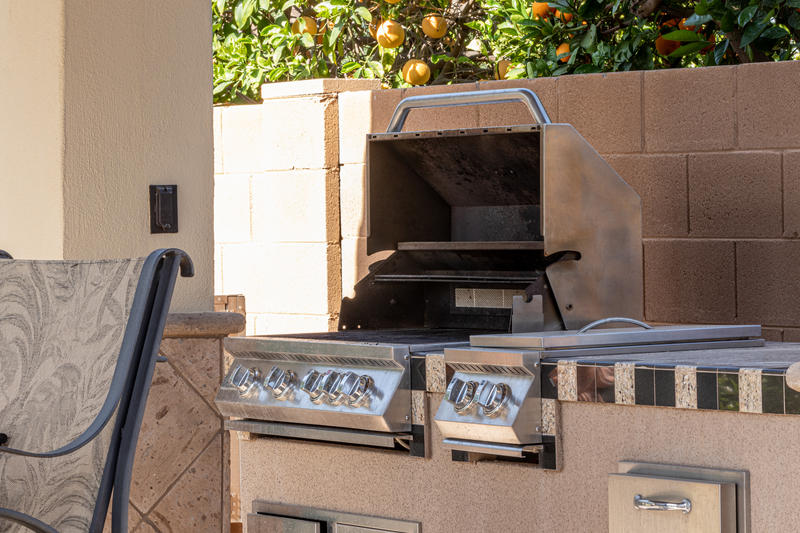
Several of the world’s best grill brands make built-in grills.
Here are some of the most impressive on the market today…
Looking for a sleek, high-performance built-in grill for your outdoor kitchen?
-
Spire Premium 5 Burner Built In Gas Grill
 The Spire Premium 5-Burner Built-In Gas Grill Head is a strong contender.
Built from durable 304 stainless steel, this 30-inch grill combines solid power, modern design, and useful features—at a mid-range price point.
🔧 Key Features:
-
63,000 BTUs total across 5 stainless burners + rear ceramic rotisserie burner
-
758 sq in total cooking area (main + warming rack)
-
Dual-fuel compatible – runs on propane, convertible to natural gas
-
Electronic ignition and internal halogen lights for nighttime grilling
-
Integrated temp gauge and flame tamers for better control
✅ Pros:
-
Premium stainless-steel look and feel
-
Spacious cooking area – great for entertaining
-
Easy to integrate into most outdoor kitchen islands
-
Backed by a 10-year burner warranty
⚠️ Cons:
-
Some users report ignition failures over time
-
A few mention uneven heat or low flame issues
-
Occasional complaints about melted plastic near knobs
📝 Final Thoughts:
The Spire 740-0788P offers excellent value if you’re looking to upgrade your outdoor setup.
While not perfect, it delivers where it counts: performance, appearance, and cooking space.
Just be prepared to troubleshoot the igniter or upgrade it if needed.
-
Napoleon Built-in Prestige PRO RB Propane Gas Grill Head
 For those who want premium performance and luxury styling in an outdoor kitchen, the Napoleon Prestige PRO 500 RB is a top-tier built-in grill.
This 32-inch stainless steel grill is built to impress—with infrared power, high BTUs, and signature Napoleon details.
🔧 Key Features:
-
66,000 BTUs total with four main burners + infrared rear burner
-
760 sq in total cooking area (500 sq in main + warming/rotisserie space)
-
JetFire™ ignition system for quick and reliable starts
-
LED NIGHT LIGHT™ knobs and interior halogen lights
-
Dual-fuel capable (propane standard, natural gas version available)
-
Includes rotisserie kit and stainless steel wave grates
✅ Pros:
-
Stunning high-end design with pro features
-
Great for rotisserie and high-heat grilling
-
Built to last with 15-year / lifetime limited warranty
-
Excellent lighting for night grilling
⚠️ Cons:
-
Some users report uneven heat zones (hotter on one side)
-
Occasional ignition system quirks (especially rear burner)
-
Mixed experiences with customer service response times
📝 Final Thoughts:
The Prestige PRO 500 RB is perfect for serious grillers who want a durable, luxury-built grill that looks just as good as it cooks.
While there are some minor performance quirks, the overall quality, warranty, and features make it a standout choice in the premium category.
-
Blaze Prelude LBM Built-in Propane Gas Grill
 If you’re looking for a tough, reliable built-in grill with pro-level performance, the Blaze Prelude LBM is a standout in the mid-premium range.
With a sleek 304 stainless steel build, strong burners, and great warranty coverage, it’s designed for serious backyard grilling.
🔧 Key Features:
-
56,000 BTUs total from 4 stainless steel tube burners
-
740 sq in total cooking space (main + warming rack)
-
Flame-thrower ignition system with backup flash tubes
-
Flame stabilizing grids to reduce flare-ups and improve heat distribution
-
Heat zone separators for cooking different foods at once
-
Built from 304 stainless steel with double-lined lid
-
Backed by a lifetime residential warranty
✅ Pros:
-
Durable, commercial-grade construction
-
Powerful heat output with excellent searing ability
-
Smart design with heat zones and flare-up control
-
One of the best warranties in its class
⚠️ Cons:
-
Can run too hot for low-temp cooking
-
Some reports of uneven heat across grill surface
-
Occasional customer service issues reported by users
📝 Final Thoughts:
The Blaze Prelude LBM is a rock-solid choice for anyone wanting a dependable, feature-packed built-in grill.
It’s ideal for grilling at high heat, with the build quality to last for years.
Just keep in mind its tendency to run hot—and check with your installer or vendor to ensure proper support.
Bottom Line – Why Are Built-In Gas Grills So Expensive?
Built-in gas grills command premium prices due to theirsuperior construction materials, primarily marine-grade stainless steel.
These materials resist corrosion and withstand extreme temperatures better than standard alternatives.
The customization factor significantly impacts cost.
Unlike freestanding models, built-ins require precise measurements and custom installation work.
This personalized approach adds considerable value to the final price.
Professional-grade features separate built-in grills from their portable counterparts.
Multiple burner zones, rotisserie systems, and advanced temperature controls justify higher investment costs.
Installation complexity requires skilled professionals and additional components.
Gas lines, electrical connections, and proper ventilation systems increase the total project expense.
The durability advantage makes built-in grills worthwhile for serious outdoor cooking enthusiasts.
These units typically last decades with proper maintenance, unlike cheaper alternatives that require frequent replacement.
Brand reputation and warranty coverage provide additional value.
Established manufacturers offer comprehensive support and replacement parts for extended periods.
Built-in grills represent a long-term investment rather than a simple appliance purchase.
They enhance property values while delivering consistent cooking performance.
The decision depends on individual priorities and budget constraints.
Frequent grill users who value quality construction will find built-ins worthwhile.
Occasional cooks might prefer less expensive alternatives.
Installation permanence means careful consideration before purchase.
Once installed, relocation becomes impractical and costly.