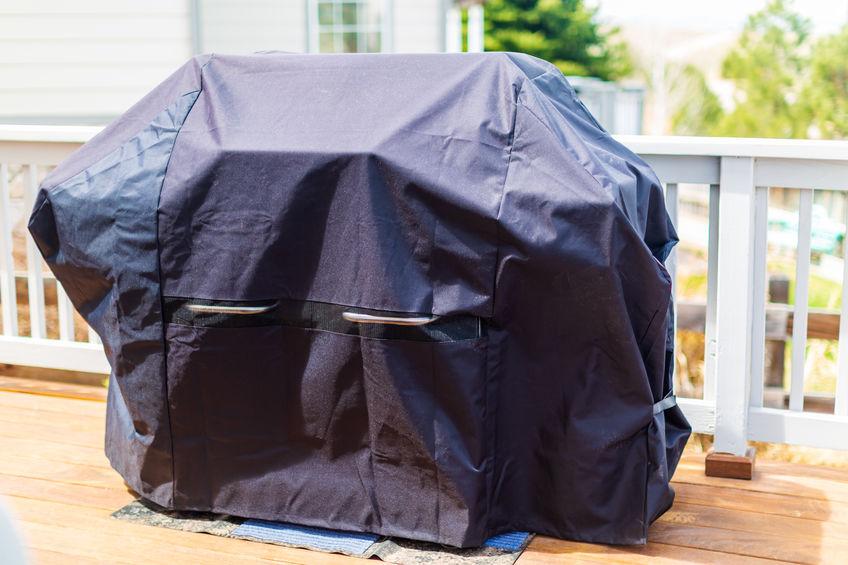
Your grill is a valuable investment, and it deserves proper protection from rain, snow, UV rays, and other harsh outdoor elements.
When it comes to grill covers, material choice plays a key role.
Polyester and vinyl strike a strong balance between weather resistance, durability, and affordability, while canvas delivers exceptional longevity for those willing to invest a bit more upfront.
 Grillman Premium Grill Covers are built to withstand any weather.
Designed to fit most grills, they combine UV resistance, waterproofing, and rip-proof durability—making them a reliable, long-lasting solution for year-round protection.
The right material ultimately depends on several factors: your local climate, how often you use your grill, and the level of protection your specific grill requires.
Some fabrics excel at waterproofing but may lack breathability, while others prioritize UV protection over heavy-duty weather resistance.
By understanding the strengths and trade-offs of each option, grill owners can make the best choice for their needs.
This guide breaks down the most popular materials, evaluates their performance across different conditions, and explores additional features like mold prevention and eco-friendly alternatives
Key Considerations When Choosing Grill Cover Materials
Material selection depends on specific environmental factors, usage patterns, and maintenance preferences.
The right choice balances protection needs with practical considerations like cleaning requirements and budget constraints.
Weather Resistance
Water Protection stands as the most critical factor for grill covers.
Vinyl offers excellent waterproofing but can crack in extreme temperatures.
Polyester provides good water resistance while maintaining flexibility in cold weather.
UV Protection prevents material degradation and color fading.
Polyester excels in UV resistance compared to untreated vinyl.
Canvas offers natural UV protection but requires waterproof coatings.
Wind Resistance requires secure fit and durable construction.
Heavy-duty materials like thick vinyl or reinforced polyester handle strong winds better than lightweight options.
Temperature Extremes affect material flexibility and durability:
- Vinyl becomes brittle below 32°F
- Polyester maintains flexibility in cold conditions
- Canvas handles temperature variations well but may shrink when wet
Durability and Longevity
Material Thickness directly impacts lifespan.
Heavy-duty vinyl (10-12 gauge) lasts 5-7 years with proper care. Standard polyester covers typically last 3-5 years.
Seam Construction determines structural integrity.
Double-stitched seams with reinforced stress points prevent tearing.
Heat-sealed seams on vinyl covers provide superior water resistance.
Reinforcement Areas at tie-down points and corners prevent common failure spots.
Look for materials with:
- Reinforced grommets
- Double-layer construction at stress points
- Reinforced elastic hems
Tear Resistance varies significantly between materials.
Canvas offers excellent tear resistance but weighs more.
Ripstop polyester provides good tear resistance with lighter weight.
Ease of Cleaning and Maintenance
Cleaning Requirements differ substantially between materials.
Vinyl wipes clean easily with soap and water but requires UV protectant treatments.
Polyester handles machine washing but may need air drying.
Stain Resistance affects long-term appearance.
Vinyl resists most stains naturally. Polyester benefits from stain-resistant treatments but may absorb oils and grease.
Storage Considerations impact material choice:
- Vinyl folds compactly but creases permanently
- Polyester folds without permanent creasing
- Canvas requires more storage space due to thickness
Maintenance Frequency varies by material.
Vinyl needs periodic conditioning to prevent cracking. Polyester requires minimal maintenance beyond regular cleaning.
Cost and Value
Initial Investment ranges from $25-150 depending on material and size.
Basic polyester covers start at $25-40. Heavy-duty vinyl covers range $50-100.
Premium canvas covers cost $75-150.
Replacement Frequency affects long-term costs:
- Budget polyester: Replace every 2-3 years
- Heavy-duty vinyl: Replace every 5-7 years
- Premium canvas: Replace every 7-10 years
Protection Value justifies higher upfront costs.
A $100 cover protecting a $1,500 grill provides excellent value compared to potential replacement costs.
Feature Comparison helps determine value:
| Material | Cost | Lifespan | Water Resistance | UV Protection |
|---|---|---|---|---|
| Basic Polyester | $ | 2-3 years | Good | Excellent |
| Heavy Vinyl | $$ | 5-7 years | Excellent | Good |
| Canvas | $$$ | 7-10 years | Good* | Good |
*Requires waterproof coating
What’s the Best Material for an Outdoor Grill Cover?

You can find excellent bbq cover materials today.
Remember to stick to vinyl or plastic (polyester) covers if you want reliable protection from rain, wind, debris, snow, and sunlight.
For an affordable yet incredibly reliable cover, consider this Heavy Duty Waterproof Cover. This cover is made for 55-inch grills but can also suit smaller grills if you don’t mind excess material showing. The straps will keep it secure even if the grill is slightly smaller than the recommended size.
For a charcoal grill, consider this BBQ Grill Cover. It is available for 15, 18, and 30-inch round grills. It is waterproof with a thin latex material that will provide adequate protection in everything except the most extreme weather.
For a real heavy-duty premium option, available for gas grills ranging from 30-inches to 72-inches, the Grillman Premium Grill Cover would be the ideal choice. It is UV resistant, waterproof, and rip-proof, making it one of the most durable options for sale today. This cover is PVC lined to provide insulative qualities without attracting critters.
- For small gas grills. Made from durable and weather-resistant material, this Easy Going Heavy Duty Gas Grill Cover designed to withstand harsh conditions and keep your grill safe from moisture, dirt, and debris. It features a convenient design that makes it easy to put on and take off, ensuring hassle-free usage. The heavy-duty construction ensures long-lasting durability, making it suitable for small gas grills
With the right grill cover, you will keep your favorite cooking appliance protected throughout the year and ready to go any time that you want to prepare a fresh and flavorful meal outdoors.
Overview of Popular Outdoor Grill Cover Materials
The three most common materials for outdoor grill covers are polyester fabric, vinyl, and canvas, each offering distinct advantages for weather protection and durability.
Understanding the specific properties of these materials helps determine which option best suits different outdoor conditions and usage requirements.
Polyester Fabric
Polyester fabric stands out for its balanced performance across multiple protection factors.
This synthetic material provides reliable water resistance while maintaining breathability that prevents moisture buildup underneath the cover.
UV Protection: Polyester offers excellent resistance to sun damage and color fading.
The material maintains its structural integrity even after prolonged exposure to direct sunlight.
Weather Resistance: This fabric handles various weather conditions effectively, including rain, snow, and wind.
Many polyester covers feature additional coatings that enhance water repellency.
Maintenance: Cleaning polyester covers requires minimal effort.
Most dirt and debris wash off easily with soap and water.
The material’s lightweight nature makes it easy to remove and replace during grilling sessions.
Polyester covers typically cost less than premium materials while delivering dependable protection for most outdoor environments.
Vinyl Covers
Vinyl covers provide the highest level of waterproofing among common grill cover materials.
This non-porous material creates a complete barrier against moisture penetration.
Heavy-Duty Protection: Vinyl excels in harsh weather conditions including heavy rain, snow, and ice.
The material resists cracking in cold temperatures when properly formulated.
Durability: High-quality vinyl covers withstand years of outdoor use without significant degradation.
The material resists punctures and tears better than fabric alternatives.
Cleaning: Vinyl surfaces wipe clean easily and resist staining.
The smooth finish prevents dirt accumulation and allows for quick maintenance.
Vinyl covers work best for long-term storage situations or areas with severe weather exposure.
The material’s weight provides secure coverage in windy conditions.
Canvas Options
Canvas offers natural breathability and traditional durability for grill protection.
This woven material allows air circulation while providing substantial weather resistance.
Natural Properties: Canvas breathes naturally, reducing condensation and moisture retention.
This characteristic helps prevent rust formation on metal grill surfaces.
Strength: The woven construction provides excellent tear resistance and structural integrity.
Canvas handles physical stress and impacts better than thinner materials.
Treatment Options: Manufacturers treat canvas with waterproofing compounds to enhance weather protection.
These treatments can be reapplied to maintain effectiveness over time.
Canvas covers typically cost more than polyester but less than premium vinyl options.
The material works well in moderate climates where extreme weather protection isn’t the primary concern.
Advantages and Disadvantages of Each Material

Different grill cover materials offer distinct benefits and drawbacks in terms of water resistance, durability, and maintenance requirements.
Understanding these trade-offs helps grill owners select the most suitable protection for their specific outdoor conditions and budget.
Polyester Pros and Cons
Polyester Benefits:
- Lightweight and easy to handle during installation and removal
- Naturally resistant to UV rays and color fading
- Quick-drying fabric that prevents moisture buildup
- Affordable pricing compared to premium materials
Polyester Drawbacks:
- Limited waterproofing without additional coatings
- Prone to tearing under strong wind conditions
- Requires regular cleaning to maintain appearance
- Less durable than heavy-duty alternatives
Most polyester grill covers feature PVC or polyurethane coatings to enhance water resistance.
These treated versions perform better in wet climates but may crack over time with temperature fluctuations.
The material works best for grills stored in covered patios or areas with minimal direct weather exposure.
Vinyl Pros and Cons
Vinyl Advantages:
- Waterproof protection against rain and snow
- Easy cleaning with soap and water
- Chemical resistance to grease and cooking residue
- Consistent performance across temperature ranges
Vinyl Disadvantages:
- Heavy weight makes handling more difficult
- Susceptible to cracking in extreme cold temperatures
- Can become stiff and less flexible over time
- Higher cost than basic fabric options
Vinyl covers excel in harsh weather conditions where complete moisture protection is essential.
The material maintains its protective qualities for several years with proper care.
Storage becomes more challenging due to vinyl’s bulk and weight compared to fabric alternatives.
Canvas Pros and Cons
Canvas Strengths:
- Breathable fabric prevents condensation and mold growth
- Tear-resistant construction handles wind and physical stress
- Natural appearance complements outdoor aesthetics
- Repairable material allows for patching and maintenance
Canvas Weaknesses:
- Requires waterproof treatment for weather protection
- Heavier than synthetic alternatives when wet
- Takes longer to dry completely after rain exposure
- More expensive than polyester options
Canvas covers need regular reproofing treatments to maintain water resistance.
The natural fibers provide excellent airflow but require more maintenance than synthetic materials.
Duck canvas and marine-grade canvas offer superior durability for long-term outdoor use.
Heavy-Duty Materials for Severe Conditions
When grills face extreme weather conditions like intense UV radiation, heavy snow loads, or constant moisture exposure, specialized materials provide superior protection.
PVC-coated polyester and marine-grade vinyl represent the premium tier of grill cover materials designed for harsh environments.
PVC-Coated Polyester
PVC-coated polyester combines the strength of woven polyester fabric with a waterproof PVC coating.
This dual-layer construction creates exceptional tear resistance while maintaining flexibility in cold temperatures.
The polyester base provides structural integrity and prevents stretching under wind loads.
The PVC coating forms a completely waterproof barrier that resists UV degradation and chemical exposure.
Key Performance Features:
- Tensile strength: 300-500 pounds per square inch
- Temperature range: -40°F to 180°F without cracking
- UV resistance: 1,000+ hour fade resistance rating
This material performs well in coastal environments where salt air and high winds create challenging conditions.
The smooth PVC surface sheds snow and ice effectively, preventing dangerous weight accumulation.
PVC-coated polyester typically weighs 12-16 ounces per square yard, making it substantially heavier than standard grill covers.
The additional weight provides stability during storms while the reinforced construction prevents punctures from debris.
Marine-Grade Vinyl
Marine-grade vinyl represents the most durable option for extreme outdoor conditions.
This material undergoes specialized treatments to withstand constant moisture, salt exposure, and intense UV radiation that would destroy conventional fabrics.
The vinyl construction creates a completely non-porous surface that prevents water penetration and mold growth.
Marine-grade specifications require enhanced UV stabilizers that maintain color and flexibility for years.
Durability Specifications:
- Thickness: 18-22 mil (standard vinyl is 8-12 mil)
- UV protection: 2,000+ hour testing without degradation
- Mildew resistance: Built-in antimicrobial treatments
This material excels in humid climates and areas with frequent precipitation.
The heavy-duty construction resists punctures from sharp objects and maintains its protective properties through multiple seasons.
Marine-grade vinyl requires minimal maintenance beyond occasional cleaning.
Its chemical resistance prevents staining from grease, tree sap, and other outdoor contaminants that permanently damage lighter materials.
Breathability and Mold Prevention Features
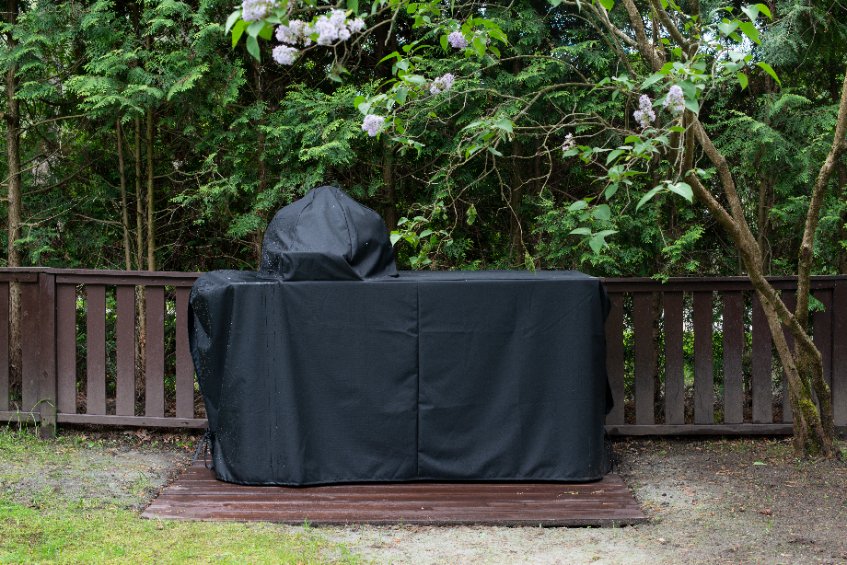
Proper airflow prevents moisture buildup that leads to mold, mildew, and corrosion on grills.
Advanced fabric treatments and ventilation systems work together to maintain dry conditions under the cover.
Vented Grill Covers
Vented covers feature strategically placed mesh panels or air vents that allow continuous airflow while blocking rain and debris.
These openings typically measure 2-4 inches and position along the bottom hem or sides.
Key ventilation features include:
- Bottom hem vents – Allow warm air to escape upward
- Side panel mesh – Enable cross-ventilation
- Adjustable vent flaps – Control airflow based on weather conditions
The mesh material is usually made from coated polyester or nylon that resists tearing and UV damage.
Covers with dual-layer ventilation combine waterproof outer fabric with breathable inner mesh.
Vented designs reduce condensation by up to 80% compared to solid covers.
The constant air circulation prevents temperature buildup that creates moisture when warm air meets cooler surfaces.
Antimicrobial Fabric Treatments
Antimicrobial treatments inhibit bacterial and fungal growth directly within the fabric fibers.
These chemical coatings remain active for 2-3 years with proper care.
Common antimicrobial agents include:
- Silver ion technology – Prevents bacterial reproduction
- Zinc pyrithione – Fights mold and mildew spores
- Quaternary ammonium compounds – Broad-spectrum antimicrobial protection
The treatments bond permanently to fabric during manufacturing rather than being applied as surface coatings.
This prevents washing away during rain or cleaning.
Antimicrobial fabrics work best when combined with breathable construction.
The treatment handles any moisture that does accumulate while ventilation minimizes overall humidity levels.
Treatment effectiveness varies by manufacturer, with premium options maintaining antimicrobial properties for 500+ wash cycles or 3 years of outdoor exposure.
UV Protection and Fade Resistance
Ultraviolet radiation poses the greatest threat to grill cover longevity, causing material degradation and color fading within a single season.
Quality UV-treated materials and proper color formulations determine whether a cover maintains its protective properties and appearance over years of sun exposure.
UV-Treated Materials
Polyester fabrics with UV inhibitors offer the most reliable protection against solar radiation.
These treatments penetrate the fiber structure during manufacturing, creating a barrier that absorbs harmful UV rays before they reach the base material.
Solution-dyed acrylic provides superior fade resistance compared to piece-dyed alternatives.
The color integration occurs at the fiber level, making it virtually impossible for UV rays to break down the pigment structure.
Vinyl covers require specific UV stabilizers to prevent cracking and brittleness.
High-quality marine-grade vinyl contains titanium dioxide and other compounds that reflect UV radiation away from the material surface.
Most manufacturers rate UV protection using UPF (Ultraviolet Protection Factor) measurements.
Covers with UPF 50+ ratings block 98% of UV radiation, while UPF 30 materials block approximately 97%.
Industrial-strength fabrics often sacrifice UV protection for waterproofing.
These covers protect the grill mechanism but may fade significantly when exposed to direct sunlight for extended periods.
Color Retention Performance
Darker colors typically fade faster than lighter alternatives due to higher heat absorption and UV interaction.
Black and navy covers may show noticeable fading within 6-12 months of consistent sun exposure.
Earth tones like tan, beige, and brown demonstrate superior color stability in outdoor environments.
These colors contain pigments that naturally resist UV breakdown while maintaining aesthetic appeal over multiple seasons.
Color-fast testing standards measure fade resistance under accelerated weathering conditions.
Covers meeting AATCC Test Method 16 standards maintain color integrity for 1,000+ hours of simulated sun exposure.
Proper color formulation involves using UV-stable pigments and dyes specifically designed for outdoor applications.
Cheap covers often use standard textile dyes that break down rapidly under solar radiation.
The fabric weave density also affects color retention.
Tighter weaves prevent UV penetration deeper into the material structure, preserving color integrity at the fiber level.
Natural Fiber Options
Canvas covers made from organic cotton provide breathable protection.
These covers allow air circulation while blocking moisture and debris from reaching the grill surface.
Hemp-blend fabrics offer natural durability and resistance to mold and mildew.
Hemp grows quickly with minimal water requirements, making it an environmentally sustainable choice.
Bamboo fiber covers combine sustainability with performance.
Bamboo regenerates rapidly without replanting and produces naturally antimicrobial fabric that resists odors.
Natural fiber advantages:
- Biodegradable at end of life
- Renewable resource materials
- Breathable fabric construction
- Chemical-free production options
Waxed cotton covers provide water resistance without synthetic coatings.
The natural wax treatment can be reapplied to maintain water-repelling properties over time.
Most natural fiber covers require more maintenance than synthetic alternatives.
Regular cleaning and occasional retreatment help preserve their protective qualities and extend lifespan.
Customization and Fit for Different Grill Types
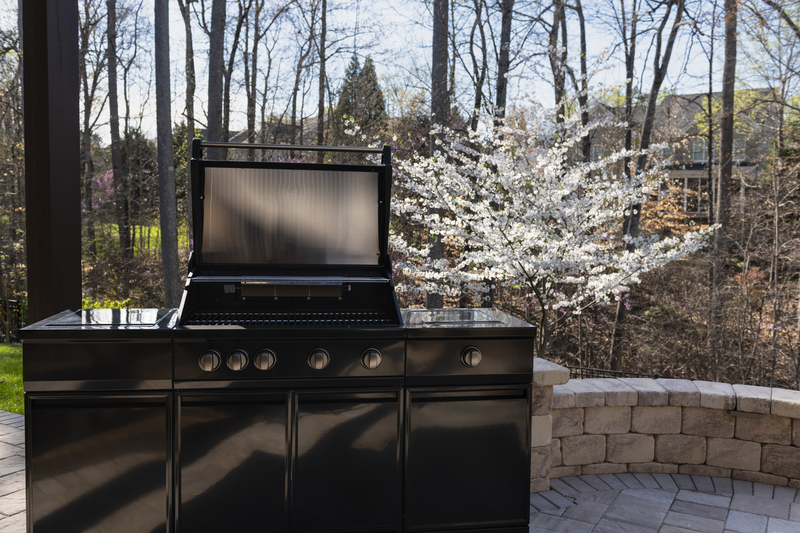
Grill covers require precise sizing to provide adequate protection against weather elements.
Manufacturers offer both custom-fitted options for specific grill models and universal designs that accommodate multiple grill sizes and shapes.
Custom-Sized Covers
Custom-sized covers provide the most precise fit for specific grill models.
These covers are designed to match exact dimensions and contours of particular brands and models.
Brand-specific covers typically include features like cutouts for handles, side burners, and control knobs.
Weber, Char-Broil, and Traeger offer covers engineered specifically for their grill lines.
The tight fit prevents wind uplift and reduces moisture infiltration.
Custom covers eliminate excess material that can collect water or create flapping in windy conditions.
Measuring requirements include grill width, depth, and height with the lid closed.
Additional measurements cover handle protrusion, side shelves, and any attached components like temperature gauges or warming racks.
Premium custom covers often include reinforced stress points and specialized closures.
These features target common wear areas specific to each grill design.
Universal Fits
Universal covers accommodate multiple grill sizes within specified dimension ranges.
These covers typically come in small, medium, large, and extra-large categories.
Size ranges for universal covers generally span 3-4 inches in each dimension.
A medium universal cover might fit grills measuring 52-58 inches wide and 24-26 inches deep.
Adjustable features include elastic hems, drawstrings, and buckle straps.
These components allow users to tighten the cover around different grill shapes and sizes.
Compatibility considerations include grill type differences between gas, charcoal, and pellet models.
Gas grills with side burners require wider covers than standard charcoal kettle grills.
Universal covers cost less than custom options but may not provide optimal protection.
The looser fit can allow moisture entry and create areas where debris accumulates.
Factors Affecting Material Lifespan Outdoors
UV radiation poses the greatest threat to grill cover materials.
Extended sun exposure breaks down polymer chains in plastics and fades fabric colors.
Temperature fluctuations cause materials to expand and contract repeatedly.
This cycle weakens fibers and creates stress points that lead to cracking.
Moisture exposure from rain, snow, and humidity affects different materials uniquely.
Water can cause metal components to rust and fabric to develop mold.
Wind stress constantly flexes grill covers against their anchor points.
Strong gusts create tension that can tear seams and stretch materials beyond their limits.
Chemical exposure from air pollution and cleaning products degrades cover materials over time.
Salt air near coastal areas accelerates this deterioration process.
| Environmental Factor | Primary Impact |
|---|---|
| UV Radiation | Color fading, polymer breakdown |
| Temperature Changes | Expansion/contraction stress |
| Moisture | Rust, mold, fabric degradation |
| Wind | Seam stress, material stretching |
| Chemicals | Accelerated breakdown |
Material quality determines initial resistance to these factors.
Higher-grade materials contain UV stabilizers and weather-resistant additives.
Thickness and weave density in fabrics affect durability significantly.
Thicker materials generally withstand outdoor stresses longer than thin alternatives.
Proper installation reduces stress from wind and improper fitting.
Covers that fit correctly experience less strain during weather events.
Maintenance frequency directly impacts lifespan regardless of material choice.
Regular cleaning removes harmful contaminants that accelerate degradation.
Conclusion
The best grill cover material depends on specific environmental conditions and usage requirements.
Vinyl stands out for maximum durability and water resistance in harsh climates.
Polyester offers balanced protection with good UV resistance at moderate price points.
Heavy-duty polypropylene provides excellent weather resistance for most outdoor conditions.
Consider these key factors when selecting material:
• Climate conditions – wet regions need superior water resistance • Sun exposure – UV-stabilized materials prevent degradation
• Grill dimensions – custom sizing ensures proper fit • Budget constraints – material costs vary significantly
Hard shell covers made from vinyl or plastic deliver the strongest protection for long-term storage and extreme weather exposure.
Fabric covers work well for regular use in moderate climates while remaining lightweight and easy to handle.
The material choice should match the grill’s environment and protection needs.
Grills in coastal areas require materials that resist salt corrosion and moisture.
Indoor storage allows for lighter materials, while year-round outdoor exposure demands heavy-duty options with reinforced construction.
Proper fit matters more than material selection.
A well-fitted cover in moderate material outperforms a loose cover made from premium materials.
Custom-sized covers provide optimal protection regardless of material choice.
Standard sizes may leave gaps that allow moisture and debris to reach the grill surface.