
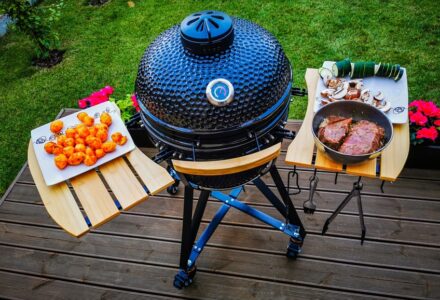
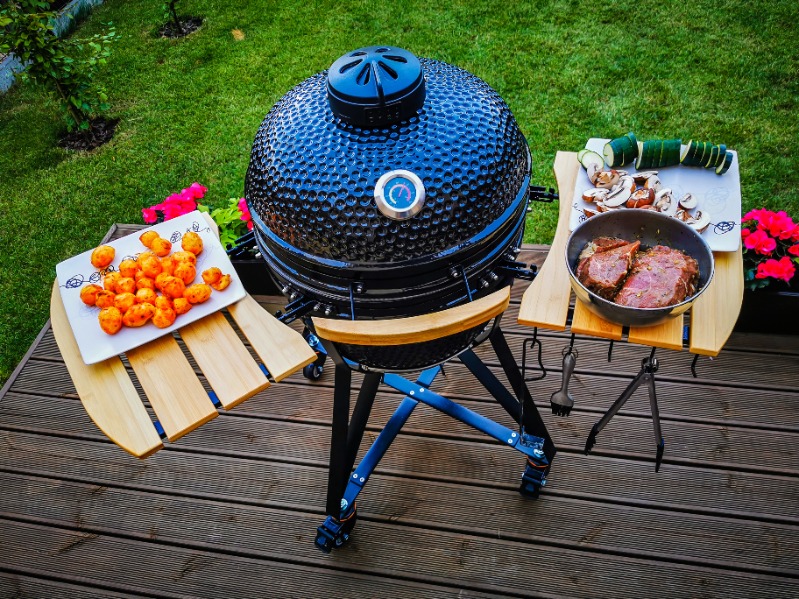
 Kamado grills offer superior heat retention, temperature control, and cooking versatility that makes them stand out from traditional gas and charcoal grills.
These egg-shaped ceramic cookers can reach temperatures over 700 degrees for perfect searing or maintain low temperatures around 225 degrees for hours of smoking.
The thick ceramic walls trap heat and moisture better than metal grills, creating juicier results.
Many grill enthusiasts wonder if kamado grills live up to their reputation.
The ceramic construction allows these grills to work as smokers, ovens, and traditional grills all in one unit.
They use less charcoal than regular grills and can maintain steady temperatures with minimal adjustments.
Understanding what makes kamado grills special helps explain why they cost more upfront but often save money over time.
From their ancient origins to modern improvements, these grills offer features that change how people cook outdoors.
The key lies in knowing how temperature control, durability, and cooking methods compare to other grill types.
What Exactly Is a Kamado Grill?
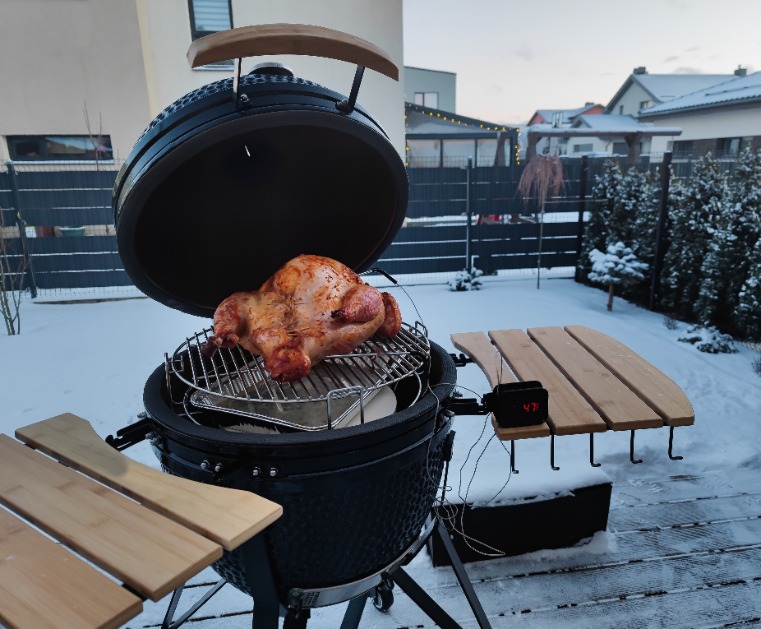
A kamado grill is an egg-shaped ceramic charcoal grill that originated thousands of years ago in Asia.
These grills use thick ceramic walls to create superior heat retention and temperature control compared to traditional metal grills.
History and Evolution of Kamado Grills
The word “kamado” means “stove” in Japanese.
These grills started in China over 3,000 years ago as simple clay cooking pots.
Between 300 and 500 A.D., the design became popular in Japan.
The Japanese created the “mushikamado,” which was mainly used as a portable rice cooker.
American soldiers discovered these grills during World War II while stationed in Japan.
They brought the idea back to America after the war.
The Big Green Egg became the first major American kamado manufacturer in the 1970s.
This company helped make kamado grills popular across the United States.
Modern kamado grills have evolved far beyond their rice-cooking origins.
Today’s versions can grill, smoke, bake, and roast food at temperatures from 200 to 800 degrees Fahrenheit.
Ceramic Construction and Design
Kamado grills feature thick ceramic walls that make them different from other grills.
The ceramic body acts as excellent insulation and reflects heat back toward the food.
This ceramic construction allows kamado grills to reach much higher temperatures than metal grills.
The material also holds steady temperatures for up to 12 hours without adding more fuel.
Most modern kamado grills have an egg shape with a large domed lid.
They use a system of top and bottom vents to control airflow and temperature.
The ceramic body won’t rust or corrode when left outside.
A high-gloss glaze covers most kamado grills to protect them from weather and give them a shiny appearance.
These grills burn lump charcoal, which is natural wood with moisture and chemicals removed.
The ceramic walls need less charcoal to maintain high heat than metal grills.
Popular Brands: Kamado Joe and Primo Grill
Kamado Joe has become a major competitor by including more accessories with their grills.
Their Classic and Big Joe models come with stands, side shelves, and heat deflectors included in the base price.
 The Kamado Joe Big Joe Series III 24-inch Ceramic Charcoal Grill and Smoker (Model KJ15041021) is a premium kamado designed for serious outdoor cooking.
It offers 450 square inches of cooking space along with the 3-tier Divide & Conquer system and the SlōRoller Hyperbolic Insert, which enhances heat and smoke circulation for more consistent results.
Built for both performance and convenience, it includes a heavy-duty cart with locking caster wheels, a Kontrol Tower top vent for precise airflow, and an Air Lift Hinge that makes lifting the dome effortless.
With its versatility and durability, the Big Joe Series III is an excellent choice for anyone who wants a high-capacity kamado grill that excels at smoking, roasting, and searing.
Primo Grill offers oval-shaped kamado grills instead of the traditional round design.
This shape provides more cooking space and allows users to create different temperature zones on the same grill.
 The Primo All-in-One Large Round Ceramic Kamado Grill with Cradle & Side Shelves (PGCRC, 2021) is a durable and versatile cooker for backyard chefs.
Made from premium-grade ceramic with a porcelain glaze, it offers excellent heat retention and a sleek, scratch-resistant finish.
Its “all-in-one” setup includes a sturdy cradle with locking caster wheels, side shelves, a grate lifter, and an ash tool—so it’s ready to use right away.
With 280 square inches of cooking space, reversible porcelain-coated grids, and precise airflow control, the Primo PGCRC delivers consistent results for smoking, roasting, and searing.
The two brands use ceramic construction with lifetime warranties.
They each offer various sizes to fit different cooking needs and backyard spaces.
These manufacturers also sell specialized accessories like pizza stones, rotisserie attachments, and multi-level cooking grates.
The accessories help expand what users can cook on their kamado grills.
Why Kamado Grills Stand Out
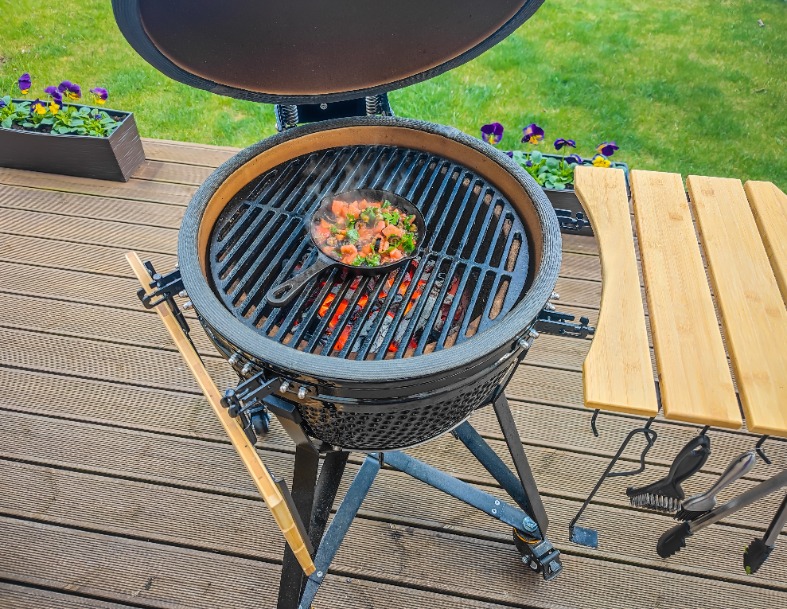
Kamado grills offer unique advantages that set them apart from standard charcoal grills.
Their ceramic construction provides superior heat retention and even cooking temperatures, while their design allows for multiple cooking methods from searing to smoking.
Heat Retention and Distribution
The thick ceramic walls of kamado grills create excellent insulation that keeps heat inside for hours.
This design allows the grill to maintain steady temperatures with minimal fuel consumption.
Heat distribution works differently than in regular charcoal grills.
The dome shape reflects heat evenly around the food.
The ceramic material heats up slowly and releases heat gradually.
Temperature capabilities include:
- Low temperatures around 225°F for smoking
- Medium heat for roasting and baking
- High heat up to 700°F for searing
The fire sits at the bottom and heats the ceramic walls uniformly.
Heat then circulates around the food before escaping through the top vent.
This creates an oven-like environment inside the grill.
The thick walls prevent heat from escaping quickly.
Users can cook for long periods without adding more charcoal.
Temperature stays consistent throughout the cooking process.
Versatile Cooking Methods
Kamado grills handle multiple cooking techniques in one device.
The same grill can smoke brisket, sear steaks, bake pizza, and roast chicken.
Direct cooking places food directly over the coals.
This method works for steaks, burgers, and vegetables that cook quickly at high heat.
Indirect cooking uses a heat deflector to create an oven environment.
This technique suits larger cuts of meat, whole chickens, and baked goods.
Users can add accessories to expand cooking options.
Heat deflectors turn the grill into a convection oven.
Pizza stones create crispy crusts.
Multi-level cooking grates allow different foods to cook at once.
The adjustable vents control airflow and temperature.
Opening vents increases heat for searing.
Closing vents reduces heat for slow cooking.
Fuel Efficiency and Lump Charcoal
Kamado grills use less fuel than traditional charcoal grills.
The ceramic walls hold heat so well that a small amount of charcoal burns for hours.
Lump charcoal works best in kamado grills.
It burns cleaner than briquettes and produces less ash.
Lump charcoal also reaches higher temperatures and adds natural wood flavors.
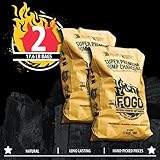 FOGO Super Premium Hardwood Lump Charcoal is made from 100% natural hardwood and features large, hand-selected pieces that light quickly and burn hot with minimal ash.
It delivers a clean, consistent fire with a mild smoky flavor, making it ideal for both grilling and smoking.
Thanks to its long burn time and high heat, this charcoal is especially well suited for kamado grills.
The efficient design means one load of charcoal can last 8-12 hours for low-temperature cooking.
High-heat cooking uses more fuel but still requires less than standard grills.
Adjustable dampers control how fast the charcoal burns.
Closing the vents slows the burn rate and extends cooking time.
Opening them increases airflow and raises temperature.
The tight seal prevents oxygen from entering when vents close.
This feature can extinguish the fire completely, saving leftover charcoal for the next cooking session.