Cooking meat to the right temperature is essential for both safety and flavor.
Many cooks wonder if it’s safe or effective to leave a meat thermometer in the meat while it cooks.
The direct answer is yes, but only if the thermometer is specifically designed to be oven-safe or suitable for grilling.
Using a thermometer that can remain inside the meat during cooking allows for continuous temperature monitoring without repeatedly opening the oven or grill.
This practice helps maintain accurate readings and preserves the meat’s juiciness by minimizing heat loss.
Choosing the right type of thermometer is crucial.
Not all thermometers can withstand the cooking environment, so understanding the tools and how to use them properly makes a significant difference in achieving perfectly cooked meat.
Can You Leave a Meat Thermometer in the Meat While It’s Cooking?
Leaving a thermometer in meat during cooking is possible but depends on the thermometer type and cooking method.
Understanding how oven-safe thermometers function, how they differ from instant-read models, and which cooking scenarios suit in-place thermometers helps determine the best use.
How Oven-Safe Meat Thermometers Work
Oven-safe thermometers are designed to withstand high heat for extended periods.
They typically feature a metal probe that remains in the meat throughout cooking and a heat-resistant cable or wireless transmitter connected to an external display.
This setup allows continuous temperature monitoring without opening the oven or grill.
The probe measures the meat’s internal temperature directly, giving accurate real-time readings.
Materials like stainless steel and heat-resistant plastics prevent damage or melting during cooking.
These thermometers are ideal for long cooking processes like roasts, smoked briskets, or whole poultry.
Comparison With Instant-Read Thermometers
Instant-read thermometers are handheld devices used to quickly check temperature and are not designed to stay in the meat during cooking.
They must be inserted, read, and removed repeatedly, which can let heat and juices escape, affecting cooking time and moisture retention.
Unlike oven-safe thermometers, instant-read models usually contain delicate electronics that can be damaged if exposed to high temperatures for long periods.
They are better suited for quick checks near the end of cooking rather than continuous monitoring.
Types of Cooking Methods Suitable for In-Place Thermometers
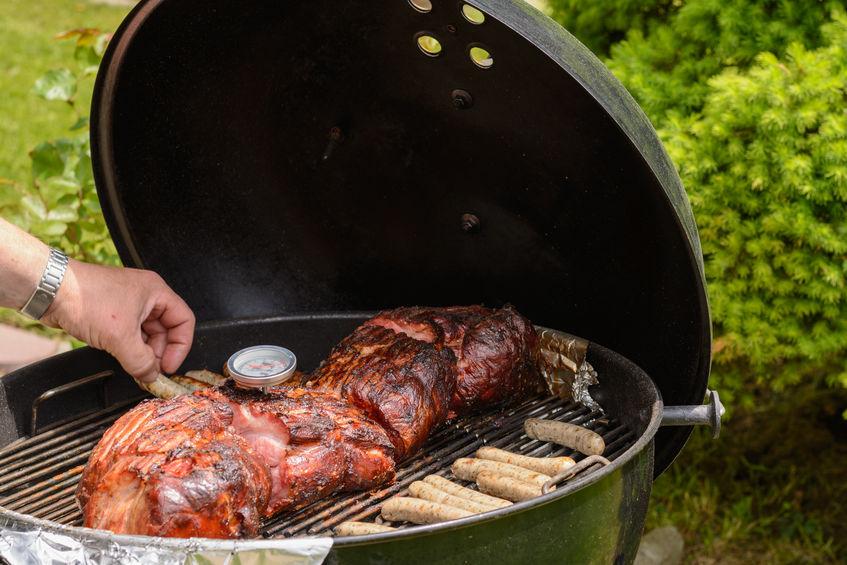
In-place thermometers work best with slow, steady cooking methods like roasting, smoking, or baking.
These methods allow the probe to stay inserted safely without frequent handling or movement.
High-heat grilling or frying is generally unsuitable because direct exposure to flames or hot surfaces can damage the thermometer.
For grilling, wireless or grill-safe probes designed specifically for those conditions should be used.
Combining the right thermometer with the proper cooking style ensures accurate temperature readings and better results.
Benefits of Leaving a Meat Thermometer in the Meat

Leaving a meat thermometer in the meat during cooking offers precise real-time data and helps control the cooking process more effectively.
It supports monitoring internal temperature steadily, enhances safety by reducing undercooking risks, and guides achieving exact preferred doneness.
Consistent Temperature Monitoring
Leaving a thermometer in the meat allows continuous tracking of the internal temperature without opening the oven or grill repeatedly.
This steady monitoring helps maintain a stable cooking environment by minimizing heat loss, which happens each time the cooking chamber is opened.
A probe thermometer with the display outside the oven enables cooks to see temperature changes instantly.
This reduces guessing and prevents overcooking or undercooking, as adjustments can be made based on accurate, real-time data rather than intermittent checks.
Improved Food Safety
Consistent temperature measurement is crucial for food safety to ensure the meat reaches temperatures that kill harmful bacteria.
Leaving a thermometer in place helps confirm the interior surpasses safe minimums specified by health guidelines.
It also eliminates the risk of missing unsafe temperature zones due to sporadic measurements.
When a thermometer remains in the meat, the entire cooking process can be monitored thoroughly, reducing the chances of foodborne illness caused by undercooked meat.
Achieving the Desired Doneness
Leaving the thermometer in the meat supports precision in achieving a specific level of doneness, whether rare, medium, or well-done.
It provides continuous feedback, so the cook knows the exact moment the meat hits the target temperature.
This accuracy helps avoid overcooked meat, which can become dry, and undercooked meat, which may be unsafe or unpalatable.
The ability to monitor the temperature throughout cooking also allows for better timing when resting the meat, ensuring juices are retained.
Potential Risks and Limitations
Leaving a meat thermometer in the meat while cooking comes with certain drawbacks.
These include challenges in maintaining accurate readings, concerns about the thermometer’s material durability, and the possibility of affecting the meat or the device itself.
Accuracy Concerns
Accuracy can be compromised if the thermometer is not positioned correctly.
If the probe touches bone or fat, the temperature reading will not reflect the true internal temperature of the meat’s thickest part.
This can lead to undercooked or overcooked results.
Continuous readings may lag behind the actual temperature in fast-cooking situations or when the probe is near a heat source.
It is crucial to place the thermometer deep into the muscle to avoid false readings.
Some cheaper thermometers may have slower response times or inconsistent calibrations, further affecting accuracy during the cooking process.
Material Safety and Heat Resistance
Only thermometers explicitly labeled as oven-safe should be left in the meat during cooking.
Materials like plastic or electronic components not designed for high heat may melt, warp, or become damaged.
Metal probes made of stainless steel are generally safe under typical cooking temperatures.
Thermometers with digital displays usually position the electronics outside the oven to prevent heat damage.
Following manufacturer guidelines is essential to avoid damaging the thermometer or creating safety hazards in the oven.
Damage to Meat or Thermometer
Inserting a thermometer can create a small hole that may cause juices to escape, which can dry out the meat slightly, especially with delicate cuts.
Constant movement or bumping of the probe during cooking can also tear the meat’s surface.
Leaving a thermometer in improperly may cause it to break or malfunction, potentially contaminating the meat with fragments from the probe or electronics.
Choosing a high-quality, properly designed leave-in thermometer minimizes these risks while maintaining food safety and cooking precision.
Choosing the Right Meat Thermometer

Selecting a meat thermometer involves understanding key design features and how they impact cooking.
Important factors include the thermometer’s heat resistance and whether it can safely remain in the meat during cooking.
Additionally, the choice between digital and analog models affects accuracy, ease of use, and monitoring options.
Oven-Safe vs. Leave-In Models
Oven-safe thermometers can withstand high temperatures, typically 400°F or more, making them suitable to stay in the meat while cooking.
These models often have metal probes designed for extended heat exposure without damage or safety risks.
Leave-in thermometers are specifically made for continuous temperature monitoring throughout the cooking process.
They usually feature heat-resistant probes and sometimes come with external displays or wireless connections to provide real-time readings without opening the oven or grill.
Some thermometers are oven-safe but not designed for long periods inside thicker cuts, which can cause inaccurate readings or probe damage.
It is essential to confirm manufacturer specifications to ensure the thermometer is made for leave-in use during cooking.
Digital vs. Analog Options
Digital thermometers provide fast and precise readings and often include features like preset temperature alerts and easy-to-read displays.
Many digital leave-in models have cordless probes that send real-time data to a handheld or smartphone receiver.
Analog thermometers operate without batteries and typically use a dial to display temperature.
These models may be oven-safe but usually are not designed for leave-in use during cooking, as their components can degrade under prolonged heat exposure.
For cooks requiring continuous monitoring, digital thermometers offer more convenience and accuracy.
However, analog thermometers can suffice for quick temperature checks and are valued for their simplicity and durability in certain cooking situations.
 The Measureman Thermometer is a durable, adjustable back-mount thermometer with a 3″ dial and 6″ brass stem, designed for homebrewing setups.
It offers a temperature range of 32–140°F (0–60°C) with 2% accuracy, making it reliable for monitoring brewing conditions.
Wired thermometers are the traditional choice.
They’re affordable, reliable, and get the job done without adding much complexity.
If you don’t mind a probe connected by a cable, they’re a solid pick for everyday grilling and roasting.
Wireless thermometers, on the other hand, bring more convenience.
With no cable attached, you can monitor your food from a distance—usually through a smartphone app.
They tend to cost more, but the smart features make cooking easier and more flexible.
 The Professional is built for speed and accuracy, delivering instant temperature readings in just 0.5 seconds.
It’s NIST certified with an accuracy of ±0.5°F, ensuring precision for professional or home cooking.
The 100% waterproof probe makes it safe for grilling, BBQs, and even candy-making without worry.
Its auto-rotate bright display adjusts for easy reading at any angle.
With a durable red-and-gray design, it combines reliability with style.
Perfect for chefs and food enthusiasts who demand fast, accurate, and versatile temperature control.
 If you’re willing to spend more for convenience, the Meater is a standout.
This probe is truly wireless and connects directly to your smartphone.
The app doesn’t just show temperature—it also estimates cooking times based on your chosen ingredients.
Plus, it measures both the internal temperature of your meat and the ambient temperature of your grill, making it versatile for different cooking methods.
If you’re looking for reliability on a budget, the Professional is hard to beat.
But if you want the freedom of monitoring your cook from anywhere and enjoy smart features, the Meater is worth the investment.
Usage Tips for In-Place Meat Thermometers
Using a meat thermometer correctly while it remains in the meat ensures accurate temperature readings and helps avoid undercooking or overcooking.
Proper insertion and correct placement depending on the type of meat are essential for reliable results.
Proper Insertion Techniques
The thermometer probe should be inserted into the thickest part of the meat, avoiding bone, fat, or gristle.
Contact with those elements can cause inaccurate readings.
The probe must penetrate deep enough to reach the center but not pass out the other side.
To prevent juice loss and maintain accurate monitoring, once inserted, the thermometer should stay in place throughout cooking.
Avoid repeatedly removing the probe, which can release moisture and alter internal temperatures.
The probe’s angle should be steady and secure to avoid shifting during cooking, which could disrupt the temperature tracking.
For oven or grill-safe thermometers, ensure the cable or wireless receiver is positioned to withstand heat without damage.
Placement in Different Types of Meat
For whole cuts like roasts or large poultry, insert the thermometer into the thickest muscle mass, usually the center.
For poultry, avoid touching bone near the thigh or breast.
The thermometer should reach the innermost part to capture the true core temperature.
In thinner cuts like steaks or chops, insert the probe into the side to the midpoint, guaranteeing it doesn’t pierce through.
Steaks require careful placement since heat distributes rapidly–accurate positioning prevents premature removal or overcooking.
When dealing with ground meat or meatloaf, the probe should be placed vertically into the center.
Since these cook quickly, leaving the thermometer in helps watch for rapid temperature changes and food safety thresholds.
Care and Maintenance of Meat Thermometers
 Proper upkeep extends the life of meat thermometers and ensures accurate temperature readings.
Attention to cleaning and regular calibration helps maintain food safety and reliable performance.
Cleaning Guidelines
Meat thermometers must be cleaned thoroughly after each use to prevent cross-contamination.
The probe should be washed with warm, soapy water immediately after removing it from the meat.
Avoid immersing digital or electronic parts in water. Instead, wipe those areas carefully with a damp cloth.
For extra sanitation, the probe can be wiped down with a food-safe sanitizer.
If using an oven-safe thermometer that stays in the meat during cooking, clean before and after cooking.
Proper drying is essential to prevent rust or damage.
Calibration and Testing for Accuracy
Regular calibration guarantees that the thermometer provides correct readings.
Most digital thermometers allow recalibration through simple steps outlined in the user manual.
Perform a quick accuracy check using the ice-water method: immerse the probe in a glass of crushed ice and water.
The ideal reading should be 32°F (0°C).
If the thermometer does not read accurately during this test, it needs recalibration or replacement.
Testing calibration at least once a month or before important cooking tasks is advised.
Common Mistakes to Avoid
One common mistake is using a meat thermometer that is not heat resistant or oven-safe.
Some thermometers are designed only for instant readings and cannot withstand prolonged exposure to high temperatures.
Using the wrong type can damage the device and cause inaccurate readings.
Another error is placing the thermometer probe too close to the bone or fat.
Bones conduct heat differently, and fat has a lower temperature, which can mislead the cook about the meat’s true internal temperature.
The probe should be inserted into the thickest, meatiest part.
Repeatedly inserting and removing the thermometer can cause juices to escape, leading to drier meat.
Leaving an appropriate probe in place avoids this issue and offers continuous temperature monitoring.
However, not all thermometers are meant to stay in during cooking, so it’s important to confirm compatibility first.
Failing to account for carryover cooking is a frequent oversight.
Meat continues to cook after being removed from heat, causing the internal temperature to rise.
Removing the meat a few degrees before the target temperature prevents overcooking.
Finally, improper calibration or neglecting to check the thermometer’s accuracy is another mistake.
Regularly testing the thermometer in boiling water or ice water ensures reliable temperature readings during cooking.
Key mistakes to avoid:
- Using non-oven-safe thermometers
- Inserting the probe near bone or fat
- Frequently removing the probe during cooking
- Ignoring carryover cooking temperature rise
- Neglecting thermometer calibration
Bottom Line – Can You Leave a Meat Thermometer in the Meat While It’s Cooking?

Whether to leave a meat thermometer in the meat while cooking depends primarily on the type of thermometer and the cooking method.
Oven-safe probe thermometers and digital models designed for continuous use are suitable for being left in the meat throughout cooking.
Leaving the thermometer in allows for consistent, real-time temperature monitoring.
This helps maintain accuracy and prevents repeatedly piercing the meat, which can cause loss of juices and inconsistent readings.
It is important to use a thermometer rated for the cooking environment.
Standard instant-read thermometers should only be inserted intermittently.
Using a heat-resistant, oven-safe thermometer probe ensures safety and durability.
Key points to consider:
- Use an oven- or grill-safe thermometer for prolonged use.
- Place the thermometer in the thickest part of the meat.
- Avoid leaving non-heat-resistant thermometers in the cooking chamber.
- Monitor the temperature externally if the thermometer has a wired or wireless display.
Following these guidelines helps achieve evenly cooked, safe, and flavorful meat with minimal guesswork.
Proper thermometer use supports both food safety and quality.