 Charcoal grilling gets a reputation for being slow, but finding a better quicker way of grilling with charcoal comes down to eliminating wasted effort. Using effective charcoal grilling techniques saves time, while understanding how to use a charcoal grill properly keeps dinner on schedule.
The fastest path to dinner is to load a chimney starter with lump charcoal, set up a two-zone fire, and prep the food before lighting the coals. This sequence cuts wasted time without forcing you to cook food over dangerously hot coals just to save a few minutes.
A kettle grill set up this way can have coals ready in roughly 15 to 20 minutes, with dinner on the table within an hour, depending on what you’re cooking. You don’t need lighter fluid, a gas assist, or constant fire tending. The key is knowing what to do while the coals heat, not just how to light them.
What Should You Prepare Before Lighting the Grill?
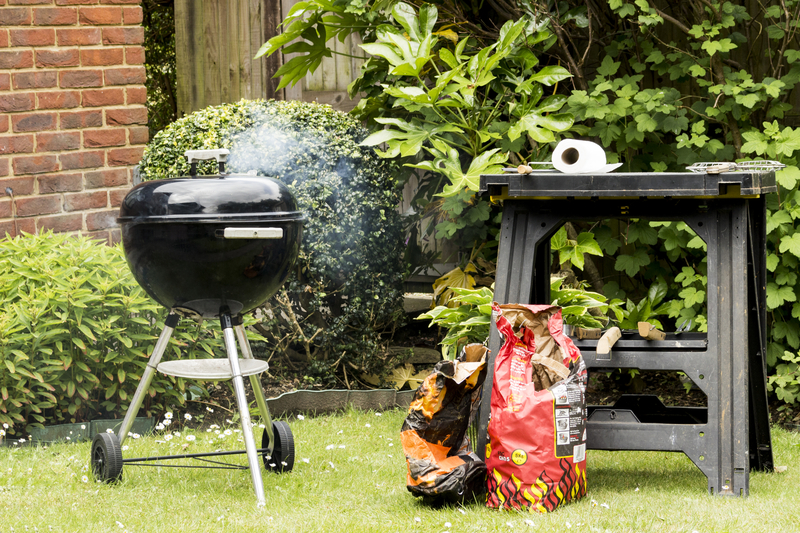 Learning how to use a charcoal grill efficiently starts with preparation before you strike a match. Whether you’re using a basic grill or a Weber kettle grill, preparation matters because you can’t adjust heat with a simple dial once the fire starts.
Choose your fuel, fill your charcoal chimney, gather your tools, and prep the food first so the cook moves smoothly.
Which Charcoal Fits a Quick Cook?
Lump charcoal is a good choice when speed matters. It typically lights faster and burns hotter than briquettes, reaching cooking temperature in about 15 to 20 minutes in a chimney starter.
Standard charcoal briquettes still have their place. Many cooks choose charcoal briquettes because their uniform shape provides steady, predictable heat. They burn consistently over a long period, making them suitable for low and slow cooking where endurance matters more than speed.
For a weeknight cook, lump charcoal’s quick ignition and high heat can save time.
Which Tools Save Time Without Sacrificing Safety?
A small, reliable set of tools keeps you from running back to the kitchen mid-cook.
Lay these out next to the grill before lighting the coals:
- Chimney starter
- Long-handled tongs (16 inches or more)
- Heat-resistant gloves
- Instant-read meat thermometer
- Grill thermometer or a reliable lid gauge
- Grill brush or a wood grill scraper
A probe-style grill thermometer helps you track ambient chamber heat without constantly opening the lid. Pair it with an instant-read meat thermometer for fast internal doneness checks.
Heat-resistant gloves rated for high temperatures are essential for handling a hot chimney or adjusting coals safely.
How Do You Prepare the Grill and Food While the Coals Heat?
Use the 15 to 20 minutes it takes the chimney to heat the coals to prepare everything else. Pat the meat dry, season it, and let it sit at room temperature while the coals catch. Trim excess fat that could cause flare-ups, and cut vegetables into portions that will cook at roughly the same rate.
Check the grill during this time, too. A dirty cooking grate can make food stick and slow down flipping, so scrape it once the grill is hot rather than trying to clean cold, greasy grates before lighting.
How Much Charcoal Do You Need?
Match the amount of charcoal to the food you’re cooking. A half chimney can handle a few burgers or a quick vegetable side. A full chimney suits a loaded grate or a two-zone setup that needs a hot side and enough coals to maintain heat during the cook.
A bag of quality lump charcoal generally lasts for two to three grilling sessions on a standard kettle grill, though the amount depends on how much charcoal you use each time.
What Should You Know About Your Grill’s Vents and Grates?
Open the vents before lighting charcoal. The bottom vent supplies oxygen during ignition, while a full ash catcher or clogged charcoal grate can smother the fire. Clear out old ash, check that the charcoal grate’s holes aren’t blocked, and make sure the lid fits properly before you start.
How Do You Light Charcoal Quickly and Evenly?
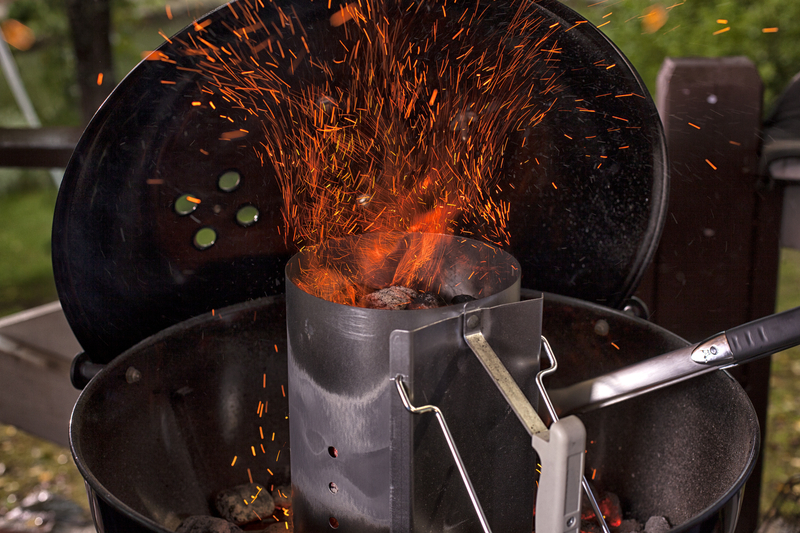 If you want to know how to start a charcoal grill quickly, a charcoal chimney starter is the most reliable tool. Mastering this method makes lighting charcoal fast and virtually foolproof, typically getting coals ready in 15 to 20 minutes.
Timing varies with wind, humidity, and fuel volume, so treat that range as an estimate. The appearance of the coals is always a better indicator of readiness than a stopwatch.
How Do You Use a Chimney Starter?
Fill a charcoal chimney starter with charcoal, leaving about an inch of space at the top. Place crumpled newspaper or a couple of natural fire starters in the bottom chamber, set the chimney on the lower grate, and light the paper or starters from underneath in two or three places.
The flames catch the bottom coals first and rise through the stack. This airflow helps a chimney starter light charcoal faster and more evenly than a loose pile in the grill. Once the chimney is lit, leave it in place so the draft can work.
When Are the Coals Ready to Pour?
The coals are ready when the top layer has a light coating of gray ash and glows red underneath. This typically takes 20 to 30 minutes and indicates the coals are ready for cooking.
Don’t wait for every piece of charcoal to ash over completely. Once the top coals are glowing and lightly ashed, pour the chimney into the grill; the coals at the bottom will already be hot.
What Can You Use If You Do Not Have a Chimney?
An electric charcoal starter is a flame-free alternative if you have access to an outdoor outlet. Place the electric charcoal starter directly into the charcoal pile, let the element heat until coals catch, and then safely remove it.
Natural fire starters, such as paraffin cubes or wood wool, can also light a small pyramid of charcoal without lighter fluid. Never add lighter fluid to lit or hot coals; the flame can travel back along the stream toward your hand.
How Do You Set Up and Control the Heat?
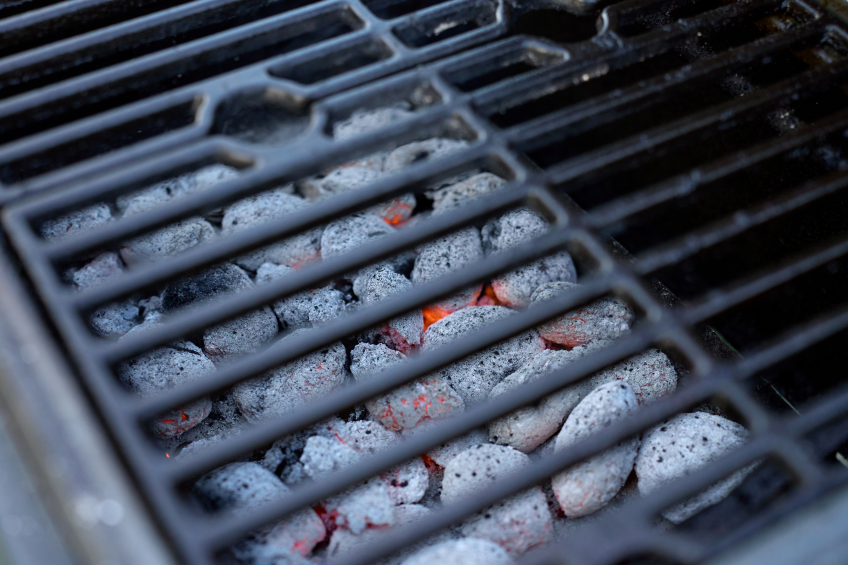 Two-zone cooking sets up coals on one side and leaves the other area empty. Practicing two-zone grilling gives you both high heat for searing and a cooler spot for food that needs to cook through without burning.
Mastering direct and indirect heat suits many weeknight meals. It lets you sear and finish food in the same cook without moving the grill or adding fuel.
How Do You Build a Two-Zone Fire?
Once the coals are ashed over, bank them on one side of the charcoal grate and leave the other side empty. This creates direct heat over the coals and indirect heat over the empty side.
For a standard kettle grill, a full chimney can provide enough charcoal for a hot direct-heat zone and a cooler indirect zone. A half chimney can work for smaller cooks that use direct heat only, such as grilling a few burgers.
When Should Food Go Over Direct or Indirect Heat?
Cook thin, quick-cooking foods over direct heat. Start thicker cuts or foods prone to flare-ups over indirect heat. Burgers, thin steaks, shrimp, and many vegetables cook well over the coals because they can finish before the outside burns.
Chicken pieces, sausages, and thicker steaks can start on the indirect side to cook through, then move over direct heat for browning. Move food to the indirect side if dripping fat causes a flare-up; the flames won’t be directly beneath it there.
How Do Vents and Coal Placement Adjust the Temperature?
The bottom vent controls how much oxygen reaches the fire and is the main vent for adjusting heat. Opening it feeds the fire and raises the temperature, while partially closing it slows combustion and lowers the heat.
Keep the top vent at least partially open while cooking. Closing it fully restricts airflow and can trap acrid smoke, affecting flavor without reliably saving fuel.
Watching a digital grill thermometer lets you see how small vent adjustments impact cooking temperatures at the grate in real time.
Which Cooking Methods Get Dinner Done Faster?
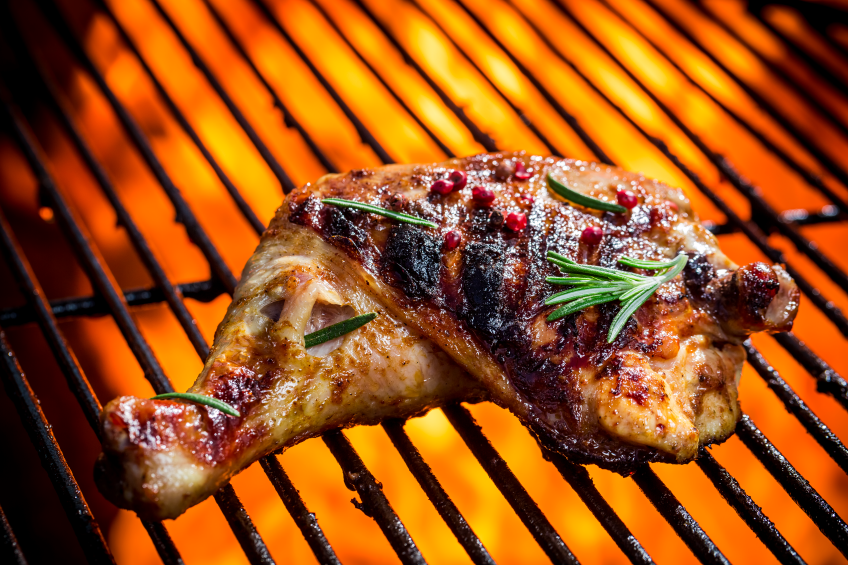 Applying the right charcoal grilling techniques makes every cook significantly more efficient. Thin cuts sear quickly directly over the coals, while thicker cuts move between zones so the inside cooks through without scorching the exterior.
Unlike complicated grilling techniques that require all afternoon, applying smart charcoal grilling techniques delivers great flavor on a tight schedule.
When Should You Grill Directly Over the Coals?
Use direct heat for foods that cook through in about the time it takes to brown the outside. Burgers, kebabs, shrimp, thin pork chops, and many vegetables can cook quickly over a hot bed of coals.
How Do You Finish Thicker Foods Without Burning Them?
Move thicker cuts to the indirect side once they’ve browned. A bone-in chicken thigh or thick pork chop can char on the outside before the inside reaches a safe temperature if it stays over direct heat the whole time.
Moving food to the cooler zone and closing the lid lets it finish cooking with indirect heat, a core principle of two-zone grilling.
When Does a Reverse Sear Make Sense?
The reverse sear method works well for thick steaks or roasts when you want an evenly cooked interior and a well-browned crust. Start the meat on the indirect side until it’s close to your target internal temperature, then move it over direct heat for a couple of minutes per side to build a crust.
This method takes a few extra minutes compared with direct grilling, but helps avoid the gray, overcooked band that can form when a thick cut is seared first and then finished slowly.
How Do You Check Doneness and Time the Sauce?
A meat thermometer is more reliable than judging doneness by color or cooking time. Remove food a few degrees below your target temperature to account for carryover cooking as it rests.
If you’re brushing on barbecue sauce, add it during the last few minutes of cooking rather than at the start. Many sauces contain sugar that can burn before the meat is done, so early application may leave a blackened layer instead of a glossy glaze.
How Do You Avoid Delays and Finish Safely?
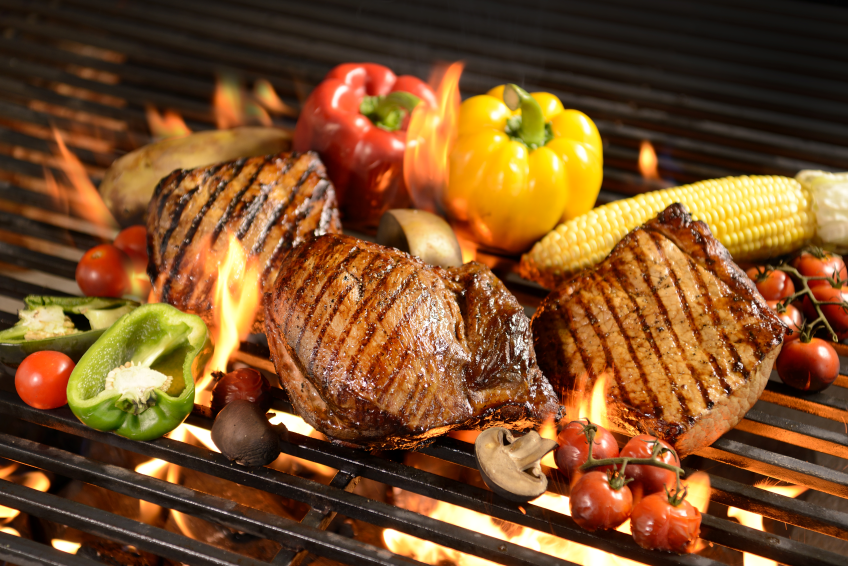
Charcoal cooks often run long because of weak airflow, unevenly distributed coals, or flare-ups that go unnoticed. Catching these problems early can help prevent food from burning or remaining undercooked.
What If the Fire Is Weak, Uneven, or Flaring Up?
A weak fire often needs more oxygen, not more charcoal. Open the bottom vent further before assuming the coals are spent; a full ash catcher or closed vent is a common cause of low heat.
Uneven heat often means the coals weren’t banked consistently in the direct-heat zone. If dripping fat causes a flare-up, move the food to the indirect side rather than dousing the flames with water, which can scatter ash onto the food.
When Are the Snake and Minion Methods Worth Using?
The snake method and the Minion method are designed specifically for low and slow cooking, not quick weeknight grilling. Both are classic low and slow cooking techniques that burn fuel gradually over several hours. The snake method arranges unlit charcoal in a C-shape, with a few lit coals at one end. The fire gradually spreads around the ring, providing heat for 8 to 12 hours.
The Minion method places a small number of lit coals on top of a larger pile of unlit charcoal. It is quicker to set up but may burn less evenly, making it suitable for cooks lasting 4 to 6 hours. Neither method is ideal for a burger-and-vegetable dinner; both are designed for brisket, pork shoulder, and ribs, which benefit from a long, steady cook.
How Do You Shut Down and Clean the Grill?
When cooking is done, close both vents fully to starve the fire of oxygen and let the coals extinguish in place. Scrape the cooking grate with a grill brush or wooden grill scraper while it is still warm, as residue is easier to remove before it cools.
Let the ash cool completely before disposing of it in a metal container. This takes at least 24 hours and may take up to 48 hours for safety. Never put warm ash in a plastic bin or paper bag.
FAQ: A Faster Cook Starts with a Well-Managed Fire
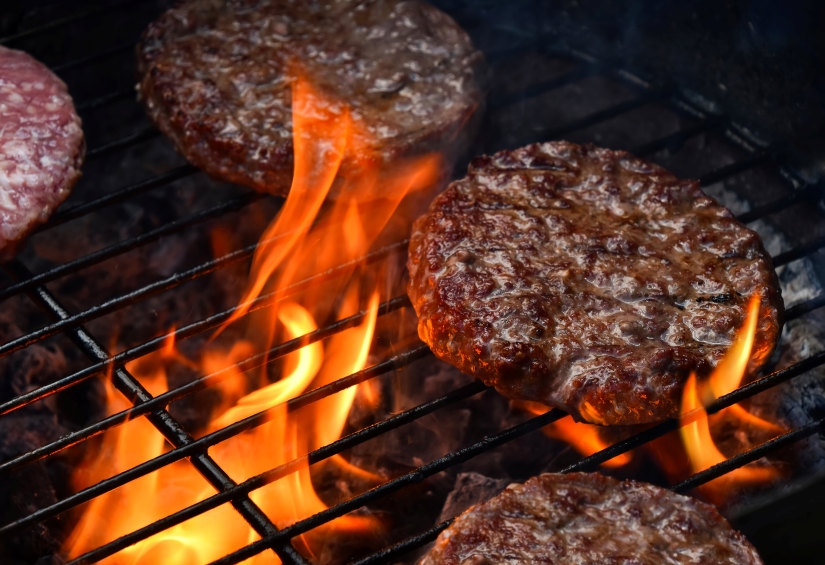 Fast charcoal grilling starts with preparation, not rushing food over the hottest coals. Fill a chimney starter with lump charcoal, prep the food while the coals heat, and set up a two-zone fire. This approach works for most weeknight meals without sacrificing control.
Save the snake and Minion methods for weekend cooks when you’re smoking food for half a day. For tonight’s dinner, a full chimney, a thermometer, and a grill brush for cleanup are all you need for a meal with real charcoal flavor.
A Faster, Easier Way to Grill With Charcoal
The fastest way to get a charcoal grill ready is to use a chimney starter. It concentrates the charcoal, improves airflow, and can get coals hot and ready for cooking faster than arranging and lighting them directly in the grill.
How Can You Make Charcoal Grill Faster?
Use a chimney starter and fill it with the amount of charcoal you need. Place it over a firelighter or crumpled paper, then allow the charcoal to become fully lit and covered with gray ash before spreading it across the grill.
Should You Leave the Grill Vents Open When Lighting Charcoal?
Yes. Open vents provide the oxygen needed to help charcoal ignite and burn efficiently. Once the grill reaches the desired cooking temperature, adjust the vents to control airflow and heat.
Can You Use a Charcoal Starter Without Lighter Fluid?
Yes. A chimney starter with firelighters, natural starters, or paper can light charcoal without requiring lighter fluid. This also avoids adding lighter-fluid odor or flavor to the cooking process.
How Long Does Charcoal Take to Get Hot?
Charcoal typically takes around 15 to 25 minutes to become ready for cooking when using a chimney starter, although the exact time depends on the type of charcoal, weather conditions, and airflow.