
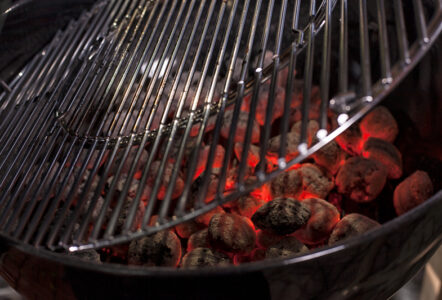
 Charcoal grilling can feel confusing if you don’t know how hot your fire should be. Too hot, and food can burn on the outside before it cooks through. Too cool, and dinner takes too long.
A charcoal grill should reach 225°F to 600°F, depending on what you’re cooking, with most everyday grilling falling in the 350°F to 450°F range. Searing a steak calls for higher heat, while ribs and other slow-cooked foods need lower, steadier temperatures.
Learning to read and control your grill temperature makes a real difference in how your food turns out. Combining the right grilling techniques with proper heat management lets you grill any meal with confidence.
Charcoal Grill Temperature Chart
| Heat Level | Temperature | Best For |
|---|---|---|
| High Heat | 450–600°F230–315°C | Steaks, burgers, thin cuts, and fast searing |
| Medium Heat | 325–450°F165–230°C | Chicken, sausages, vegetables, and corn |
| Low Heat | 225–325°F105–165°C | Ribs, pork shoulder, brisket, and slow cooking |
Quick Guide:
450–600°F = High heat & searing
325–450°F = Medium heat & everyday grilling
225–325°F = Low heat & slow cooking
Charcoal grills work across three main heat ranges, each suited to different foods. Here’s what to aim for and how to adjust your vents.
High Heat: 450–600°F for Fast Grilling and Searing
High direct heat is ideal for searing steaks, burgers, and other thin cuts that cook quickly. Intense direct cooking creates a browned sear and crisp grill marks in just minutes.
To reach this range, open both the top and bottom vents fully. This allows more air to reach the coals, increasing the fire’s heat. Use a full chimney of lit charcoal for this heat level. A small pile of coals may not provide enough heat, even with the vents fully open.
Use the hand test as a rough estimate: if you can hold your hand a few inches above the grate for only two or three seconds, the fire is hot. For a more accurate reading, use a grill thermometer.
Medium Heat: 325–450°F for Everyday Grilling
This range works well for most weeknight grilling. Chicken pieces, sausages, vegetables, and corn all cook well here.
At the higher end, around 400°F, keep the bottom vent open and the top vent about three-quarters open. For a gentler 325–350°F, partially close the top vent to about half open.
Medium heat helps cook food through without burning the outside first. It’s a useful middle ground when you’re unsure which heat level to choose.
Give vent adjustments about ten minutes to take effect before checking the temperature again.
Low Heat: 225–325°F for Slow Cooking
Low heat and indirect cooking are useful for ribs, pork shoulder, and brisket, which need hours to become tender. Gentle indirect heat also allows wood chunks or chips to add rich smoke flavor.
Partially close both vents, leaving openings of about a finger’s width as a starting point. Use a smaller pile of coals, or try the charcoal-snake method, so the fire burns slowly instead of all at once.
Keep the lid closed as much as possible. Every time you lift it, heat escapes and the grill needs time to recover. For long cooks, add a few unlit coals before the fire starts to die out, rather than waiting until it has cooled significantly.
Choose a Temperature for the Food
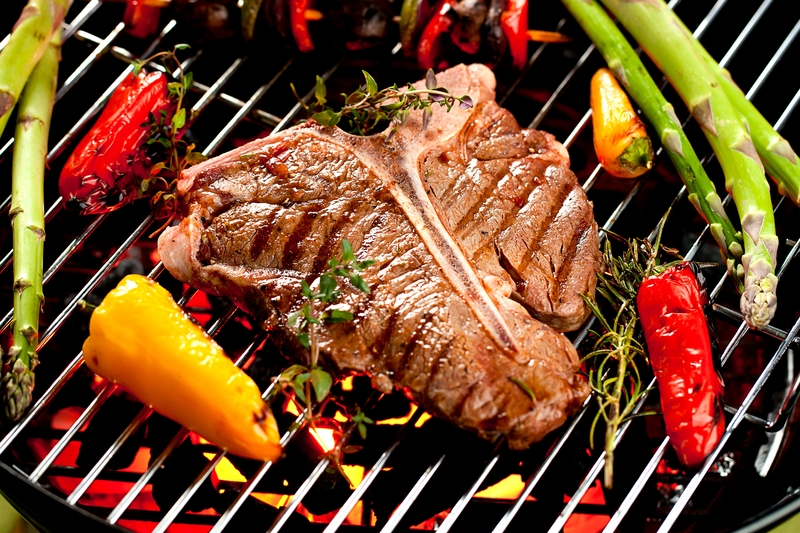 Different foods need different heat levels to cook properly. Small, thin cuts cook well over high heat, while large cuts often need lower, steady heat over a longer time.
Steaks, Burgers, and Other Quick-Cooking Cuts
Steaks and burgers cook well over high heat using direct grilling. Aim for 450°F to 600°F when searing steaks. This high heat browns the outside of the meat. The inside stays juicy if you avoid overcooking it.
You can use a two-zone setup for better control. Sear the meat on the hot side first, then move it to a cooler zone to finish cooking.
This method works well for thick cuts, such as steak, because it lets the inside cook through without burning the outside. Burgers cook quickly, usually in under 10 minutes total. Check that ground beef reaches 160°F internally before taking it off the grill.
Chicken, Fish, and Vegetables
Chicken cooks well over medium to medium-high heat, around 350°F to 450°F. This range helps cook the meat through without burning the skin.
Grilling chicken at too high a heat can char the outside while leaving the inside undercooked. Chicken breasts and thighs should reach 165°F internally.
Fish is delicate and cooks quickly. Use medium heat, around 350°F to 400°F, to help prevent it from falling apart or drying out. Vegetables also cook well over medium to medium-high heat. Most need only a few minutes per side to soften and develop light grill marks.
Ribs, Roasts, and Other Large Cuts
Large cuts of meat often need low, steady heat for a long time. Keep the grill between 225°F and 300°F for ribs, roasts, and other large cuts.
Slow cooking helps break down tough connective tissue, producing tender meat that pulls apart easily. Cooking times can range from a few hours to most of a day, depending on the size of the cut. Keep the lid closed as much as possible to hold in heat and smoke.
Always check internal temperature with a food thermometer rather than relying on time alone. Pork ribs are often cooked to 195°F to 203°F for a tender texture, while roasts should reach a safe internal temperature appropriate for the type and cut of meat.
Set Up Direct and Indirect Heat Zones
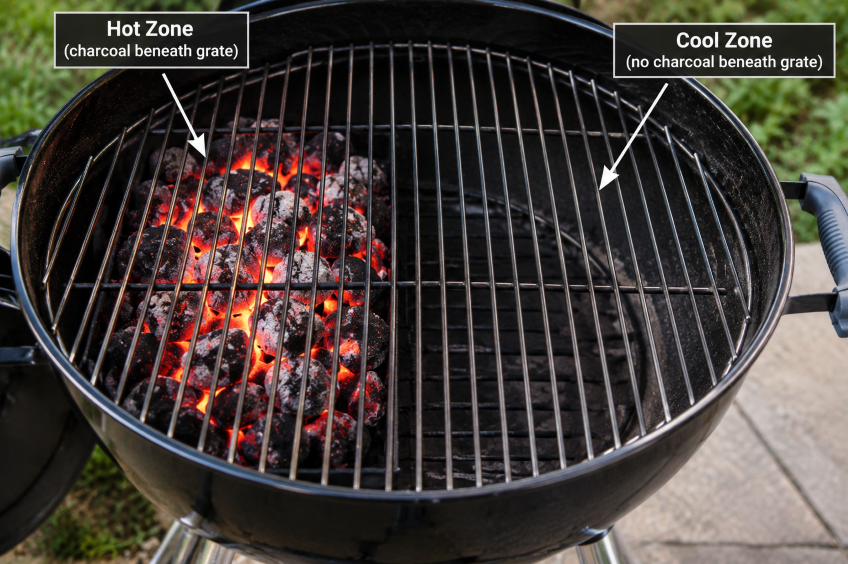 Charcoal placement affects how your grill cooks. The right charcoal arrangement creates two distinct temperature zones, letting you control both fast searing and slower, gentler cooking.
Direct Grilling Over the Coals
Direct heat means placing food right over the hot coals. Direct grilling works best for thin cuts that cook quickly, such as burgers, hot dogs, chicken breasts, and steaks under an inch thick.
The cooking grate over direct heat can reach 450°F to 600°F, hot enough to brown and crisp food quickly. Watch food closely, since flare-ups can happen when fat drips onto the coals during direct cooking.
Direct cooking gives grilled food a charred, seared crust. Because intense direct heat cooks quickly, it is not the best choice for thick cuts that need more time to finish.
Indirect Grilling Away From the Coals
With indirect heat, place food away from the coals so it cooks from the heat circulating inside the grill rather than directly over the fire.
This method suits thicker foods like whole chickens, ribs, roasts, and large cuts of pork. Indirect grilling typically uses lower temperatures, often between 225°F and 325°F, giving food time to cook through without burning on the outside.
You’ll usually close the lid during indirect cooking to trap circulating indirect heat, much like an oven. These indirect grilling techniques yield tender, juicy results without constant flipping or flare-ups.
Using a Two-Zone Fire to Sear and Finish
A two-zone fire combines both methods on the same grill. Push your charcoal to one side, leaving the other side empty, to create direct and indirect zones side by side.
This setup lets you sear a steak over the coals for a browned crust, then move it to the empty side to finish cooking without burning. It also works well for foods that flare up, since you can shift them to the cooler zone until the flames settle down.
Two-zone grilling gives you more control than relying on direct cooking alone. You can sear on the hot side, finish on the cool side, or move meat to the indirect zone to avoid flare-ups, making this setup useful for many types of food.
Build and Control the Charcoal Fire
 The type and amount of charcoal you use, how you light it, and how you manage airflow determine how hot your grill gets and how long it stays hot. Unlike a gas grill, a charcoal grill needs hands-on setup before you can reach a target temperature.
Choose Briquettes or Lump Charcoal
Briquettes are made from compressed charcoal dust and binders, so they burn at a steady, predictable rate. They’re a good choice if you’re new to charcoal grilling or want consistent heat during a long cook.
Lump charcoal is made from chunks of burned wood and typically contains no additives. It lights faster and burns hotter than briquettes, but its burn rate can vary from piece to piece.
If you want steady heat for hours, briquettes are usually easier to manage. If you want a hotter fire for searing, lump charcoal can reach high temperatures faster.
The Jealous Devil All Natural Hardwood Lump Charcoal is crafted from premium hardwood for clean, pure grilling. It burns exceptionally hot and consistently, delivering professional-level searing power.
Match Charcoal Quantity to the Cooking Method
The amount of charcoal affects how hot and how long your fire burns. A full chimney starter of lit coals spread evenly can produce high heat of around 500°F or more, making it suitable for direct grilling and searing steaks or burgers. Actual temperatures vary by grill, fuel, and airflow.
For medium heat between 350°F and 450°F, start with about half a chimney of coals. For low-and-slow cooking near 225°F to 275°F, use a smaller amount of lit charcoal with a larger pile of unlit charcoal. This lets the fire spread gradually instead of burning all the fuel at once.
Use this quick reference:
| Charcoal Amount | Approximate Temp | Best For |
|---|---|---|
| Full chimney | 500°F+ | Searing |
| Half chimney | 350–450°F | General grilling |
| Small amount + unlit pile | 225–275°F | Smoking, slow cooking |
Light the Coals and Adjust the Vents
A chimney starter is a simple way to light charcoal without lighter fluid. Fill it with charcoal, place crumpled newspaper underneath, and light it. The coals are usually ready once they’re mostly covered in gray ash, which typically takes 15 to 20 minutes.
Once the coals are lit, pour them into the grill. A thoughtful charcoal arrangement helps you establish your cooking zones quickly. Then use the bottom vent to control most of the airflow and the top vent to fine-tune it. Opening both vents wider generally raises the temperature, while partially closing them lowers it.
Wait about 10 to 15 minutes after adjusting the vents before checking the thermometer again. Charcoal fires respond more slowly than gas grills, so patience matters.
Measure Heat and Check Food for Doneness
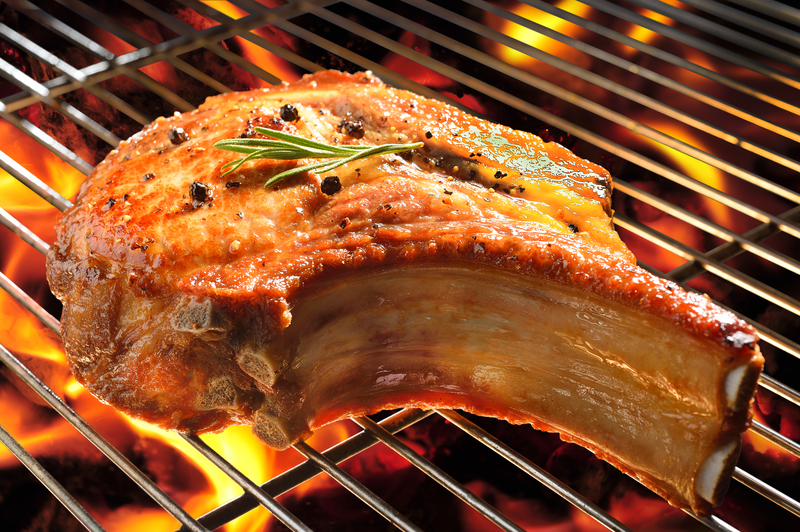 You can check how hot your grill is with a thermometer or the hand test. Use a food thermometer to check whether food has reached a safe internal temperature and your preferred doneness.
Read Temperature at the Cooking Grate
A lid thermometer measures the air temperature inside your grill, but it may not match the temperature at the cooking grate. The difference can be significant because the lid sits several inches above the food.
For a more accurate reading, place a grill thermometer probe near the grate, close to the level of your food. Some grill thermometers come with a clip or stand for this purpose.
You can also use the hand test. Hold your palm about 5 inches above the coals, roughly where a soda can would sit. If you pull your hand away after 2 to 4 seconds, the heat is high. After 5 to 7 seconds, it’s medium. After 8 to 10 seconds, it’s low, according to Weber’s guide to measuring grill heat.
Recognize When the Coals Are Ready
Charcoal is generally ready for cooking once the coals are mostly gray or ash-white on the outside. This usually takes 15 to 20 minutes after lighting, depending on the amount and type of charcoal and the airflow.
You may see an orange glow beneath the ash layer. This indicates that the coals are still burning and producing heat. Avoid cooking over coals that are still black or just beginning to catch fire. They may not be fully lit, which can lead to uneven heat.
Once the flames die down and ash forms, spread the coals into the zones you need, such as a hot side for searing and a cooler side for slower cooking. Coal color is often a better guide than time alone, since airflow and charcoal type affect how quickly coals heat up.
Check Internal Temperature Before Serving
Checking the grill temperature only tells you part of the story. The best way to check whether food is safely cooked is to measure its internal temperature with a food thermometer.
Insert the probe into the thickest part of the meat, away from bone and fat. Wait a few seconds for the reading to settle before checking it.
Common safe minimum internal temperatures include:
- Chicken and turkey: 165°F
- Ground beef and pork: 160°F
- Beef, pork, and lamb steaks or roasts: 145°F, with a 3-minute rest
- Fish: 145°F
For some cuts, you can take food off the grill a few degrees before it reaches the target temperature, as the temperature may rise slightly while it rests. Always confirm that it reaches the recommended safe minimum temperature.
Fix a Grill That Is Too Hot or Too Cool
 Grill temperature can change, but you can bring it back on track with a few simple adjustments. Most fixes involve airflow, charcoal, or the lid.
Lower Heat Without Putting Out the Fire
If your grill is too hot, close the vents partway rather than all the way. This reduces oxygen and slows the burn. Don’t close the vents completely unless you want to extinguish the fire. Doing so can cause the coals to smolder and produce more smoke.
You can also spread the charcoal into a thinner layer to lower the heat beneath your food by reducing how densely the coals are packed.
Moving food to a cooler part of the grill works well too. If your charcoal setup leaves one side cooler, move your food to that side until the heat drops. Raising the cooking grate, if your grill allows it, also increases the distance between the food and the coals.
Raise Heat or Replenish Fading Coals
When your fire cools down too much, open the vents wider. More airflow brings in more oxygen, which can make the coals burn hotter and faster.
If the coals are dying out, add more charcoal. You can place unlit coals directly on top of the lit ones, where they can catch fire as the existing coals burn. How long this takes depends on the charcoal and airflow.
For a faster boost, light new charcoal in a chimney starter first. Once it’s fully lit, pour the hot coals into the grill. Avoid adding Match Light charcoal to an already lit fire. It contains lighter fluid, so use plain charcoal briquettes instead.
Account for Wind, Cold, and Lid Openings
Outdoor conditions affect charcoal grill temperature. Wind can push more oxygen through the vents, causing charcoal to burn hotter and faster than expected.
Cold weather draws heat away from the grill, so you may need to add charcoal or adjust the vents to maintain a steady temperature.
Every time you lift the lid, heat escapes and oxygen enters. This can cause a brief temperature spike, followed by a drop after you close the lid.
Try to keep lid checks short and lift the lid only when necessary. Checking the food’s internal temperature with a thermometer instead of relying on appearance can help you avoid opening the lid too often.
FAQ: What Temperature Should a Charcoal Grill Be?
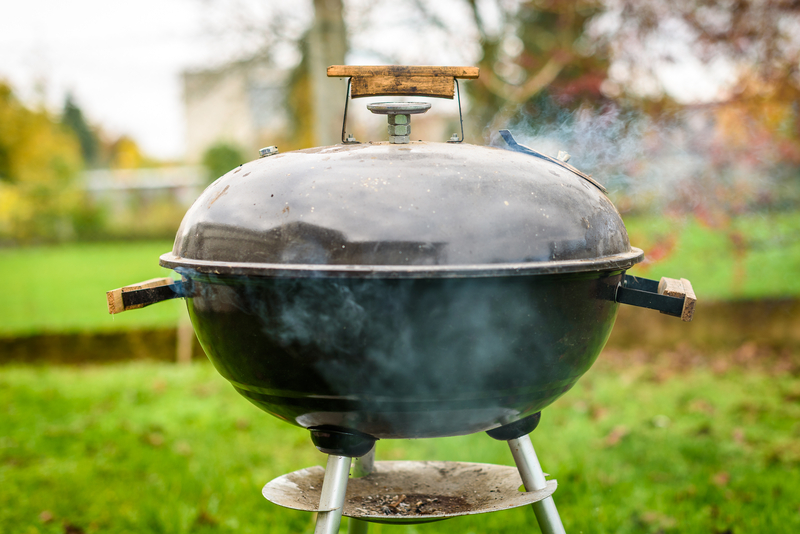 A charcoal grill is commonly used at 350°F to 450°F (175°C to 230°C) for medium-heat cooking, while high-heat grilling can reach 450°F to 550°F (230°C to 290°C) or higher. The ideal temperature depends on the food you are cooking and whether you are grilling directly or indirectly.
What Temperature Is Medium Heat on a Charcoal Grill?
350°F to 450°F (175°C to 230°C) is generally considered medium heat. This range works well for foods such as chicken pieces, burgers, sausages, and many vegetables.
What Temperature Is High Heat on a Charcoal Grill?
High heat is generally around 450°F to 550°F (230°C to 290°C). It is useful for searing steaks and other foods that benefit from intense direct heat.
How Do You Check the Temperature of a Charcoal Grill?
A grill thermometer positioned near the cooking grate provides the most useful temperature reading. The temperature at the grate can differ significantly from the temperature shown on a lid-mounted thermometer.
How Do You Know When Charcoal Is Hot Enough to Cook?
Charcoal is generally ready when the briquettes or lump charcoal are fully lit and covered with a layer of gray-white ash. Once the coals are hot and the grill has reached the desired temperature, you can begin cooking.