
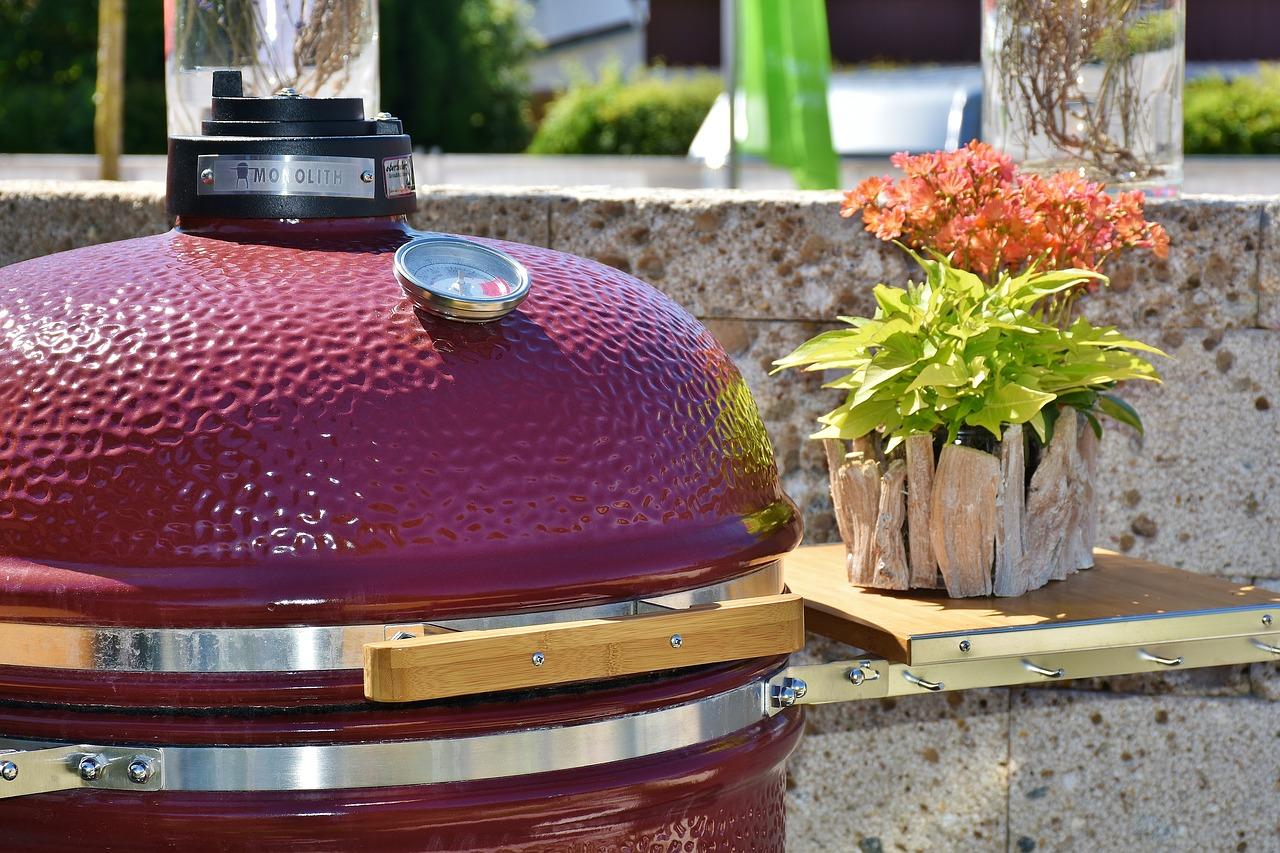
If you enjoy outdoor cooking, you may have seen a round, egg-shaped grill in a store or a friend’s backyard. That grill is likely a kamado grill.
A kamado grill is an egg-shaped charcoal cooker with insulated walls that retain heat, allowing you to grill, smoke, roast, and bake.
The name comes from the Japanese word for “stove” or “cooking range”. Its thick walls trap heat, and its vents let you control the temperature. These cookers excel at both grilling and smoking across wide temperature ranges. With a small amount of charcoal, many kamado grills can hold a steady temperature for 12 hours or more.
In this article, you will learn about the kamado grill’s history and how it works. You will also find out what you can cook on one and how to decide if it is right for you.
The Design That Defines a Kamado
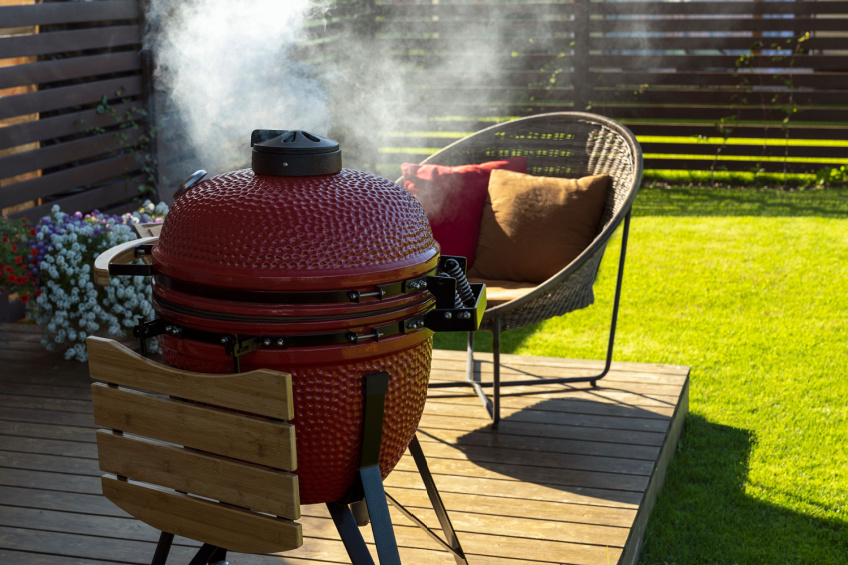 A kamado is an egg-shaped charcoal grill with thick, insulated walls, a domed lid, and vents at the top and bottom. Most models are made of ceramic, while some use insulated steel to reduce weight and cost.
The Insulated, Dome-Shaped Cooking Chamber
The oval body and rounded lid are the most recognizable features of kamado grills. A modern kamado is typically a hinged, insulated cooker with grates and airflow vents. You light charcoal in a firebox at the bottom, and the food sits on a grate above it.
The dome shape helps heat circulate around the food. With the top and bottom vents controlling oxygen flow, you can maintain about 225°F for smoking or reach temperatures above 700°F for pizza.
The tight seal also helps retain heat and moisture. A thick-walled cooker helps food stay juicy.
Ceramic and Steel Kamado Construction
Kamado grills are available in both ceramic and steel constructions, and the material affects their weight, durability, heat retention, and price. Understanding these differences can help you choose the right type for your cooking needs.
Kamados come in two main material types:
| Material | Strengths | Drawbacks |
|---|---|---|
| Ceramic | Retains heat well, does not rust, can last many years | Heavy, can crack if heated too quickly |
| Steel | Lighter, often costs less | May retain heat less evenly, can rust over time |
A ceramic kamado grill uses ceramic insulation to retain and radiate heat. This is why many people simply call them ceramic grills. High-end ceramic grills can withstand extreme temperatures year after year without warping or rusting.
Steel models typically use two layers of metal with insulation between them. This design aims to provide heat retention similar to a ceramic charcoal grill while weighing less. If you plan to move your grill often, a steel model may suit you better.
How Airflow Regulates Kamado Heat
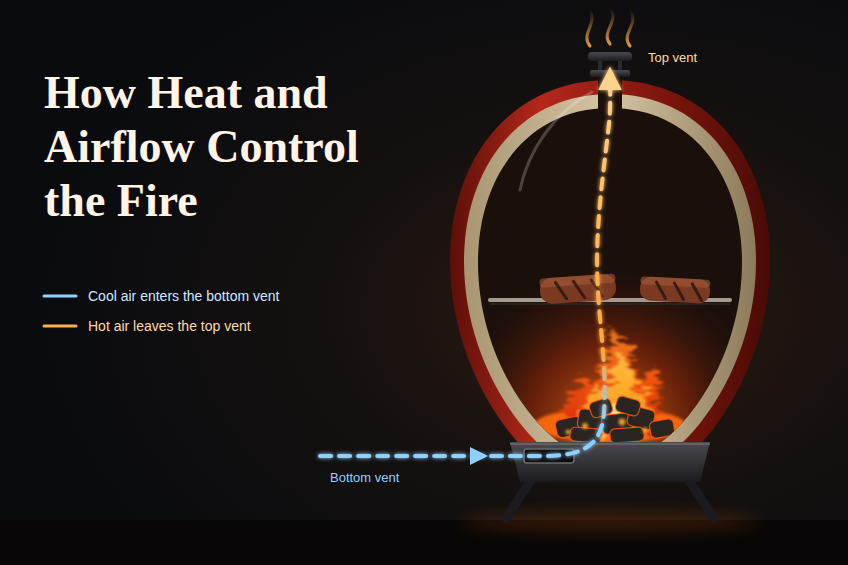 A kamado grill’s temperature depends on how much air reaches the burning charcoal and how well its thick walls retain heat. Adjusting the vents gradually helps maintain steady temperatures for both high-heat searing and low-and-slow cooking.
What the Bottom and Top Vents Do
Every kamado has two vents. Fire needs oxygen to burn, and the amount of oxygen affects how hot the fire gets.
- Bottom vent (draft door): Lets fresh air in to feed the fire.
- Top vent: Lets hot air and smoke out.
Air enters at the bottom, passes over the coals, rises through the dome, and exits at the top. This creates a steady flow. As a basic rule, more airflow means higher heat.
Kamado Joe grills use a Kontrol Tower top vent, which has a dial for fine adjustments and stays in place when you open the lid. Effective airflow management uses both vents together.
Why Insulation Holds Heat and Saves Charcoal
Most kamados have thick ceramic walls, while some newer models use insulated steel or cast aluminum. The rounded shape and insulated walls provide outstanding heat retention. Because of this thermal efficiency, cooking on a ceramic grill requires far less fuel adjustment than cooking on thin metal.
Because heat stays inside, you may need less charcoal than you would with a conventional metal grill. This fuel efficiency is especially useful for long cooks. A single load of lump charcoal can often last through a long smoke when the vents are mostly closed.
Lump charcoal works well in a kamado. It lights quickly, burns hot, and typically leaves less ash than briquettes. Less ash can help keep the bottom vent clear for airflow.
The sealed dome also helps retain moisture, which can keep meat from drying out.
How to Adjust Temperature Without Overshooting
Good temperature control starts with heating the grill gradually. A kamado heats up quickly but cools down slowly, so if you exceed your target, it can take a long time to bring the temperature back down.
Follow these steps:
- Light a small area of charcoal for low-temperature cooking, or several spots for high heat.
- Leave both vents wide open with the lid closed.
- Start closing the vents when the grill is about 50°F below your target.
- Make small adjustments and wait 10 to 15 minutes before adjusting again.
| Target Range | Bottom Vent | Top Vent |
|---|---|---|
| 225–275°F (smoking) | Slightly open | Barely open |
| 325–375°F (roasting) | About ¼ open | About ¼ open |
| 500°F+ (searing) | Fully open | Fully open |
Exact settings vary by grill. Burp the lid by opening it slowly at high heat. This lets air enter gradually and helps reduce the risk of a flare-up.
What You Can Cook on One
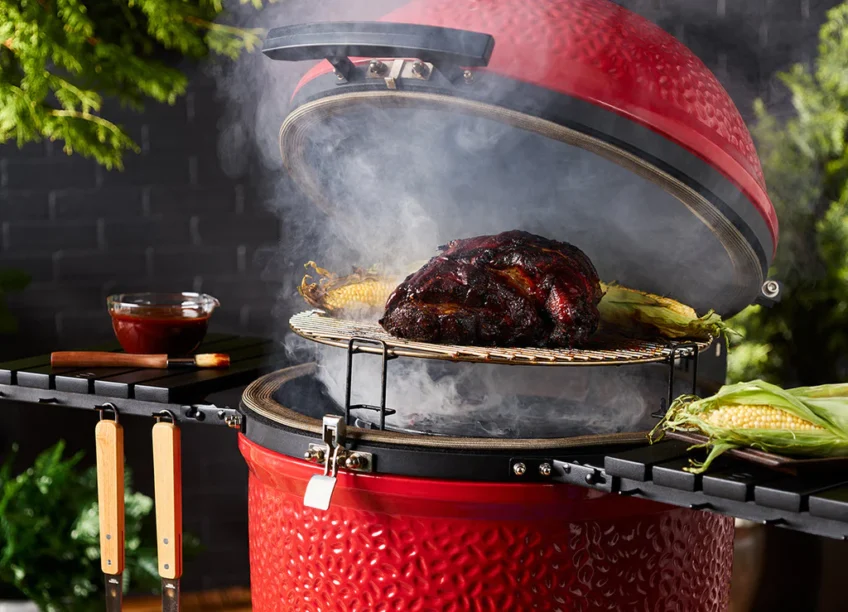 A kamado can run from about 200°F to over 700°F, whether you are searing steaks, smoking brisket, or baking pizza on the same cooker. Its versatility makes it great for both grilling and smoking. The setup changes with each cooking method, but the grill and fuel stay the same.
Direct Grilling and High-Heat Searing
For direct grilling, place food on the grate above the hot coals. This works well for burgers, chicken thighs, sausages, and vegetables.
For searing, open the vents to let in more air and raise the temperature to 500°F or higher. Kamados can maintain low temperatures for long cooks and reach high temperatures for searing. Use fresh lump charcoal for a hot fire.
Watch your food closely at these temperatures. Meat cooked over high heat may need frequent turning to prevent burning.
Good foods for high heat:
- Steaks and pork chops
- Burgers and hot dogs
- Shrimp and scallops on skewers
- Asparagus, peppers, and corn
Low-and-Slow Smoking
A kamado works as an all-in-one charcoal grill and smoker. Its thick walls retain heat, allowing a small fire to burn steadily for many hours.
For smoking, maintain a temperature of about 225°F to 250°F. Add smoking wood chunks, such as hickory or apple, to the charcoal for flavor, then partially close the vents to slow the fire.
Common foods to smoke include spare ribs, pulled pork, and brisket. Smoking brisket can take 10 hours or more, so start with a full load of charcoal to reduce the risk of running out during cooking.
Indirect Roasting and Baking
For roasting and baking, place a heat deflector between the coals and the grate. It blocks direct heat, allowing the kamado to cook food more like an oven than an open fire.
| Method | Typical Temperature | Example Foods |
|---|---|---|
| Roasting | 325°F–400°F | Whole chicken, turkey, pork loin |
| Baking | 350°F–450°F | Bread, casseroles, cobbler |
| Pizza | 600°F–750°F | Pizza on a stone |
With a pizza stone, a kamado can function much like a wood-fired oven. Many kamados can reach temperatures above 700°F for pizza. The crust cooks in just a few minutes, so check it often.
Benefits, Limitations, and Grill Comparisons
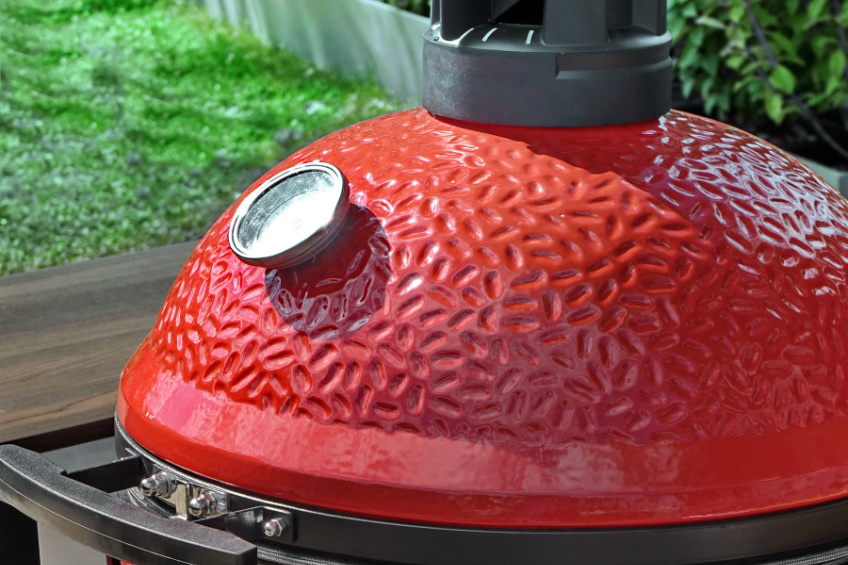 A kamado grill retains heat and uses charcoal efficiently, but it is heavy, costs more than many basic grills, and takes practice to control. It offers a different balance of features from a gas grill or pellet smoker.
Where Kamados Outperform Standard Charcoal Grills
The biggest advantage is heat retention. Thick walls hold heat inside, helping you maintain steady temperatures for several hours. A thin steel kettle loses heat through its sides more quickly, making both grilling and smoking less reliable in cold weather.
This design also improves fuel efficiency. When you close the vents after cooking, the fire dies down, and unused coals can be extinguished. The remaining lump charcoal can be reused the next time you cook.
A kamado also supports more cooking styles than most standard charcoal grills:
- Searing steaks and burgers at high heat
- Smoking pork shoulder or brisket at low heat
- Baking pizza or bread like an outdoor oven
- Roasting whole chickens or vegetables
Weight, Cost, and the Temperature-Control Learning Curve
Ceramic kamados are heavy. Many large models weigh over 150 pounds, making them difficult to move around a yard. Ceramic can also crack if dropped or handled roughly.
Price is another factor. Some models sell for about $300, but many models start around $700. Stands, side tables, and heat deflector plates often cost extra.
Temperature control takes practice. You adjust heat with the top and bottom vents, and even small changes can affect the temperature. If the grill gets too hot, it can take a long time to cool down. A traditional charcoal grill typically costs less and has a simpler setup if you want basic grilling.
Open the lid slowly to let air in gently and help prevent a sudden flare-up.
How They Compare With Gas Grills and Pellet Smokers
Each grill type has distinct strengths. The table below compares their key features.
| Feature | Kamado Grill | Gas Grill | Pellet Smoker |
|---|---|---|---|
| Fuel | Lump charcoal | Propane or natural gas | Wood pellets |
| Startup time | 10–15 minutes | A few minutes | About 10–15 minutes |
| Heat control | Manual vents | Knobs | Digital controller |
| Smoky flavor | Strong | Mild | Strong |
| Needs electricity | No | Usually no | Yes |
A gas grill is often the fastest and easiest choice for quick weeknight meals. A pellet smoker controls its own temperature, making tasks like smoking brisket simpler.
However, many pellet smokers cannot reach the very high temperatures a kamado can for searing. A kamado grill offers more cooking range than a standard charcoal grill, but requires more hands-on temperature control.
How to Choose a Model
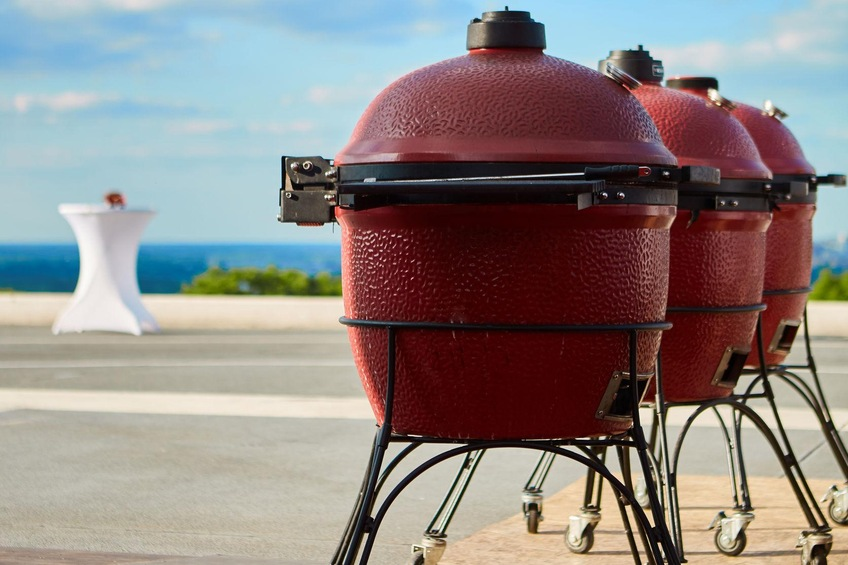 The right kamado depends on how many people you cook for, the grill’s construction, and which accessories are included. The initial price may not reflect the total cost, so check which parts come with the grill before you buy.
Cooking Area, Materials, and Total Cost
Start with grate size. An 18-inch grate is a common size and can serve about 4 to 8 people.
| Grate Size | Good For |
|---|---|
| 13–16 inches | 1–3 people, small patios, camping |
| 18 inches | Most families |
| 22–24 inches | Large groups, big cuts like whole turkeys |
Next, consider the material. Most kamados use thick ceramic, which retains heat well but is heavy and can crack if dropped. Some models use ceramic or insulated steel construction. The steel Char-Griller Akorn costs less and weighs less than many ceramic models, but it may rust over time.
Total cost matters too. Some brands sell the grill body alone. You may need to buy a stand, side shelves, and a heat deflector separately.
Included Accessories and Brand-Specific Features
Included accessories can be a major difference between kamado grill brands.
Kamado Joe: Most models include a cart, side shelves, heat deflectors, and a multi-level cooking system. Many also feature the Air Lift Hinge, which reduces the effort required to raise the heavy ceramic dome. Kamado Joe models are also known for their flexible cooking configurations, allowing you to set up different heat zones for grilling, roasting, and smoking.
London Sunshine: Its’s a compact option for smaller patios and outdoor cooking areas. It features a ceramic construction designed to retain heat efficiently, along with a waterproof vent cap that helps protect the grill when it is not in use. Its smaller cooking chamber makes it particularly suitable for households that want kamado-style cooking without the footprint of a full-size ceramic grill.
Char-Griller: Akorn models offer a more budget-friendly approach to kamado-style cooking, with many models including a cart and side shelves. Their insulated steel construction is lighter than traditional ceramic designs while still providing the heat retention needed for grilling, roasting, and smoking. This makes the Akorn range an appealing choice if you want kamado-style versatility without the weight and higher price of a large ceramic cooker.
What to Look for in Kamado Grill Reviews
With many options across the kamado grill market, reviews can help you compare models. Look for reviews based on hands-on testing. For example, one group tested 16 kamado grills for both smoking and searing.
Focus on these points when reading kamado grill reviews:
- Temperature control: How well does the grill maintain low heat for several hours?
- Heat-up time: How quickly does it reach searing temperatures?
- Gasket and hinge quality: Do the seals wear out quickly?
- Warranty: Ceramic parts often have long warranties, but metal parts may have shorter coverage.
If you are new to kamado cooking, check lists of the best kamado grills for beginners, which focus on ease of use. You can also use a kamado grill buying guide to compare features and sizes side by side.
Where the Kamado Design Came From
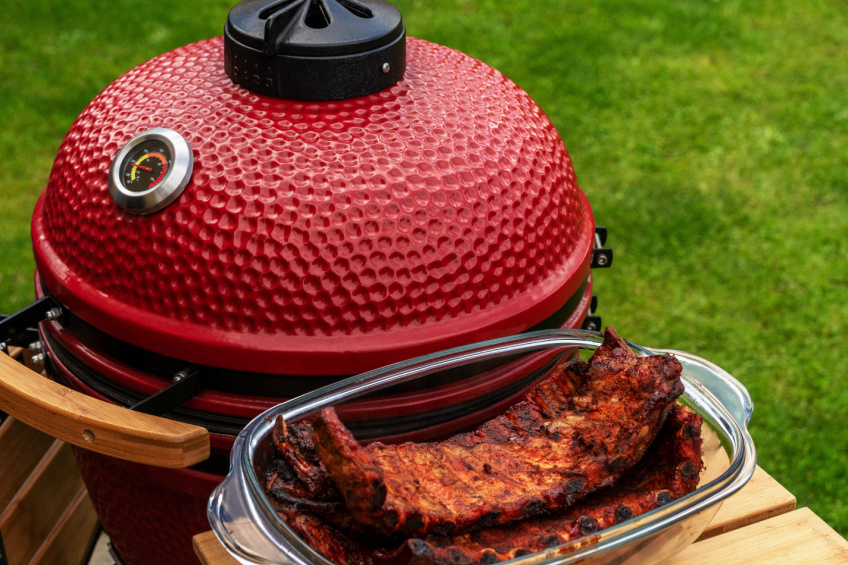 The kamado began as a fixed clay cooking stove in Japanese homes. A smaller, portable version called the mushikamado later reached the United States and evolved into the ceramic charcoal grills found in backyards today.
Traditional Japanese Cooking Stoves and the Mushikamado
The word kamado is Japanese for “stove” or “cooking range.” It literally means a place for the cauldron. Early versions were large clay stoves built into homes, with a pot set on top to cook rice and other foods.
The idea for this type of stove reached Japan from the Korean peninsula during the Kofun period, which ran from about 250 to 538 A.D. Some grill sellers say the design dates back more than 3,000 years, but that claim is not well supported.
Over time, a portable version called the mushikamado, meaning steam cooker, appeared.
It had several key features:
- A round clay body
- A domed lid
- A draft door at the bottom to control airflow
The Evolution of the Modern Backyard Grill
After World War II, American service members stationed in Japan encountered the mushikamado, a traditional clay cooker used for preparing food. Some brought these cookers back to the United States, but the original clay construction could crack under repeated use and temperature changes.
As kamado-style cooking became more popular, manufacturers began developing more durable ceramic materials and improved designs. These changes produced the insulated, heat-retaining cookers commonly used for outdoor grilling and smoking today.
Several manufacturers now produce kamado grills, including Kamado Joe, Primo, and Char-Griller. Most modern models retain the characteristic egg-shaped design, which helps circulate heat efficiently while allowing the grill to maintain steady cooking temperatures.
| Feature | Mushikamado | Modern Kamado |
|---|---|---|
| Material | Clay | Thick ceramic |
| Main use | Steaming rice | Grilling, smoking, baking |
| Durability | Prone to cracking | Designed for outdoor use |
This evolution turned a traditional cooker into a versatile tool for outdoor cooking. Modern kamado grills combine the heat retention of their traditional predecessors with improved airflow control and more durable construction. This allows them to maintain stable temperatures for everything from low-and-slow smoking to high-heat searing.
FAQ: What Is a Kamado Grill?
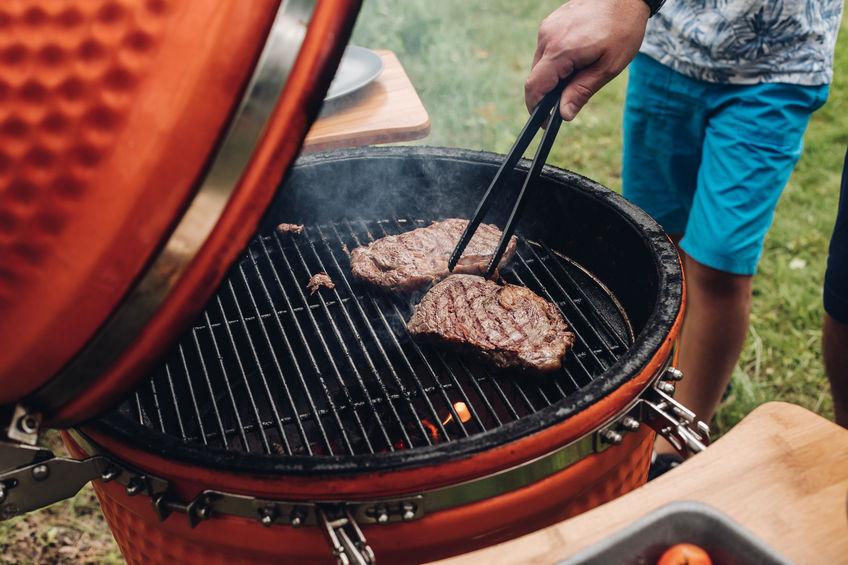 A kamado grill is a thick-walled, insulated charcoal grill traditionally made from ceramic. Its insulated construction retains heat efficiently, while adjustable vents allow you to control airflow and cooking temperature for grilling, roasting, smoking, and baking.
How Does a Kamado Grill Work?
A kamado uses charcoal as its heat source, with air entering through a lower vent and exiting through an upper vent. Adjusting these vents controls the airflow through the grill, which allows you to regulate the temperature.
What Can You Cook on a Kamado Grill?
A kamado grill can be used for a wide range of cooking methods, including high-temperature searing, low-and-slow smoking, roasting, and baking. With the appropriate accessories and setup, it can also be used for foods such as pizza and bread.
Why Are Kamado Grills Good for Low-and-Slow Cooking?
The thick ceramic walls provide substantial insulation and help the grill retain heat for extended periods. Combined with precise airflow control, this makes a kamado well suited to maintaining relatively stable low temperatures for long cooking sessions.
Do Kamado Grills Use Less Charcoal?
They can be relatively fuel-efficient because their insulated construction retains heat effectively. A kamado may require less charcoal to maintain a cooking temperature than a less-insulated charcoal grill, although actual consumption depends on the temperature, cooking time, weather, and grill size.
Are Kamado Grills Better Than Kettle Grills?
Neither is universally better. Kamado grills offer superior insulation and temperature retention, while kettle grills are generally lighter, simpler, and less expensive. A kettle is often a practical choice for everyday charcoal grilling, whereas a kamado is particularly appealing if you want to grill, smoke, roast, and bake on one cooker.
What Are the Disadvantages of a Kamado Grill?
Kamado grills are typically heavier and more expensive than basic charcoal grills, and ceramic components can crack if handled improperly or subjected to thermal shock. Their smaller cooking area on some models can also be a limitation when cooking for large groups.