

Picking a new gas grill or bbq grill often comes down to one question: how many burners do you need? In the debate of a 3 burner vs 4 burner grill, choosing a 3-burner or 4-burner grill affects how much food you can cook, how much space the grill takes up, and how much you pay.
A three-burner grill works well for families and small gatherings, while a four-burner grill offers more cooking space and heat zones for larger groups. Most 3-burner grills offer 400 to 500 square inches of cooking space. Four-burner models often offer 500 to 700 square inches.
Burner count is only part of the picture. Long-term fuel efficiency, price, and patio space also matter when choosing a grill for outdoor cooking.
This grill buying guide breaks down how each option performs so you can find the right fit for your outdoor cooking setup.
The Short Answer: Match Burners to How You Cook
 A three-burner grill suits many families and saves space, while a four-burner grill is a good choice if you cook for larger groups or often need several heat zones at once. Actual fuel use and price vary by model.
In any 3 burner vs 4 burner grill comparison, your choice also dictates your temperature control and overall heat output.
When Three Burners Are Enough
For many home cooks, a three-burner grill offers a good balance of cooking space and versatility. A quality 3 burner grill allows you to keep one burner on high and another off to create an indirect-heat zone.
A 3-burner gas grill usually provides 400 to 500 square inches of cooking space. That cooking surface area is typically enough for burgers, chicken, and vegetables for a family of four to six.
For everyday outdoor cooking, an efficient 3-burner gas grill delivers reliable heat distribution across the primary grates without wasting fuel.
Three burners may be enough if you:
- Cook mostly for your household
- Grill on weekends rather than every day
- Have a small patio or balcony
- Want a smaller grill with a lower upfront cost
Three-burner models are often smaller and less expensive than four-burner grills, which can matter if space or budget is limited.
When a Fourth Burner Is Worth It
A 4-burner gas grill typically offers more cooking capacity, often 500 to 700 square inches. Depending on the model and menu, that space can help you cook for 8 to 12 people in one session.
This larger cooking surface area gives you plenty of room to prep multiple items at once without crowding the grates.
| Factor | 3-Burner | 4-Burner |
|---|---|---|
| Cooking area | 400–500 sq in | 500–700 sq in |
| Total BTUs | 30,000–45,000 | 40,000–60,000 |
| Width | 40–50 in | 50–60 in |
| Starting price | $200–$400 | $300–$500 |
A four-burner grill is worth it if you host often or cook large cuts like brisket or whole turkey. A 4 burner grill lets you sear over two burners and cook indirectly over an unlit burner. This setup gives you ample room for direct cooking while keeping other zones open.
You can turn off burners you don’t need, but you can’t add cooking space to a grill that is too small.
A 4-burner gas grill also provides higher heat output and greater flexibility when managing distinct heat zones.
Compare Usable Cooking Space
 The most useful figure is the size of the main grate, not the total area printed on the box. Also consider how much food you cook at once and how much room your patio has for the full grill size.
Primary Grate Area Versus Advertised Total Area
Grill makers often list a “total cooking area,” which usually combines the warming rack with the main grate. The warming rack sits above the main cooking surface and is useful for toasting buns or holding cooked food. It is not a substitute for space on the main grate when cooking raw meat.
Look for the primary cooking space: the main cooking surface directly above the burners. Evaluating the actual cooking surface area ensures you know how much food will fit at once.
For example, the Weber Spirit E-325 lists 450 sq. in. of total cooking area. That figure includes 360 sq. in. of primary cooking space and a 90 sq. in. warming rack. Compare primary area to primary area when shopping. Brands may measure cooking area differently, so total figures can make one grill appear larger than it is.
How Much Food Fits Without Crowding
A 4-burner grill typically has more cooking space than a 3-burner grill, which can help when cooking for a group.
These ranges are a useful starting point:
| Burners | Typical Primary Cooking Area | Usual Group Size |
|---|---|---|
| Three | About 350–500 sq. in. | 3–5 people |
| Four | About 450–650 sq. in. | 5–8 people |
Do not plan to fill every inch of the grate. Leave open space so you can move food away from flare-ups and keep a cooler zone for finishing chicken or cooking with indirect heat.
On a three-burner grill, turning off one burner leaves less space for direct heat. A four-burner grill can keep more of the cooking surface hot while one zone stays cool.
Measure the Grill’s Footprint Before Buying
Cooking area is only part of a grill’s size. Side shelves, the cart, and the lid all affect its footprint. Three-burner grills are usually smaller, so measure your patio space before you decide.
Check these measurements:
- Width with shelves open, since this is how you will use it
- Width with shelves folded, if the model allows it
- Depth with the lid closed
- Height with the lid open, so it clears any overhang
Leave room to stand, open the lid, and reach the grease tray. Follow the manual’s guidance for safe clearance from walls and railings. Also consider available storage space for the off-season.
Consider the Heat Zones You Need
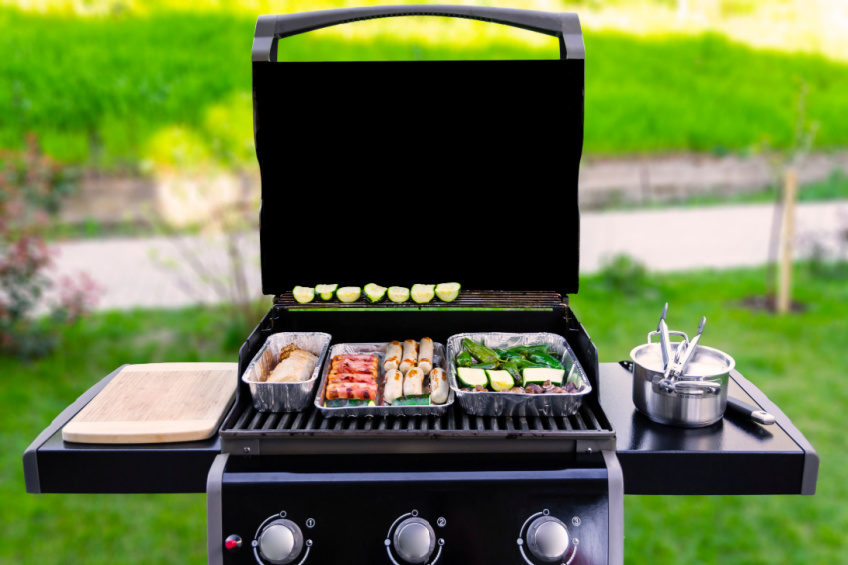 Each burner on a gas grill can control a separate heat zone, so the burner count affects temperature control. A three-burner grill can provide up to three zones, and a four-burner grill up to four.
An extra zone is useful for searing, indirect cooking, and preparing several foods at once. Precise temperature control makes a huge difference in outdoor cooking results.
Direct Grilling and Searing
Direct grilling means cooking food over a lit burner. This method of direct cooking works well for thin foods like burgers, hot dogs, shrimp, and sliced vegetables.
Because direct cooking exposes food to immediate, radiant heat, it quickly produces deep char marks and a crisp crust.
Searing requires high heat, often 500°F or higher, depending on the food and technique. Both grill sizes can reach high temperatures.
The difference is the available cooking area:
- Three burners: Use one burner on high for searing, with the other two on medium or low.
- Four burners: Use two burners on high for a larger searing area, such as when cooking several steaks at once.
When a recipe calls for “high heat,” it helps to think in terms of heat zones rather than dial settings. Sear over the hottest lit zone and use cooler zones for gentler cooking.
Even heat distribution ensures steaks sear uniformly across the active grates.
Indirect Cooking on Three- or Four-Burner Grills
Indirect grilling means cooking food beside the heat source rather than directly over it. It works well for whole chickens, roasts, ribs, and thick pork chops.
A common method combines direct cooking for an initial sear with indirect heat so meat cooks through without scorching.
| Grill Type | Common Indirect Setup |
|---|---|
| Three-burner | Outer burners on, center burner off, food in the middle |
| Four-burner | Outer two burners on, middle two off, food in the center |
A four-burner grill provides more room in the unlit area, which can help with rotisserie cooking that needs steady heat on both sides of the food. The cool zone also gives you a safe place to move food during flare-ups.
Cooking Different Foods at Once
Meals often include foods that need different temperatures. Steak needs high heat, vegetables cook well over medium heat, and buns need only low heat.
A third burner adds a center zone for steady medium heat, which works for many family meals.
A fourth burner adds another option.
Here is one way to set up four heat zones:
- Burner 1: High heat for searing meat
- Burner 2: Medium-high heat for chicken or sausages
- Burner 3: Medium heat for vegetables
- Burner 4: Low heat for warming buns or holding cooked food
If you often cook proteins, sides, and bread at the same time, a fourth heat zone makes meal prep easier.
A 3 burner grill can handle simple multi-zone meals, but stepping up to a 4-burner gas grill gives you independent temperature control over four individual burners.
Look Beyond Burner Count for Performance
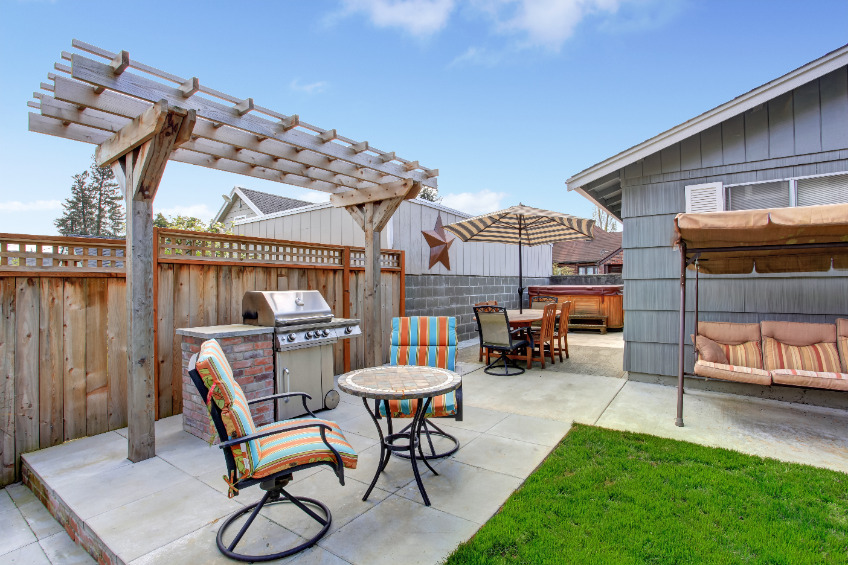 A grill with more burners is not always better. Grill performance depends on BTU output relative to cooking area, heat distribution, burner materials, and how many burners you use at once.
Evaluating btu output alongside total grate size is an essential part of any grill buying guide.
What BTU Ratings Do—and Do Not—Tell You
A BTU rating measures how much heat the burners can produce in an hour. It does not tell you how hot the cooking grate gets or how well the grill retains heat.
Many four-burner grills have a total heat output of 40,000 to 60,000 BTUs, while three-burner models often range from 30,000 to 45,000 BTUs. A higher number may look better, but a larger grill also has more cooking area to heat.
A higher btu output does not automatically translate into better grilling if heat escapes through a lightweight lid. A high BTU rating on a poorly insulated grill will simply waste fuel, so balanced heat output matters far more than raw numbers alone.
A more useful comparison is the BTU-to-cooking-area ratio. Calculate it by dividing total BTUs by the main cooking area in square inches.
| Grill | Total BTUs | Cooking Area | BTUs per Sq. In. |
|---|---|---|---|
| Three-burner | 36,000 | 450 sq. in. | 80 |
| Four-burner | 48,000 | 600 sq. in. | 80 |
Many grillers look for about 80 to 100 BTUs per square inch. In the example above, both grills provide the same BTUs per square inch.
Heat Distribution and Burner Quality
Heat distribution describes how evenly heat covers the cooking grate. Uneven heat creates hot and cold spots, which can cause some food to burn while other food remains undercooked.
On some three-burner grills, the gaps between burners may create cooler areas. Proper burner spacing, heat tents, and a well-fitted lid can help reduce this problem.
Superior heat distribution allows you to use the entire surface evenly during outdoor cooking.
Burner material also affects long-term performance:
- Stainless steel burners resist rust better than painted or plain steel burners.
- Cast stainless steel burners are thicker and heavier, and may last longer under heat and grease exposure.
- Thin sheet-metal burners cost less but may wear out or rust through sooner.
Burner count affects how many heat zones you can set up, while burner quality affects how reliably those zones perform over time.
Premium models featuring cast stainless steel burners maintain steady heat and offer exceptional durability against grease and corrosion.
How Burner Use Affects Fuel Consumption
Fuel efficiency depends on how many burners you light and how long you run them. A grill with fewer burners can be a more fuel-efficient choice for small meals.
You can maintain great fuel efficiency on a larger grill by only lighting the burners you need. If you cook for two people, light just one or two burners to use less gas.
Here are a few ways to save fuel:
- Preheat for about 10 to 15 minutes, but no longer than needed.
- Keep the lid closed to retain heat.
- Turn off burners under empty sections of the grate.
- Clean the burner ports to help gas flow evenly.
Running all four burners for a large group uses more gas, but lets you cook more food at once and may reduce the total time spent grilling.
Weigh Features, Fuel Type, and Price
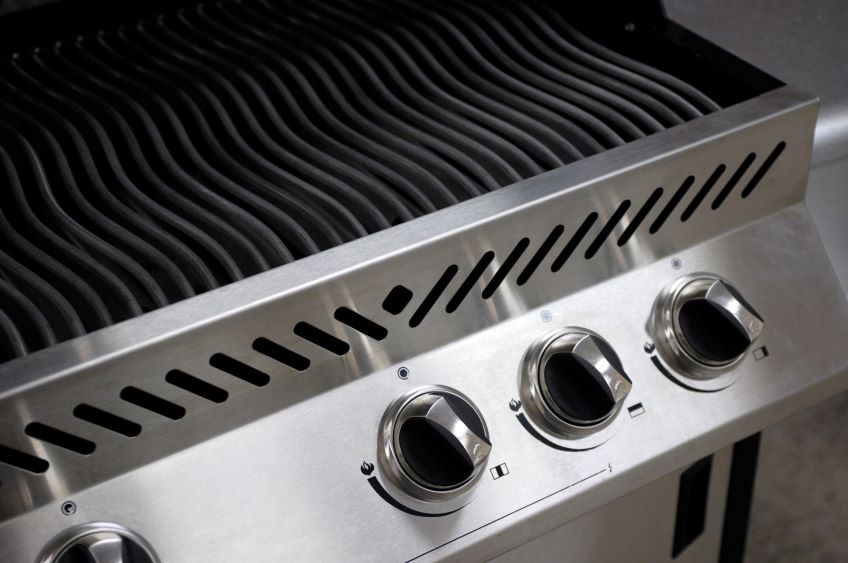 Four-burner gas grills often include extras such as side burners, but pay only for the grill features you will use. Your fuel choice and long-term costs matter alongside the purchase price.
Features Worth Paying For
Four-burner models are more likely to include side burners and warming racks than three-burner models. Evaluating different grill features helps you decide which conveniences justify spending extra money.
| Feature | Why It Helps | Who Needs It |
|---|---|---|
| Electronic ignition | Lights burners with a button | Everyone |
| Built-in thermometer | Shows the temperature inside the lid | Anyone cooking with the lid closed |
| Side burner | Heats sauces or side dishes outdoors | Cooks who prepare full meals outside |
| Easy-reach grease tray | Makes cleanup faster and helps limit flare-ups | Everyone |
A built-in thermometer helps you monitor ambient chamber temperatures at a glance. However, lid gauges can differ from the grate surface, so a separate probe thermometer gives a more accurate reading for meat.
Value grills such as the Char-Broil Pro Series illustrate the tradeoff. You get more burners and extras for less money, but should check the build quality of the grates and cart.
Propane Versus Natural Gas
A propane grill runs on a refillable tank, so you can move it around your patio or take it with you if you rent or relocate. The downside is that the tank can run out mid-cook.
A natural gas grill connects to your home’s gas line, so it does not need refills, but it stays in one spot.
Buy the correct fuel version from the start. Not every propane grill can be safely converted to natural gas. Valves, regulators, and burner openings differ by fuel type.
If you choose propane, a tank gauge or scale helps you know when to refill. Keeping a spare tank on hand also prevents surprises.
Purchase Price and Ongoing Costs
A four-burner grill usually costs more than a three-burner model, and it can cost more to operate and maintain.
- Fuel use: Running more burners uses more gas.
- Cleaning: A larger grate means more surface area to scrub.
- Replacement parts: Burners, igniters, grates, and heat tents wear out over time.
- Storage: Bigger grills need bigger covers and more space.
According to one buying guide, a well-built three-burner grill may last longer than a budget four-burner model. A value four-burner can still make sense if you want more cooking space for the money.
Before you buy, confirm that replacement parts are available for the model. Also check which parts the warranty covers and for how long.
Make the Final Choice
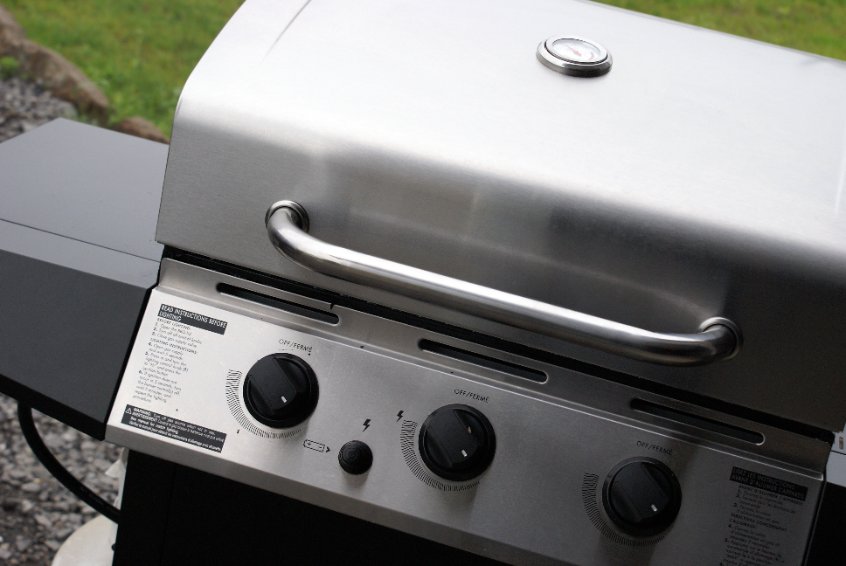 A 3-burner grill fits many households of three to five people and smaller patios. A 4-burner grill makes more sense if you often cook for five to eight people or need more room for heat zones.
Choose Three Burners for Everyday Meals and Limited Space
A three-burner model handles most weeknight cooking with ease. It is a good fit for families of four and smaller groups who grill burgers, chicken, sausages, and vegetables.
Most three-burner grills offer about 350 to 500 square inches of main cooking space. That cooking surface area is ample for direct cooking over high heat while reserving a cooler zone for flare-ups.
For casual outdoor cooking, a compact 3 burner grill provides plenty of heat output for weeknight dinners while keeping fuel consumption low.
Pick three burners if these points describe you:
- You usually cook for 3 to 5 people
- Your patio or balcony has limited room
- You want to spend less at checkout
A three-burner grill also takes up less room than a four-burner model. If you live in an apartment or condo, it is smart to measure your patio space first.
Three-burner models also tend to cost less upfront. A smaller grill offers better fuel efficiency, so a propane tank lasts longer during everyday cooks.
Choose Four Burners for Frequent Entertaining and Larger Cooks
A four-burner gas grill typically offers a larger grilling surface than a 3-burner model.
A dependable 4 burner gas grill provides the room needed to feed a crowd. Most models offer about 450 to 650 square inches of main grate space.
The extra burner can help in a few ways:
- Bigger batches: You can cook more burgers or chicken pieces at once.
- More heat zones: You can sear on one side and cook gently on the other.
- Indirect cooking: Ribs and whole chickens have more room to cook away from direct flame.
Choose four burners if you often host 5 to 8 people. When weighing a 3 burner vs 4 burner grill, consider whether you need maximum heat output and versatile temperature control for frequent entertaining.
A larger grill costs more to buy, fuel, clean, and store, though. Only go bigger if you will regularly use the extra grate space.
If brisket or pork shoulder is your main goal, a four-burner gas grill may not be the best fit. A pellet grill or smoker is better suited to long, low-temperature cooks.
Check Grate Dimensions and Warranty Details for Specific Models
Burner count is only the start.
Before you buy, compare these details for each model:
| What to Check | Why It Matters |
|---|---|
| Primary grate area | The listed “total area” may include the warming rack. |
| Assembled size | Your grill must fit your patio, including its side shelves. |
| Fuel type | Some models are available only for propane. |
| Warranty by part | Burners, igniters, and grates may have shorter warranty coverage. |
For example, the Weber Spirit E-325 is a three-burner gas grill with 450 square inches of total cooking area, including 360 square inches on the main cooking grate and another 90 square inches on the warming rack. It is available in propane configurations, while some Weber Spirit models are also offered in natural gas versions.
A two-burner grill can be a better fit when you have limited space or normally cook for a smaller household. The Weber Spirit E-210, for example, is a compact two-burner propane grill that provides separate heat zones without the larger footprint of a three- or four-burner model.
The Kenmore 3-Burner Propane Grill is another example of a three-burner gas grill, with 30,000 BTUs of total heat output and cast-iron cooking grates. Its three-burner configuration allows you to create separate heat zones, while the folding side tables and wheels make it practical for outdoor cooking and storage.
For more cooking capacity, the Napoleon Freestyle 425 is a four-burner natural gas grill. Its four-burner layout gives you more flexibility for creating separate heat zones when cooking several foods at different temperatures.
Another four-burner option is the Weber Genesis E-325, which provides a larger cooking area than a typical two-burner grill and is available in both propane and natural gas versions. A four-burner configuration can be useful when you regularly cook for several people or want more room for indirect cooking.
These examples show why burner count alone does not determine which grill is right for you. When comparing two-, three-, and four-burner models, also consider the main cooking area, heat-zone flexibility, fuel type, physical size, and available space. Propane models are generally easier to install because they use a tank, while natural gas models require a suitable gas connection at the installation location.
Following a practical grill buying guide helps you evaluate heat distribution, construction quality, cooking capacity, fuel type, and the final delivered price before you order.
FAQ: Do I Need a Three- or Four-Burner Grill?
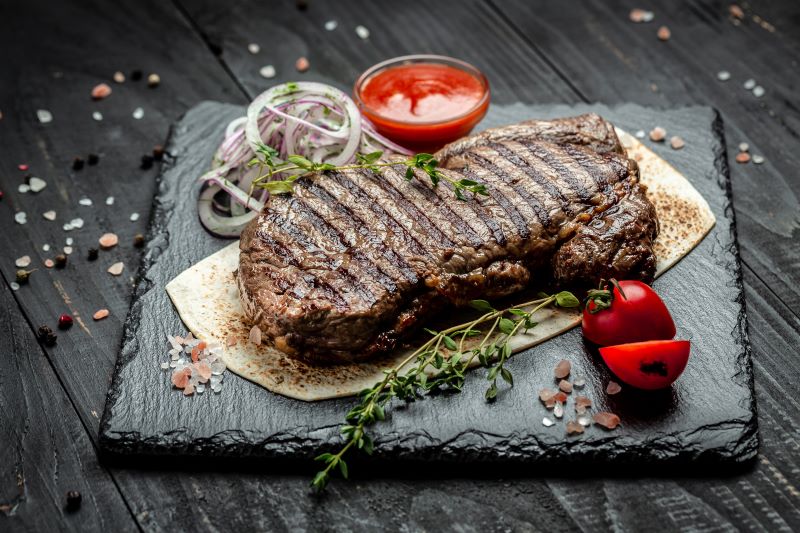 A three-burner grill is usually sufficient for most families, while a four-burner grill provides more cooking space and greater flexibility for larger meals. The right choice depends mainly on how many people you cook for and whether you regularly use different heat zones.
Is a Three-Burner Grill Big Enough?
Yes. A three-burner grill typically provides enough cooking space for everyday family meals, including burgers, steaks, chicken, vegetables, and other foods. It can also create separate direct and indirect cooking zones by adjusting the burners independently.
What Is the Advantage of a Four-Burner Grill?
A four-burner grill provides a larger cooking surface and allows you to create multiple temperature zones more easily. This can be useful when cooking different foods at different temperatures or preparing larger quantities at once.
Is a Four-Burner Grill Better for Large Families?
A four-burner model can be more practical if you regularly cook for a large family or entertain several guests. The additional burner and cooking area give you more room to spread food across the grill without overcrowding it.
Does a Four-Burner Grill Use More Gas?
It can, particularly when all four burners are operating at the same time. However, gas consumption depends on the grill’s burner output, cooking temperature, and how many burners you actually use rather than simply the number of burners.
Which Is Better for Two-Zone Cooking?
Both three- and four-burner grills can provide effective two-zone cooking. On a three-burner grill, you can use one or two burners for direct heat and leave another section unlit for indirect cooking, while a four-burner grill gives you more flexibility in creating and adjusting separate heat zones.