


When you shop for a new gas grill, you probably notice the BTU number listed prominently. Short for British thermal unit, this rating seems to promise that more BTUs mean better food. But that is not always true.
A higher BTU rating does not automatically mean your grill will cook better. Heat retention, burner design, and grill size all affect how effectively heat reaches your food. A grill with a lower BTU rating but good insulation can outperform a higher-rated model that loses heat. Understand how BTU ratings work before choosing a grill.
This guide explains what BTUs measure, how they relate to cooking surface area, and why the “bigger is better” myth can lead you to the wrong grill for your needs.
The Short Answer: More Heat Is Not Always Better
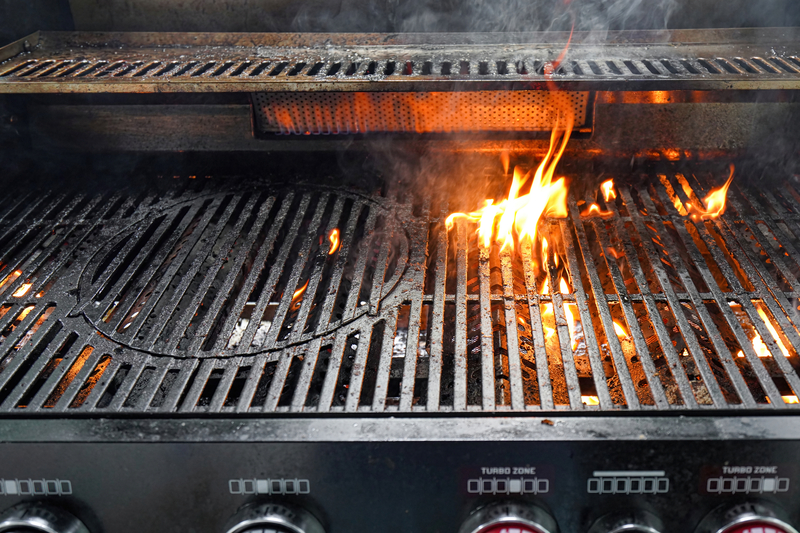 A high BTU rating tells you how much heat a grill’s burners can produce, not how hot your food will get or how evenly it will cook. What matters more is how effectively the grill uses and retains that heat.
When Extra Heat Helps
More heat output can help in specific situations. When searing steaks, extra heat can help you develop a rich crust quickly before the inside overcooks.
Higher output also helps when you cook in cold or windy weather, when the grill loses heat to the surrounding air.
A high-BTU grill may also preheat faster, which matters if you want to start cooking without a long wait. But once your grill reaches your target temperature, additional heat output may offer little benefit. At that point, steady, even heat matters more than a bigger flame.
Why a Lower-Rated Grill Can Cook Better
A low-BTU grill can outperform a high-BTU one if it features sturdy grill construction. Heat retention can matter far more than raw output.
A grill with a thick lid, tight seals, and heavy-duty materials holds heat better, so it needs less fuel to maintain the desired temperature.
Even cooking also depends on burner placement and how heat spreads across the grates, not just how much heat the burners produce. A grill with poor heat distribution can leave burnt and undercooked spots side by side, regardless of burner power, as burner design and insulation can matter more than raw BTU numbers.
The Trade-Off Between Heat Output and Fuel Use
A higher BTU rating indicates greater potential fuel use when the burners run at full output. Actual propane consumption depends on how long and how intensely you grill. A high-output grill may use more fuel than a smaller one, even if both reach the same cooking temperature.
Over time, higher fuel use can add to your costs. You may pay more to refill propane tanks or use natural gas than you would with a more efficient grill. Before choosing a grill based on BTUs alone, consider how often you cook and how long each session lasts. A high-BTU grill can use more propane or natural gas and increase fuel costs.
What a Grill’s BTU Rating Actually Measures
 A BTU rating indicates a grill’s heat input, not how hot your food will get. Because a British thermal unit measures fuel burned rather than cooking performance, higher numbers can mislead buyers. The advertised figure may also include burners that do not heat the main cooking surface.
BTUs Measure Burner Output, Not Cooking Temperature
A British thermal unit (BTU) is a unit of heat energy. For a grill, the BTU rating indicates the burners’ heat input per hour when they run at full output.
Specifically, one British thermal unit represents the energy required to raise the temperature of a pound of water by one degree. This measurement reflects fuel consumed rather than the internal cooking temperature.
Actual cooking temperatures also depend on how well the lid seals, metal thickness, and how heat spreads across the cooking grate.
Two grills with the same BTU rating can cook very differently. One might hold heat evenly across the cooking surface, while the other has hot spots in the middle and cooler zones near the edges. BTUs do not necessarily indicate better BBQ performance because the rating measures heat input, not how evenly the grill distributes or retains that heat.
Check Whether the Advertised Total Includes Extra Burners
Many grills advertise a total BTU rating that combines the output of every burner. This can include a side burner, a rotisserie burner, and an infrared rear burner.
These extra burners are not located under the main cooking grate. A side burner is intended for sauces or side dishes. A rotisserie burner, including an infrared rear burner, is designed to cook food on a rotating spit rather than heat the main cooking surface.
When you see a high total BTU number, check the specifications for a breakdown. Look for the BTU rating of the main burners under the primary cooking grate.
That figure is more useful when comparing grills for direct cooking. A grill with a lower overall BTU rating may still perform well if more of its output comes from the main burners rather than side or rotisserie burners.
How to Compare BTUs Across Grill Sizes
 A high BTU number on its own does not tell you much. To compare grills more fairly, consider the main-burner BTUs per square inch, use typical ranges for different grill sizes as a guide, and think about how much food you cook at once.
Calculate Main-Burner BTUs per Square Inch
Total BTUs mean little without the cooking surface area. For a rough comparison of heat output relative to size, divide the main-burner BTUs by the cooking area in square inches.
For example, a grill with 40,000 BTUs and 500 square inches of cooking space has 80 BTUs per square inch. A grill with 60,000 BTUs and 750 square inches also has 80 BTUs per square inch, even though its total BTU rating is higher. This calculation shows why you should compare BTUs per square inch, not just total BTUs. It can help you compare a compact grill with a large freestanding gas grill, but it does not account for heat retention or distribution.
Use Common BTU Ranges as a Starting Point, Not a Rule
Many backyard grills fall between 80 and 100 BTUs per square inch, a range that can work well for everyday cooking. Some sources cite about 110 BTUs per square inch as a sign of strong performance, though results also depend on burner design and airflow.
These figures are a rough guide, not strict BTU requirements. Finding a good BTU for a gas grill usually means balancing total output with efficient design rather than chasing the highest number.
A grill below 80 BTUs per square inch may still cook well if it has good airflow and heat retention. Identifying your specific BTU requirements helps you avoid paying for excess burner power.
Remember that a higher BTU output does not always mean better grilling performance. Finding a good BTU for a gas grill comes down to matching output to your cooking habits.
Match the Primary Cooking Area to the Number of People You Feed
Once you have considered the BTU-per-square-inch range, choose a cooking area that suits your household. A grill with 300 to 400 square inches works for two or three people, while families of four to six often need 500 to 700 square inches.
Larger gatherings may call for 700 square inches or more, which is common on a full-sized freestanding gas grill. Choosing the right cooking surface area first, then checking whether the BTU rating is appropriate for that size, can help you avoid paying for more output than you need. This approach also helps you avoid a grill that looks good on paper but runs out of room during a cookout.
Why Grill Design Matters as Much as Burner Output
 The number on the box tells only part of the story. How your grill distributes and retains heat matters just as much, and depends on burner layout, grate material, and overall build quality.
Burner Layout and Heat Diffusers Reduce Hot Spots
Burner design affects how evenly heat spreads across the cooking surface. A grill with only one or two burners may have cooler spots in the corners, even if its total BTU rating looks high.
Look for a flame tamer or heat diffuser plate above each burner. This part sits between the flame and the grates, helping distribute heat before it reaches your food.
Without a diffuser, some areas may get direct, intense heat while others stay cooler. Burner design and firebox engineering matter more than raw BTU numbers, since well-placed burners with effective diffusers can outperform a grill with a higher BTU rating but a poor layout.
Durable stainless steel burners tend to resist rust better than painted steel tubes, though durability depends on the material grade.
Quality stainless steel burners also provide reliable gas flow for consistent flame patterns across the cookbox.
Grates and Firebox Construction Affect Heat Retention
Your grates do more work than many people think. Heavy cast iron grates retain heat exceptionally well and create strong sear marks, but they need regular oiling to help prevent rust.
Stainless steel grates heat up quickly and resist corrosion, though they may not retain heat as well when you open the lid. Either material can work well, but the choice affects how your food cooks.
The firebox matters, too. A grill with thin, single-wall metal loses heat quickly, forcing the burners to work harder to maintain the cooking temperature.
Heavy-duty grill construction plays a central role in thermal efficiency. Grills built with heavier-gauge steel or 304 stainless steel construction can retain heat better and use fuel more efficiently.
A tight-sealing lid is another key aspect of grill construction, preventing gaps that let heat escape and force the burners to compensate.
Look for Consistent Heat Across the Grate
Even heat distribution helps determine whether your food cooks evenly. Achieving even cooking requires consistent burner output and well-designed heat diffusers.
You can check for even heat distribution with a simple bread test. Place a few slices across the grate, close the lid, and see which pieces toast faster.
Uneven browning points to hot spots caused by poor burner spacing or an inadequate heat diffuser. A grill designed for even cooking gives you far better results than one with high BTUs but patchy temperatures.
Some manufacturers list BTU per square inch as a useful performance metric alongside total BTU output. However, it does not show whether the grate delivers even heat distribution.
Choose Heat Capacity for the Way You Cook
 Your cooking style matters more than the BTU number on the box. Think about whether you often sear steaks, smoke meat for hours, or want extra features before you pick a grill.
High-Heat Searing and Infrared Options
If you like searing steaks, look for a grill with a powerful burner in one area rather than relying only on a high total BTU count. Some grills include an infrared burner designed specifically for high-heat searing.
Dedicated infrared burners heat up quickly and reach extreme temperatures in a focused space. Ceramic infrared burners create a searing station for searing steaks without wasting gas across the rest of the grill.
For high-heat grilling, check how quickly the grill reaches its top temperature and how well it recovers after you open the lid. A grill with verified high grate-level heat and a usable sear zone will serve you better than one with only a high BTU rating and no effective sear zone.
Low-and-Slow Cooking and Indirect Heat
Slow cooking, also called low and slow cooking, needs a different setup. You want burners you can turn down low and keep steady for a long time, not just high output.
Look for independent burner controls so you can turn off one side and cook with indirect heat on the other. This setup works well for ribs, whole chickens, and other foods that need hours of gentle heat.
A smoker box is a useful add-on if you want wood-smoke flavor during a long cook. It sits near a burner and heats wood chips slowly rather than burning them quickly.
Check how well the grill maintains a low, steady temperature before buying, since this matters more for slow cooking than the total BTU rating.
How Specialty Features Fit Into Your Plans
Extra burners and attachments can add value, but only if you’ll actually use them. A rotisserie burner, for example, sits at the back of the grill and cooks food on a rotating spit, helping roast whole chickens or roasts evenly.
Side burners let you cook sauces or sides without using the main grate. These features may be included in a grill’s total BTU rating, which can make the number look bigger than the output available to the main cooking area.
Before buying, check which burners serve the main cooking area and which are separate add-ons. This helps you understand what you’re getting for the way you plan to cook.
Make the Final Choice Using Performance and Running Costs
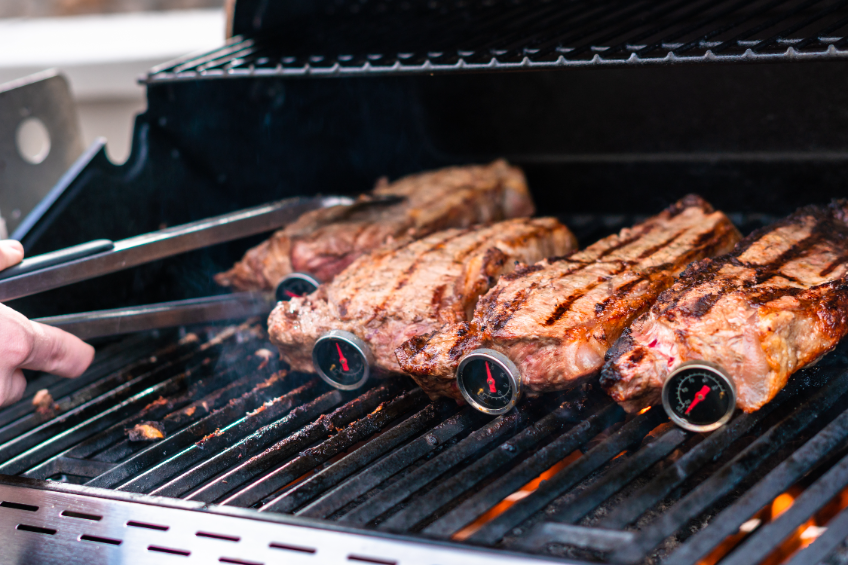 Picking a grill comes down to how it actually cooks, not what the box says. Compare three things before you buy: how quickly it heats up, how well it maintains a steady temperature, and how much fuel it uses.
Compare Heat-Up Time, Temperature Control, and Cold Spots
Time how long your grill takes to reach 500°F. Heat-up time varies by grill, weather, and starting conditions, so use it as one comparison point rather than a pass-or-fail test. A longer wait may reflect the grill’s design, fuel supply, or conditions, regardless of its BTU rating.
Cold spots are just as important. Run a bread test: lay slices across the whole grate and see which ones brown first and which stay pale. Uneven browning points to poor heat distribution, even on a grill with high total output. A grill with fewer BTUs but a solid lid and good burner spacing may cook more evenly than a larger, less expensive model.
Consider Gas Consumption at the Settings You Will Use
Most people don’t cook on high heat the whole time. Check how much propane or natural gas the grill uses at medium settings, since that’s where you’ll spend much of your cooking time.
A standard propane grill tank holds about 20 pounds of fuel. A grill that burns through fuel quickly at medium heat will cost more to run over a season of regular use, even if the sticker price looked like a bargain.
Two grills with the same BTU ratings can use different amounts of gas, depending on how well they retain heat. Better heat retention can reduce how often the burners need to run, lowering gas consumption while maintaining the cooking temperature.
Prioritize Useful Features Over a High BTU Rating
Look beyond the BTU rating and consider what the grill actually offers.
Focus on these features:
- Thick, well-sealed lid – helps retain heat instead of letting it escape
- Cast iron or heavy stainless steel grates – transfer heat evenly to food
- Multiple burner zones – let you create hot and cool areas for different foods
- Built-in thermometer – lets you monitor the grill’s temperature without opening the lid
A well-built grill with these features and a 40,000 BTU rating may perform better than a basic model rated at 60,000 BTU.
Solid grill construction affects how effectively the grill retains and distributes heat, making build quality far more important than the BTU rating alone.
Choosing the Best BTU Range for Different Grills
 Different grill sizes and designs require different BTU outputs to heat the cooking surface effectively. However, BTU rating should not be considered in isolation. Grill construction, burner design, cooking area, heat retention, and environmental conditions such as wind and altitude can all affect how efficiently a grill uses its available heat.
Small Gas Grills and Portable Models
Small gas grills typically require less total BTU output because they have smaller cooking chambers and less cooking surface to heat. Portable models often prioritize fuel efficiency and compact design rather than maximum heat output.
As a general guide, a small grill with around 200 square inches of cooking area may perform well with approximately 15,000–20,000 BTUs, although the exact requirement depends on the grill’s design and burner efficiency.
Key BTU considerations for small grills:
- Wind can have a greater effect on heat retention.
- Smaller cooking chambers generally require less total heat output.
- Fuel capacity can limit how long the grill can operate at high heat.
- Multiple burners can provide better temperature control than a single burner.
Example: NOMADIQ Portable Propane Gas Grill — a compact tabletop and camping-style grill.
- Cooking area: Approximately 226 square inches
- BTU output: Approximately 9,200 BTUs across two burners
- Why it works: A compact cooking surface does not require the same total heat output as a large backyard grill. The NOMADIQ’s relatively modest BTU rating is designed around its small cooking area and portable format.
Medium and Large Gas Grills
As cooking areas become larger, grills generally require greater total BTU output to heat the cooking surface and maintain useful temperatures across multiple cooking zones.
A medium grill with approximately 300–500 square inches of cooking area may fall in the 24,000–40,000 BTU range, while larger grills with more than 500 square inches can require 40,000–60,000 BTUs or more.
However, a higher BTU rating does not automatically mean a grill will perform better. Burner placement, grate design, lid construction, and the grill’s ability to retain heat can be just as important.
Example: Weber® Genesis E-325 Gas Grill — a full-sized propane grill designed for backyard cooking.
- Cooking area: Approximately 787 square inches
- BTU output: Approximately 39,000 BTUs across its main burners
- Why this works: The Genesis E-325 combines a large cooking area with multiple burners, giving you enough heat for searing while allowing different temperature zones for indirect cooking. Its BTU output is well matched to its cooking surface, showing why overall grill design and heat distribution matter just as much as the headline BTU number.
Extra-Large and Island Grills
Very large grills with extensive cooking surfaces and additional burners can have substantially higher BTU ratings. These grills may include side burners, searing burners, rotisserie burners, or other cooking features that contribute to the total advertised BTU figure.
Example: BIG HORN 6+2 Burners Deluxe Stainless Steel Island Gas Grill — a large island-style grill designed for cooking for larger groups.
- Cooking area: Approximately 1,033 square inches
- BTU output: Approximately 98,600 BTUs total
- Why the output is high: A grill of this size has substantially more cooking surface and may include several additional burners. A high total BTU rating allows different sections of the grill to operate simultaneously, although the advertised total includes the output of its various burners and should not be compared directly with the main-burner BTU rating of a smaller grill.
Recommended BTU Ranges by Grill Size
| Grill Size | Cooking Area | Approximate Total BTUs | General BTU Range |
|---|---|---|---|
| Small | Up to 300 sq. in. | 15,000–25,000 | Lower output |
| Medium | 300–500 sq. in. | 24,000–40,000 | Moderate output |
| Large | 500+ sq. in. | 40,000–60,000+ | Higher output |
| Extra Large | 800+ sq. in. | 60,000+ | Very high output |
These ranges are useful as a general starting point rather than a strict formula. A grill with a lower BTU rating can outperform a higher-rated model if it has better burner design, insulation, heat retention, and construction.
Multiple burners also become increasingly useful as grill size increases. Three or four burners, for example, can create more useful heat zones than a smaller number of extremely high-output burners.
Finally, construction quality matters. Heavy-gauge materials and a well-designed lid can help a grill retain heat, meaning it may maintain cooking temperatures efficiently without relying solely on a very high BTU rating.
Is Higher BTU Better for BBQ? What Weber Says
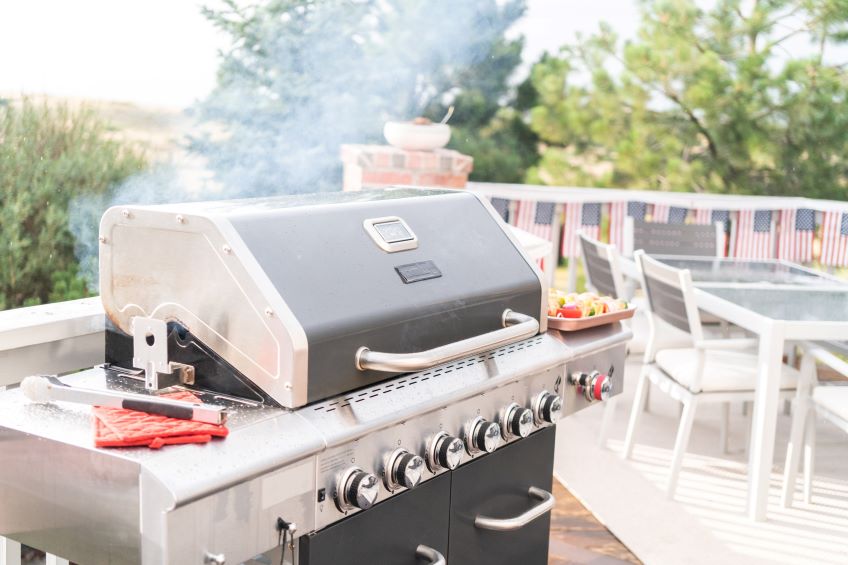 Not necessarily. A higher BTU rating does not automatically mean a gas grill will cook better, reach a higher temperature, or produce better searing results. BTU (British Thermal Unit) measures the amount of heat energy a grill’s burners can produce over time, but the number alone does not tell you how efficiently that heat is transferred to the cooking surface.
Weber explains that a common misconception is that grills with higher BTU ratings will necessarily get hotter. Weber notes that its gas grills are designed to reach approximately 500°F to 550°F, despite differences in size and burner output.
Grill size, burner design, heat distribution, cooking-grate material, insulation, and overall efficiency can all affect performance. A larger grill may have a higher total BTU rating simply because it has more burners and a larger cooking area, rather than because it is capable of reaching a higher cooking temperature.
This is why BTU should be considered alongside the size of the cooking surface and how effectively the grill uses its heat. Weber’s guidance specifically states that higher BTUs are not required to achieve good grilling results and emphasizes efficiency and consistent heat instead.
For most home grilling, the ability to maintain a steady temperature and distribute heat evenly is more useful than simply choosing the grill with the highest BTU number. A grill with adequate burner power, good heat retention, and effective temperature control can perform very well without having an exceptionally high BTU rating.
FAQ: Is Higher BTU Better for BBQ?
 Not necessarily. A higher BTU rating does not automatically mean a better BBQ grill because cooking performance also depends on burner design, heat distribution, cooking surface, and how efficiently the grill uses its fuel.
What Does BTU Mean on a BBQ Grill?
BTU, or British thermal unit, measures the amount of heat a grill’s burners can produce over time. A higher BTU rating means the burners can produce more heat, but it does not by itself indicate how hot the cooking grates will become.
Does Higher BTU Mean a Hotter Grill?
Not always. A grill with a high BTU output can still have poor heat distribution or lose substantial heat through its construction, lid, or gaps.
What BTU Is Good for a Gas Grill?
There is no single BTU rating that is ideal for every gas grill. A better comparison is BTU output relative to the cooking area, along with burner design, heat distribution, construction, and the grill’s ability to maintain consistent temperatures.
Is BTU Important for Searing?
BTU can contribute to a grill’s ability to produce and maintain high heat, but searing performance depends on more than burner output. The design of the burners, grates, heat-retention materials, and distance between the burners and cooking surface all affect how effectively a grill sears food.