
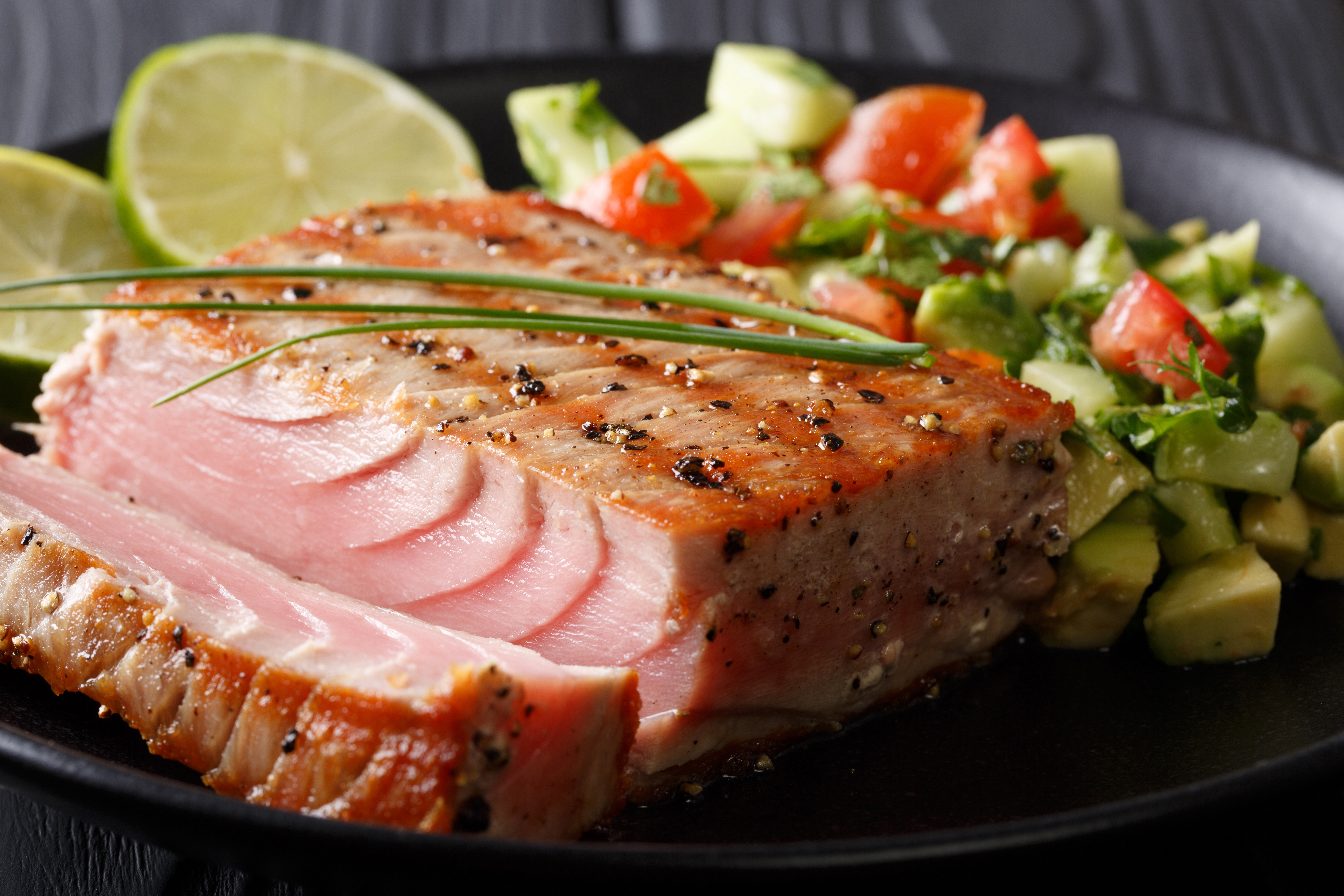
Grilling tuna transforms this prized fish into a restaurant-quality meal that showcases its rich flavor and meaty texture.
The key lies in understanding proper selection, preparation, and timing to achieve that perfect sear while maintaining a tender interior.
Successful tuna grilling requires choosing thick, high-quality steaks, preheating the grill to high heat, and searing for just 2-3 minutes per side to create a beautiful crust while keeping the center pink.
This technique prevents overcooking, which can turn the fish dry and tough.
Both gas and charcoal grills work effectively for tuna, making this cooking method accessible to home cooks with various equipment.
The process involves selecting the right cut, proper seasoning techniques, and mastering temperature control to deliver consistently delicious results that rival professional kitchens.
Choosing the Best Tuna for Grilling

The quality of tuna directly impacts the final grilled result.
Fresh, high-grade tuna with proper thickness and the right species will deliver superior flavor and texture compared to lower-quality alternatives.
Selecting Fresh vs Frozen Tuna
Fresh tuna provides the best grilling experience when available.
Look for steaks with bright red color and firm texture that springs back when pressed.
The flesh should appear moist without any brown spots or strong fishy odor.
Fresh tuna should smell like the ocean, not overly fishy.
Avoid steaks with dark patches, slimy texture, or dull coloring.
Purchase from reputable fishmongers who can verify the catch date.
High-quality frozen tuna can work well if fresh options aren’t available.
Choose individually wrapped steaks that were flash-frozen at sea.
Avoid packages with ice crystals or freezer burn.
Thaw frozen tuna in the refrigerator for 12-24 hours before grilling.
Never use warm water or microwave defrosting, as this damages the texture.
Pat completely dry before seasoning and grilling.
Recommended Tuna Species
Yellowfin tuna offers excellent grilling performance with its firm texture and mild flavor.
This species holds together well on the grill and provides consistent results for home cooks.
Bigeye tuna delivers rich flavor and high fat content that stays moist during grilling.
Its deeper red color and buttery texture make it ideal for searing techniques.
Bluefin tuna provides premium quality but comes with sustainability concerns and higher prices.
Albacore works for grilling but has lighter color and milder taste than other varieties.
Avoid skipjack tuna for grilling purposes.
Its softer texture and stronger flavor work better for canned preparations than high-heat cooking methods.
Best Cuts for Grilling
Tuna steaks should measure 1 to 1.5 inches thick for optimal grilling results.
Thinner cuts cook too quickly and become dry, while thicker pieces may remain raw in the center.
Look for center-cut steaks from the loin section.
These pieces provide uniform thickness and consistent cooking. Avoid tail sections or irregularly shaped cuts that cook unevenly.
Tuna loin portions work well for larger groups.
Cut the loin into individual steaks just before grilling to maintain freshness.
Keep cuts perpendicular to the grain for best texture.
Steaks should weigh 6-8 ounces per serving.
This size provides adequate portion control while allowing proper searing time.
Uniform sizing ensures all pieces finish cooking simultaneously.
Preparation Essentials
 Proper preparation transforms ordinary tuna into an extraordinary grilled dish.
Quality cutting techniques, strategic marinating, and precise seasoning create the foundation for perfectly grilled tuna steaks.
Trimming and Slicing Tuna Steaks
Fresh tuna requires minimal trimming but careful attention to cutting technique.
Remove any dark bloodline meat along the edges using a sharp fillet knife.
This darker flesh can taste metallic when grilled.
Cut steaks to 1 to 1.5 inches thick for optimal cooking control.
Thinner cuts cook too quickly and become dry.
Thicker pieces allow for proper searing while maintaining the desired internal temperature.
Use smooth, single strokes when slicing to prevent tearing the flesh.
Cut against the grain when possible to ensure tender results.
The tuna should feel firm to the touch with bright red coloring throughout.
Key cutting guidelines:
- Maintain consistent thickness across each steak
- Keep cuts perpendicular to the work surface
- Trim away any sinew or connective tissue
- Pat steaks dry with paper towels before seasoning
Marinating Tuna for Flavor
Tuna benefits from brief marinating periods of 15 to 30 minutes maximum.
Longer exposure to acidic ingredients begins cooking the fish and changes its texture.
Effective marinades balance oil, acid, and aromatics.
Olive oil provides moisture protection during grilling.
Citrus juice or vinegar adds brightness without overwhelming the fish’s natural flavor.
Soy sauce-based marinades work particularly well with tuna’s meaty texture.
Combine soy sauce, sesame oil, and ginger for an Asian-inspired profile.
Mediterranean versions use olive oil, lemon juice, and herbs.
Popular marinade combinations:
- Soy sauce + sesame oil + garlic
- Olive oil + lemon juice + fresh herbs
- Balsamic vinegar + olive oil + black pepper
- Teriyaki sauce + rice wine vinegar
Always marinate in the refrigerator in a non-reactive container.
Remove tuna 10 minutes before grilling to bring closer to room temperature.
Essential Seasonings
Salt and freshly ground black pepper form the foundation of tuna seasoning.
Apply seasonings 30 minutes before grilling to allow proper penetration without drawing out moisture.
Coarse sea salt works better than table salt for tuna steaks.
The larger crystals create better texture contrast and don’t dissolve as quickly.
Use approximately 1/2 teaspoon per side for standard steaks.
Complementary spices enhance tuna without masking its flavor.
Sesame seeds provide nutty crunch when pressed into the surface.
Crushed coriander seeds add citrusy notes that pair well with the fish’s richness.
Recommended seasoning blends:
- Classic: Coarse salt + cracked black pepper
- Asian: Sesame seeds + garlic powder + five-spice
- Mediterranean: Dried oregano + lemon zest + sea salt
- Spicy: Cayenne pepper + paprika + onion powder
Avoid over-seasoning, which competes with tuna’s natural taste.
Light, even application allows the fish’s flavor to remain prominent while adding complementary notes.
Grilling Techniques for Tuna
 Proper grilling technique determines whether tuna turns out perfectly seared or overcooked and dry.
The key factors include choosing the right heat method, maintaining precise temperatures, and timing each step accurately.
Direct vs Indirect Heat
Direct heat works best for tuna steaks and fillets.
Place the fish directly over the heat source for optimal searing and crust formation.
Direct grilling creates the signature caramelized exterior that seals in moisture.
The high heat quickly develops grill marks while keeping the interior tender.
Indirect heat should be avoided for tuna.
This method cooks too slowly and can result in an overcooked, dry texture throughout the fish.
Tuna’s firm, meaty structure responds well to quick, high-temperature cooking.
The direct method allows for precise control over doneness levels.
Position tuna steaks perpendicular to grill grates to prevent sticking.
This also creates attractive crosshatch marks that enhance presentation.
Optimal Grilling Temperatures
Preheat the grill to 450-500°F before cooking.
This temperature range ensures proper searing without burning the exterior.
Medium-high to high heat creates the ideal cooking environment.
Lower temperatures won’t develop the necessary crust, while excessive heat chars the outside before the inside reaches proper doneness.
Gas grills should run on medium-high settings.
Charcoal grills need hot coals with minimal flame for consistent heat distribution.
Oil the grill grates thoroughly to prevent sticking.
The high protein content in tuna makes it prone to adhering to metal surfaces.
Test grill temperature by holding a hand 4-5 inches above the grates.
The heat should feel uncomfortably hot within 2-3 seconds.
Timing and Doneness
Cook tuna steaks 2-3 minutes per side for rare doneness.
This timing applies to steaks that are 1-1.5 inches thick.
Rare tuna maintains a cool, red center with a thin band of cooked flesh around the edges.
The internal temperature reaches 120-125°F.
Medium-rare requires 3-4 minutes per side.
The center becomes warm and pink with an internal temperature of 130-135°F.
Avoid cooking beyond medium-rare as tuna becomes dry and loses its delicate texture.
Well-done tuna resembles canned tuna in both taste and consistency.
Use a meat thermometer for accuracy, inserting it horizontally into the thickest part.
Visual cues include firm edges with a slightly soft center when pressed gently.
Equipment and Tools Needed

Grilling tuna requires minimal equipment but choosing the right grill type and essential accessories makes a significant difference in achieving perfect sear marks and temperature control.
Best Grills for Tuna
Gas grills offer the most consistent temperature control for tuna steaks.
They heat quickly and allow precise adjustments during the cooking process.
Charcoal grills provide excellent high-heat searing capabilities.
They create distinctive grill marks and impart a subtle smoky flavor to the tuna.
Electric grills work well for indoor cooking when outdoor grilling isn’t possible.
They maintain steady temperatures but may require longer preheating times.
Pellet grills combine convenience with wood-fired flavor.
They excel at maintaining consistent medium-high heat needed for tuna steaks.
The key requirement is achieving medium-high heat around 400-450°F.
Any grill that reaches this temperature range will produce excellent results.
Recommended Grill Accessories
Metal tongs are essential for safely flipping tuna steaks without piercing the flesh.
They provide better control than spatulas or forks.
Paper towels help pat steaks dry before seasoning and clean grill grates between uses.
Instant-read thermometer ensures accurate internal temperature readings.
Tuna reaches medium-rare at 135°F and medium at 145°F.
Grill brush keeps grates clean and prevents sticking.
Clean grates are crucial for proper searing.
Kitchen towel protects hands when handling hot equipment and wipes excess oil from steaks.
Step-by-Step Grilling Method
 The grilling process requires proper grill preparation at 400-450°F, careful placement of seasoned tuna steaks, and precise timing with flipping at the 2-3 minute mark.
Temperature monitoring ensures the ideal seared exterior while maintaining the desired internal doneness.
Preparing the Grill
The grill should reach a temperature between 400-450°F before cooking begins.
This high heat creates the necessary sear on the tuna’s exterior while keeping the interior tender.
Clean the grill grates thoroughly with a wire brush to remove any residue.
Oil the grates using a paper towel soaked in vegetable oil or cooking spray to prevent sticking.
For Gas Grills:
- Preheat on high for 10-15 minutes
- Reduce to medium-high once temperature stabilizes
For Charcoal Grills:
- Light coals 20-30 minutes before cooking
- Arrange coals for direct high heat cooking
- Test heat by holding hand 5 inches above grates for 2-3 seconds
Remove tuna steaks from refrigeration 15 minutes before grilling.
This allows them to reach room temperature for even cooking throughout.
Placing Tuna on the Grill
Place tuna steaks directly on the hottest part of the grill grates.
The steaks should make an audible sizzling sound when they contact the hot surface.
Position steaks with adequate spacing between each piece.
This prevents overcrowding and ensures proper heat circulation around each steak.
Initial Placement Guidelines:
- Place steaks perpendicular to grill grates for attractive grill marks
- Avoid moving steaks immediately after placement
- Allow 2-3 minutes for proper searing
The high heat creates a caramelized crust on the bottom surface.
This searing process locks in juices and develops the characteristic grilled flavor.
Resist the urge to press down on the steaks with a spatula.
This forces out natural juices and can result in dry fish.
Turning and Monitoring Tuna
Turn tuna steaks after 2-3 minutes of initial cooking.
Use tongs or a thin spatula to flip each steak carefully without breaking the seared crust.
Cooking Times by Preference:
- Rare: 2-3 minutes per side (internal temperature 115°F)
- Medium-rare: 3-4 minutes per side (internal temperature 125°F)
- Medium: 4-5 minutes per side (internal temperature 135°F)
Check doneness by inserting an instant-read thermometer into the thickest part of the steak.
The center should remain pink for rare to medium-rare preparations.
Visual cues help determine doneness without cutting into the fish.
The exterior develops a golden-brown crust while the sides show a thin cooked layer.
Remove steaks from grill immediately once desired doneness is reached.
Tuna continues cooking from residual heat even after removal from the grill.
Serving Grilled Tuna
Properly serving grilled tuna requires attention to resting time, strategic slicing, and thoughtful accompaniments.
The right toppings enhance the fish’s natural flavors while complementary sides create a balanced meal.
Resting Time and Slicing
Allow grilled tuna to rest for 2-3 minutes after removing it from the grill.
This brief resting period helps redistribute the juices throughout the fish.
Use a sharp knife to slice tuna against the grain.
Cut the steak into ¼-inch to ½-inch thick slices for optimal presentation and texture.
Slicing Techniques:
- Straight cuts: Standard approach for most presentations
- Diagonal cuts: Creates larger surface area and elegant appearance
- Cubes: Perfect for salads or appetizer portions
Position the knife at a slight angle when slicing to create wider pieces.
Clean the blade between cuts to maintain neat, professional-looking slices.
For seared tuna that’s rare in the center, the contrast between the cooked exterior and pink interior becomes more visible with proper slicing technique.
Topping Ideas
Fresh toppings complement grilled tuna without overwhelming its delicate flavor.
Simple preparations work best to highlight the fish’s natural taste.
Classic Toppings:
- Sesame seeds (black or white)
- Fresh herbs (cilantro, chives, parsley)
- Citrus zest (lemon, lime, orange)
- Pickled ginger
- Wasabi paste
Sauce Options:
- Soy-ginger glaze
- Lemon-herb butter
- Avocado-wasabi mayonnaise
- Ponzu sauce
- Olive oil with garlic
Drizzle sauces lightly over the sliced tuna rather than drowning the fish.
Sprinkle dry toppings just before serving to maintain their texture and color.
Pairing with Sides
Grilled vegetables make excellent companions to tuna steaks.
Asparagus, zucchini, and bell peppers can be grilled alongside the fish for convenience.
Vegetable Sides:
- Grilled asparagus with lemon
- Roasted Brussels sprouts
- Steamed broccoli
- Mixed greens salad
Starch Options:
- Jasmine rice
- Quinoa pilaf
- Roasted potatoes
- Rice noodles
Light, fresh sides work better than heavy preparations.
Asian-inspired vegetables like bok choy or snow peas pair particularly well with tuna’s meaty texture.
Consider temperature contrast when plating.
Warm grilled tuna pairs nicely with cool cucumber salad or chilled gazpacho for summer meals.
Common Mistakes to Avoid
Over-seasoning the tuna masks its natural flavor.
The fish has a rich taste that requires minimal enhancement.
Using table salt creates overly salty results.
Coarse sea salt or kosher salt provides better control and distribution.
Skipping the drying step prevents proper searing.
Patting tuna steaks dry with paper towels removes excess moisture that interferes with crust formation.
| Mistake | Result | Solution |
|---|---|---|
| Overcooking | Dry, tough texture | Use meat thermometer |
| Dirty grill grates | Sticking and tearing | Clean grates thoroughly |
| Wrong temperature | Uneven cooking | Preheat to high heat |
Cooking on a dirty grill causes sticking and leaves unwanted flavors.
Clean grates ensure even cooking and easy release.
Overcooking tuna is the most frequent error.
The internal temperature should reach 125°F for medium-rare, which maintains the tender texture.
Using thin steaks leads to overcooking.
Thick cuts of at least one inch allow for proper searing while keeping the interior pink.
Moving the tuna too early prevents crust development.
Allow 2-3 minutes per side without flipping or pressing.
Ignoring the resting period causes juices to run out.
Let grilled tuna rest for 2-3 minutes before slicing to retain moisture and flavor.
Storing and Reheating Grilled Tuna
Proper storage extends the life of grilled tuna and maintains food safety.
Store leftover grilled tuna in the refrigerator within two hours of cooking.
Refrigerator Storage:
- Use airtight containers or wrap tightly in plastic wrap
- Consume within 2-3 days for best quality
- Keep temperature at 40°F or below
Freezer Storage:
- Wrap tightly in freezer-safe materials
- Label with date
- Use within 2-3 months for optimal taste
Reheating Methods:
The best approach brings tuna to room temperature first.
Cold fish reheats unevenly and can become tough.
Stovetop Method (Recommended):
- Remove tuna from refrigerator 15-20 minutes before reheating
- Use medium-hot non-stick pan
- Heat gently for 1-2 minutes per side
- Avoid high heat which creates unwanted searing
Microwave Method:
- Use short 15-20 second bursts
- Check temperature between intervals
- Stop when internal temperature reaches 145°F
Important Safety Notes:
- Always reheat to internal temperature of 145°F
- Thaw frozen tuna completely before reheating
- Never reuse tuna that has been reheated once
Reheating grilled tuna requires gentle heat to prevent drying.
The fish should feel warm throughout but not overcooked.
Creative Recipes for Grilled Tuna
Grilled tuna adapts well to various flavor profiles, from soy-ginger marinades to herb crusts with lemon butter.
These preparations transform basic grilled fish into restaurant-quality dishes.
Asian-Inspired Grilled Tuna
Soy-Ginger Marinade creates an authentic Asian flavor profile.
Combine ¼ cup soy sauce, 2 tablespoons rice vinegar, 1 tablespoon sesame oil, and 1 teaspoon grated fresh ginger.
Marinate tuna steaks for 30-60 minutes before grilling.
The salt in soy sauce firms the fish texture while adding umami depth.
Sesame Crust adds texture and nutty flavor.
Mix 2 tablespoons each of black and white sesame seeds with ½ teaspoon garlic powder.
Press the mixture onto both sides of the tuna before grilling.
Cook for 2-3 minutes per side for medium-rare doneness.
The seeds create a crispy exterior that contrasts with the tender interior.
Serving Suggestions include steamed jasmine rice, pickled cucumber salad, or Asian slaw.
Drizzle with sriracha mayo or ponzu sauce for additional flavor layers.
Mediterranean Grilled Tuna
Herb Crust combines fresh Mediterranean herbs for aromatic flavor.
Mix 2 tablespoons chopped fresh basil, 1 tablespoon each of oregano and thyme, plus 1 teaspoon minced garlic.
Add 2 tablespoons olive oil to create a paste.
Coat tuna steaks 15 minutes before grilling to allow herbs to penetrate the fish.
Lemon Butter Finish enhances the Mediterranean profile.
Melt 3 tablespoons butter with 2 tablespoons fresh lemon juice and 1 teaspoon lemon zest.
Brush the lemon butter over grilled tuna immediately after cooking.
The warm fish melts the butter while the citrus brightens the rich tuna flavor.
Traditional Accompaniments include grilled vegetables, couscous, or Greek salad.
Capers, olives, and tomatoes complement the herb-crusted fish perfectly.
Tuna Steak Sandwiches
Sandwich Construction requires properly sized tuna portions.
Cut steaks to fit sandwich bread dimensions, typically 4-5 inches wide and ¾ inch thick.
Season with salt, pepper, and olive oil before grilling.
Cook for 2 minutes per side to maintain moisture for sandwich filling.
Bread Selection affects the final result.
Ciabatta, sourdough, or brioche buns provide sturdy bases that won’t become soggy from tuna juices.
Toast bread lightly on the grill for added texture and to prevent moisture absorption.
Topping Combinations create distinct flavor profiles:
- Classic: lettuce, tomato, red onion, and mayo
- Avocado: sliced avocado, sprouts, and wasabi aioli
- Mediterranean: arugula, roasted peppers, and pesto
Layer ingredients strategically with sauces on bread and vegetables closest to the warm tuna to prevent wilting.