

This content has been archived. It may no longer be relevant
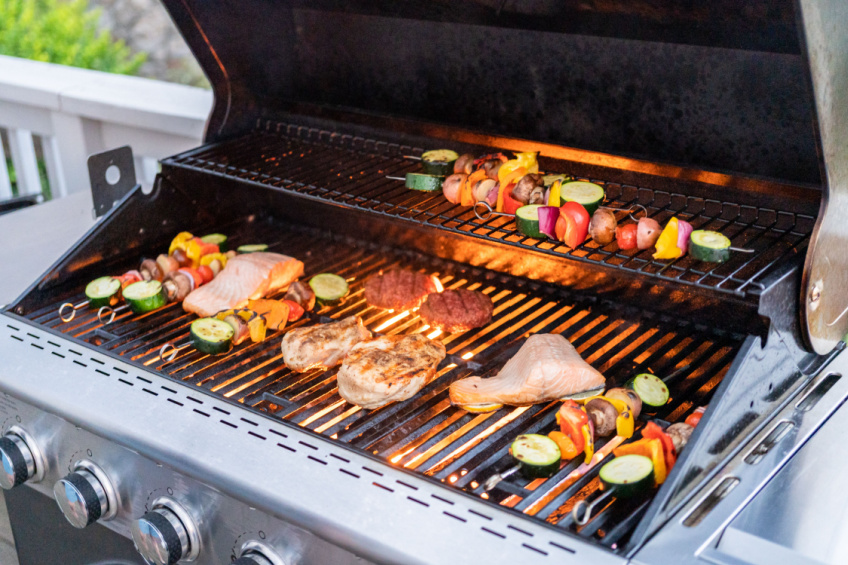
Choosing the right grill size for a family of six can make the difference between enjoying relaxed cookouts and feeling stressed about feeding everyone efficiently.
Many families underestimate their grilling needs and end up with equipment that forces them to cook in multiple batches or rush through meal preparation.
For a family of six, a grill with 400-600 square inches of primary cooking space typically provides the optimal balance of capacity and convenience.
This size range allows cooks to prepare main courses and sides simultaneously while avoiding the expense and space requirements of oversized commercial-style units.
The decision involves more than just counting family members, as factors like entertaining frequency, available outdoor space, and cooking preferences all influence the ideal grill dimensions.
Understanding these variables helps families select equipment that enhances their outdoor cooking experience rather than limiting it.
 A large gas grill that hits that hits the sweet spot perfectly is the the Royal Gourmet SG6002RC 6-Burner Gas Grill.
It offers ample cooking space, powerful heat, and all the convenience features you’d hope for.
Understanding Grill Size for a Family of 6
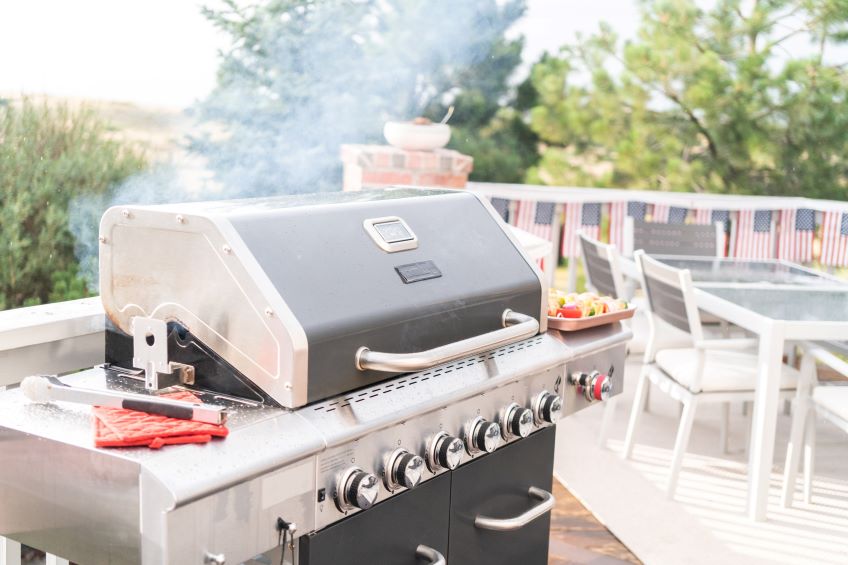
A family of 6 requires approximately 400-500 square inches of cooking surface to grill efficiently without overcrowding.
The specific space needed depends on the types of food being prepared and whether meals are cooked simultaneously or in batches.
Why Grill Size Matters
Feeding six people with an undersized grill creates significant cooking challenges.
Small grills force cooks to prepare food in multiple batches, extending meal preparation time considerably.
An appropriately sized grill allows simultaneous cooking of proteins and sides.
This reduces overall cooking time and keeps food at optimal serving temperatures.
Space constraints lead to several problems:
- Uneven cooking temperatures
- Extended meal preparation times
- Food becoming cold while waiting for other items
- Increased fuel consumption from longer cooking sessions
Overcrowded cooking surfaces prevent proper heat circulation.
This results in some pieces cooking faster than others, creating inconsistent results across the meal.
The right grill size eliminates these issues by providing adequate space for proper food placement.
Each item receives consistent heat exposure and cooks evenly.
Recommended Cooking Surface Area
A family of 6 typically requires 400-500 square inches of primary cooking surface.
This measurement excludes warming racks or secondary cooking areas.
Cooking surface requirements by meal type:
| Meal Type | Required Space | Reasoning |
|---|---|---|
| Burgers/Hot Dogs | 350-400 sq in | Standard portions need minimal space |
| Mixed Proteins | 450-500 sq in | Different cooking times require separation |
| Full Dinner | 500+ sq in | Proteins, vegetables, and sides together |
Gas grills in the 4-6 burner range usually provide this cooking area.
Charcoal grills measuring 22-24 inches in diameter offer similar space.
Consider slightly larger grills if the family frequently entertains guests.
An extra 100 square inches accommodates occasional larger gatherings without requiring a complete grill replacement.
Types of Food and Their Space Requirements
Different foods require varying amounts of cooking surface per person.
Proteins typically need the most space, while vegetables and sides require less area.
Space requirements per person:
- Burgers: 25-30 square inches each
- Chicken breasts: 30-35 square inches each
- Steaks: 35-40 square inches each
- Vegetables: 15-20 square inches per serving
Thick proteins like steaks need more space for proper heat circulation.
Thin items like vegetables can be placed closer together without affecting cooking quality.
Mixed meals require strategic space planning.
Place items with similar cooking times in the same grill zones to maximize efficiency.
Consider food expansion during cooking. Burgers and chicken pieces often increase in thickness, requiring additional clearance space between items.
Key Factors When Choosing a Grill Size

The right grill size for a family of six depends on cooking surface area, available heat zones, and the ability to prepare multiple foods at once.
These elements work together to ensure efficient meal preparation for larger households.
Grill Dimensions and Cooking Surface
A family of six requires 400-600 square inches of primary cooking surface to handle meals efficiently.
This space accommodates 6-8 burger patties or 4-6 chicken breasts simultaneously.
Secondary cooking areas add valuable space for vegetables, warming buns, or keeping food at serving temperature.
These warming racks typically provide an additional 150-300 square inches.
Minimum recommended dimensions for family of six:
- Primary cooking area: 400-600 sq inches
- Total cooking area: 550-900 sq inches
- Grill width: 24-32 inches
Compact grills under 300 square inches force multiple cooking batches.
This creates longer preparation times and risks serving cold food to some family members.
Number of Burners or Heat Zones
Three to four burners provide the heat control needed for cooking different foods simultaneously.
Each burner typically covers 100-150 square inches of cooking space.
Multiple heat zones allow for direct high-heat searing alongside indirect low-heat cooking.
One burner can maintain high heat for steaks while another provides medium heat for chicken.
Four-burner grills offer the most flexibility for families of six.
Two burners can create an indirect cooking zone while the remaining burners handle direct grilling tasks.
Gas grills with fewer than three burners limit cooking options significantly.
Charcoal grills need adequate space to create distinct temperature zones through coal arrangement.
Ease of Simultaneous Cooking
Large cooking surfaces enable preparing proteins and sides together rather than in sequence.
A 500+ square inch grill can handle six portions of meat plus vegetables without overcrowding.
Simultaneous cooking benefits:
- All food finishes at the same time
- Reduced overall cooking duration
- Better heat efficiency
- Less active monitoring required
Adequate space between food items ensures proper heat circulation.
Overcrowded grills create uneven cooking and extend preparation times significantly.
Side burners or additional cooking features expand simultaneous cooking capabilities.
These allow for preparing sauces or heating sides while the main grill handles proteins.
Popular Grill Types and Their Size Options
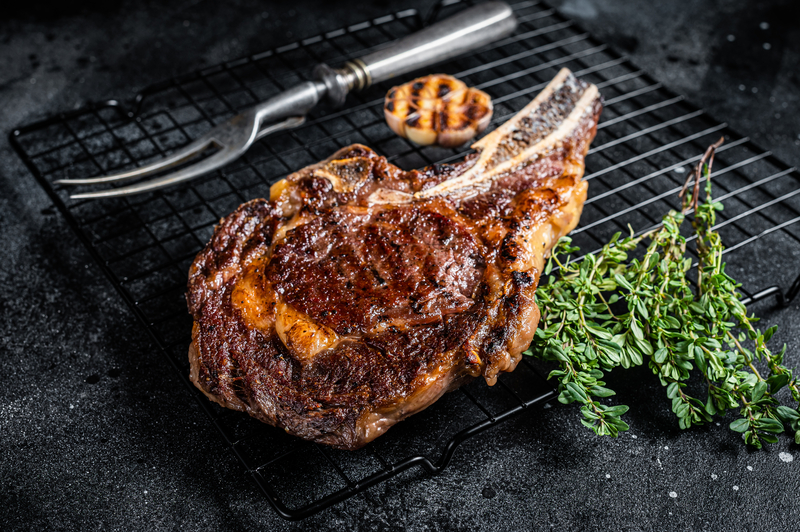 Gas grills typically offer the most size variety for medium to large families, while charcoal grills provide excellent flavor with fewer size constraints.
Electric grills work best for smaller spaces but may require cooking in batches for a family of six.
Gas Grills for Medium to Large Families
Gas grills provide the most practical solution for families of six due to their consistent heat control and quick startup times.
Most manufacturers offer gas grills in three main categories: 400-500 square inches for compact cooking, 500-700 square inches for standard family use, and 700+ square inches for large gatherings.
A family of six should target grills with 600-800 square inches of cooking space.
This size accommodates 12-16 burger patties or 8-10 chicken breasts simultaneously.
Popular size options include:
- 4-burner models: 500-650 square inches
- 5-burner models: 650-750 square inches
- 6-burner models: 750-900 square inches
Gas grills offer multiple cooking zones, allowing parents to cook different foods at varying temperatures.
The side burners found on larger models provide additional cooking space for sides or sauces.
Most gas grills between 600-800 square inches measure 50-60 inches wide and require 6-8 feet of clearance space.
Charcoal Grills: Pros and Cons for Family Use
Charcoal grills deliver superior flavor through direct heat and smoke but require more cooking time and temperature management.
Standard charcoal grills range from 300-800 square inches, with kettle-style grills being most common for family use.
Advantages for families:
- Enhanced smoky flavor
- Lower initial cost
- Portable options available
- High-heat searing capability
Disadvantages include:
- 20-30 minute startup time
- Temperature control difficulty
- Longer cooking sessions
- More cleanup required
For a family of six, a 22-26 inch diameter kettle grill provides adequate space.
Large barrel-style charcoal grills offer 600-800 square inches but require significant outdoor space.
Charcoal grills work best when families have flexible meal timing and enjoy the traditional grilling experience.
Electric Grills and Space Efficiency
Electric grills suit families with limited outdoor space, apartment balconies, or areas with fire restrictions.
Most electric grills provide 200-400 square inches of cooking surface, making them challenging for cooking complete meals for six people simultaneously.
Space-efficient benefits:
- No propane tanks or charcoal storage
- Compact countertop models available
- Indoor and outdoor use capability
- Easy cleanup process
Electric grills require cooking in batches for larger families.
A typical 300 square inch electric grill accommodates 4-6 burger patties, necessitating multiple cooking rounds.
Temperature limitations restrict electric grills to 400-500°F maximum, preventing proper searing.
Cooking times increase by 25-40% compared to gas or charcoal alternatives.
Families choosing electric grills should consider dual-zone models or larger 400+ square inch units to minimize batch cooking.
These grills work best as supplementary cooking devices rather than primary family grills.
Comparing Grill Sizes by Usage Scenario
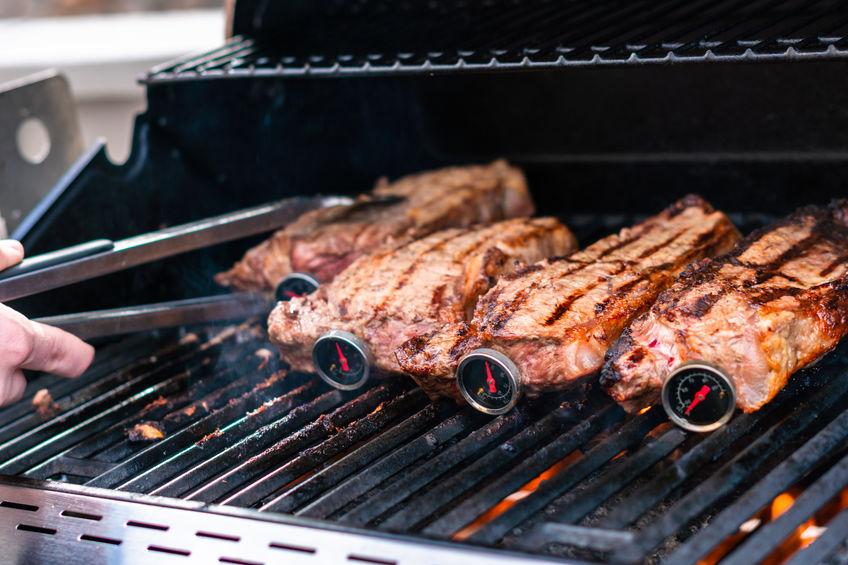 Different cooking situations require specific grill sizes to handle varying food quantities and cooking methods efficiently.
A 22-inch grill works well for standard family meals, while 26-inch or larger grills become essential when entertaining guests or managing multiple food types simultaneously.
Everyday Family Dinners
A 22-inch grill provides adequate cooking space for most weeknight dinners for six people.
This size accommodates 4-6 burgers, 6-8 chicken pieces, or equivalent protein portions without overcrowding.
The cooking surface typically measures 360-400 square inches on a 22-inch round grill.
This allows families to cook main proteins while leaving space for vegetables or sides.
Key advantages for daily use:
- Faster preheating times (15-20 minutes)
- Less charcoal consumption
- Easier temperature control
- Manageable cleanup
Most families can complete dinner preparation in one cooking session.
The compact size reduces fuel costs and maintenance time compared to larger models.
However, cooking times may extend when preparing thick cuts of meat that require indirect heat zones.
Dense meal components like corn on the cob or foil packets might need sequential cooking rather than simultaneous preparation.
Hosting Larger Gatherings
A 26-inch or larger grill becomes necessary when cooking for 8-12 people or preparing multiple courses.
The expanded cooking surface handles 8-10 burgers, 12+ chicken pieces, and side dishes simultaneously.
Recommended sizes for entertaining:
- 26-inch grill: 570-630 square inches
- 28-inch grill: 750+ square inches
Larger grills offer better heat zone management.
Cooks can maintain high-heat searing areas while creating moderate zones for vegetables and warming spaces for finished items.
The additional space prevents overcrowding, which causes uneven cooking and extended preparation times.
Multiple protein types can cook at appropriate temperatures without cross-contamination concerns.
Party cooking benefits:
- Reduced total cooking time
- Better food temperature control
- Space for warming finished items
- Ability to cook appetizers and mains together
Cooking for Picky Eaters or Dietary Needs
Families with varied dietary preferences require extra grill space to prevent cross-contamination and accommodate different cooking methods.
Separate zones become essential when handling vegetarian items alongside meat products.
A 26-inch grill allows physical separation between food types.
Vegetarian proteins and vegetables can occupy one section while meat products cook in designated areas.
Dietary accommodation features:
- Dedicated vegetarian cooking zones
- Space for allergy-safe food preparation
- Multiple temperature zones for different preferences
- Room for specialized cooking accessories
Different cooking times for various dietary needs require simultaneous preparation capabilities.
Veggie burgers, traditional burgers, and grilled vegetables each need specific heat levels and timing.
Larger cooking surfaces also accommodate specialized tools like grill baskets for vegetables or fish cooking planks.
These accessories require additional space beyond the primary protein cooking area.
Families managing food allergies benefit from clear physical separation between potential allergens and safe foods during the cooking process.
Extra Features That Impact Usable Grill Space
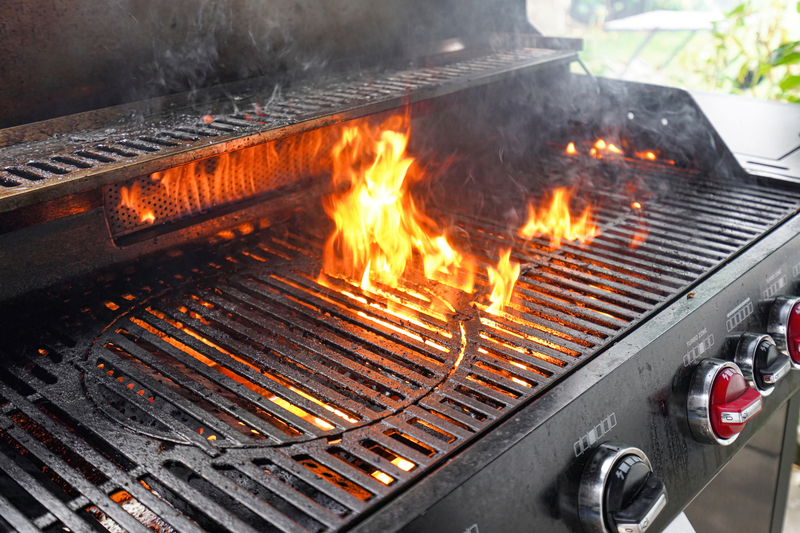
Warming racks and side burners can reduce primary cooking area by 20-30% when in use.
Built-in storage compartments and prep areas also affect the actual grilling space available for a family of six.
Warming Racks and Side Burners
Warming racks typically occupy 15-20% of the total advertised cooking space.
These racks sit above the main grates and reduce headroom for larger items like whole chickens or roasts.
Side burners consume valuable real estate on the grill’s side tables.
A standard 10,000 BTU side burner takes up approximately 12-15 inches of prep space.
Space Impact Breakdown:
- Warming rack: Reduces vertical clearance by 4-6 inches
- Side burner: Claims 144-225 square inches of surface area
- Rotisserie kit: Requires 8-10 inches of additional height clearance
Families cooking for six people should calculate actual cooking space after accounting for these features.
A 600 square inch grill with a large warming rack provides closer to 480 square inches of primary cooking area.
Built-In Storage and Prep Areas
Storage cabinets beneath the grill reduce the cooking surface height by 6-8 inches.
This affects accessibility when grilling larger quantities of food for six people.
Fold-down side tables add prep space but create width constraints.
Standard fold-down tables extend 18-24 inches from each side when deployed.
Built-in tool hooks and spice racks claim 2-4 inches of depth on side surfaces.
Propane tank storage compartments limit the grill’s mobility and positioning options.
Storage Features Impact:
- Cabinet storage: Reduces ground clearance to 28-32 inches
- Side prep areas: Add 36-48 inches to total width
- Integrated cutting boards: Consume 200-300 square inches of surface space
These features affect the grill’s footprint and surrounding space requirements for a family cooking setup.
Space and Placement Considerations
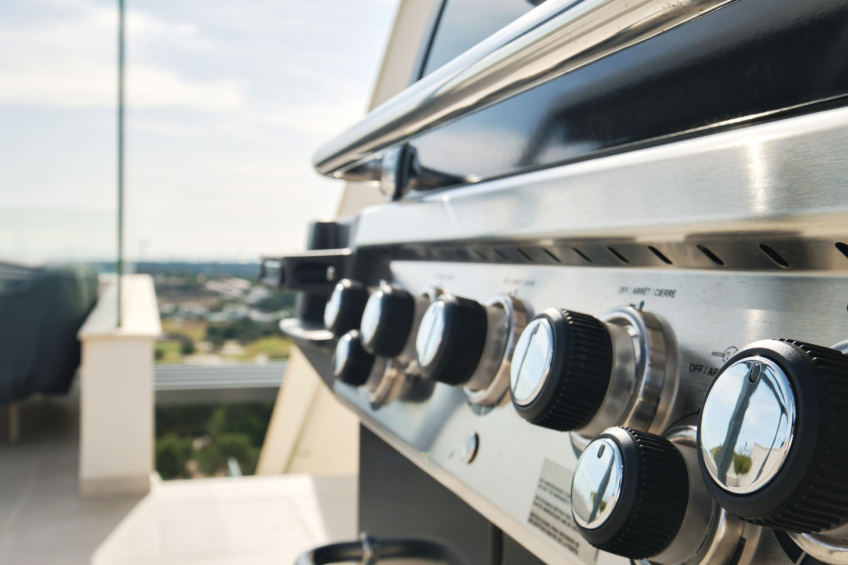
For families of 6, selecting the right grill location involves choosing between yard and patio placement options, plus deciding whether a portable or permanent installation works best.
The cooking space needs and safety clearances differ significantly between these setups.
Backyard Versus Patio Grills
Backyard grills offer maximum flexibility for families cooking for 6 people regularly.
They can accommodate larger grills with 500-600 square inches of cooking surface without space restrictions.
Most backyards allow for the recommended 15-20 feet clearance from structures.
This distance becomes crucial for larger BTU grills that families of 6 typically need.
Backyard advantages:
- Room for 36-42 inch wide grills
- Storage space for propane tanks and accessories
- Ventilation for smoke and heat
- Entertainment space for guests
Patio grills work well for smaller outdoor spaces but require careful size selection.
The cooking area may need to be compact while still serving 6 people effectively.
Patio installations must maintain minimum 10-foot clearance from house walls and overhangs.
This often limits grill width to 30-36 inches maximum.
Patio considerations:
- Limited to medium-sized grills (400-500 sq inches)
- Requires adequate ventilation planning
- May need wind barriers
- Storage solutions more critical
Portable Versus Built-In Options
Portable grills provide flexibility for families who want cooking options in multiple locations.
They typically offer 400-500 square inches of cooking space, sufficient for 6 people.
Cart-style portable grills work best for families of 6.
They include storage underneath and wheels for easy movement while maintaining adequate cooking surface.
Portable models require level ground and still need proper clearances from structures.
They can be moved for weather protection or seasonal storage.
Built-in grills create permanent cooking stations with expanded features.
They typically offer larger cooking surfaces and better heat retention for consistent results.
Built-in advantages:
- Larger cooking areas (500+ square inches)
- Better wind protection
- Integrated storage and prep space
- Higher BTU output options
Built-in installations require professional gas line connections and permanent clearance planning.
They represent a long-term commitment to the selected location.
The choice depends on budget, usage frequency, and outdoor space permanence.
Families who grill year-round often prefer built-in convenience.
Budgeting for the Right Grill Size
Setting a realistic budget for a family of 6 requires balancing upfront costs with cooking capacity needs.
Higher-quality larger grills deliver better long-term value through durability and performance.
Cost Versus Cooking Capacity
For a family of 6, expect to invest $300-800 for a quality grill with adequate cooking space.
Budget models under $300 typically offer 400-450 square inches of cooking surface, which creates challenges when preparing meals for six people.
Mid-range grills ($400-600) provide 500-600 square inches of cooking area.
This size range allows families to cook main courses and sides simultaneously without extending meal preparation time.
Premium options ($600-800) offer 650+ square inches of cooking space.
These models include features like:
- Multiple cooking zones
- Better heat distribution
- Enhanced temperature control
- Additional rack space
The cost per square inch decreases as grill size increases.
A 400-square-inch grill at $300 costs $0.75 per square inch, while a 600-square-inch grill at $500 costs $0.83 per square inch.
Families should budget for the largest cooking surface their budget allows.
Undersized grills force multiple cooking batches, extending meal times and increasing propane or charcoal consumption.
Long-Term Durability and Value
Investing in a well-built grill saves money over time through reduced replacement costs and better performance.
Quality construction materials like stainless steel grates and cast iron burners last 8-10 years with proper maintenance.
Budget grills typically require replacement every 3-4 years due to rust, warping, and component failure.
A $300 grill replaced twice costs $600 over six years, while a $500 quality grill lasting eight years provides better value.
Warranty coverage indicates manufacturer confidence in durability.
Look for grills offering 5+ year warranties on major components like fireboxes and burners.
Higher-end grills maintain consistent temperatures and distribute heat evenly.
This performance reduces cooking time and prevents food waste from uneven cooking or flare-ups.
Fuel efficiency improves with better-designed grills.
Quality models use 15-20% less propane or charcoal than budget alternatives through superior insulation and heat retention.
The Ideal Grill for a Family of Six
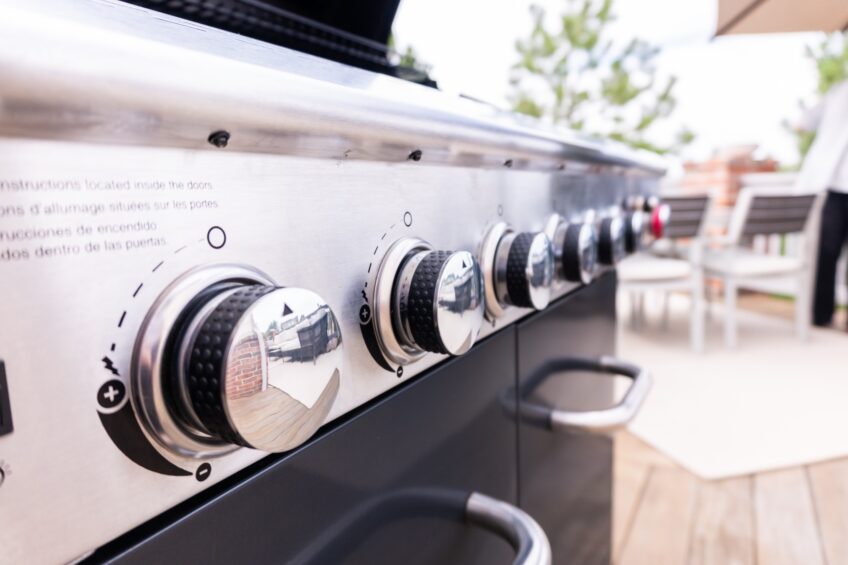 In our search for the perfect family grill, we found one that hits that sweet spot perfectly: the Royal Gourmet SG6002RC 6-Burner Gas Grill.
It offers ample cooking space, powerful heat, and all the convenience features you’d hope for.
This grill isn’t just big—it’s well-equipped. With six burners delivering a total of 71,000 BTU—that’s five main burner tubes, a dedicated sear burner, and a handy side burner—this unit is built to handle large, diverse meals.
The cooking area spans 625 sq in. on the main grate, plus a 202 sq in. warming rack—bringing the total to 827 sq in.
That allows you to grill more and wait less, perfect for feeding a family in one go.
A heavy-duty, double-layer lid keeps heat locked in, while the built-in thermometer helps you stay on top of grilling temps.
Cleanup is hassle-free thanks to a removable grease tray and cup.
This model even comes with a protective cover—because whether you’re grilling rain or shine, keeping your equipment protected from the elements is a smart move.
Why This Grill Works for a Family of Six
 A family of six often means cooking for extra hands—kids, partners, maybe even grandparents joining in.
With that in mind, here’s why the Royal Gourmet model stands out:
- Spacious Cooking Surface: At 827 sq in., it’s well beyond the 500 sq in. benchmark needed to comfortably cook for six people.
- Versatile Burners: The extra sear and side burners mean you can multitask—grill steaks, toast buns, and simmer sauce simultaneously.
- Substantial Cooking Power: With 71 k BTU, this grill gets hot fast and stays hot—great for searing and keeping up with large meals.
- Convenience & Cleanup: Thoughtful touches like the grease management system and durable cover make maintenance easy.
Maintenance and Storage for Larger Grills
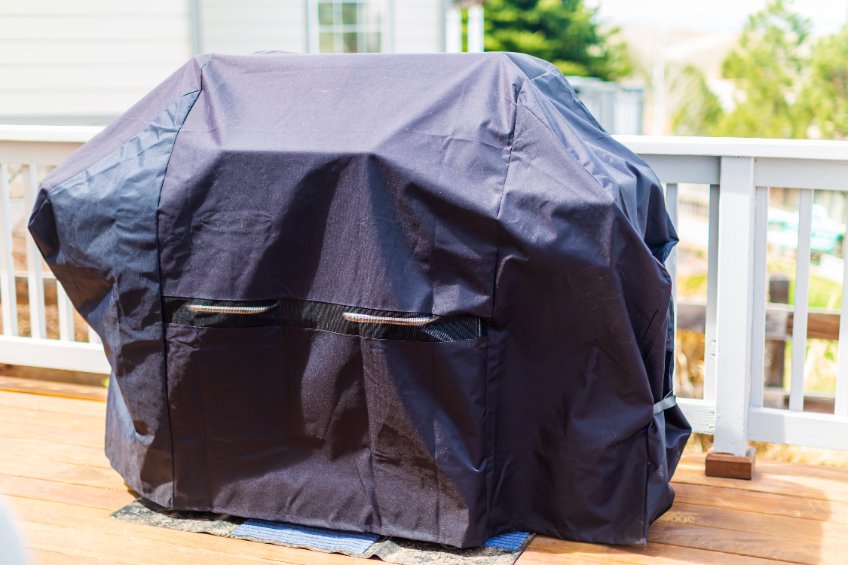
Larger grills require more intensive cleaning routines and specialized storage solutions compared to compact models.
The increased cooking surface area and multiple components demand systematic maintenance approaches to ensure longevity and optimal performance.
Cleaning and Upkeep Requirements
Grills sized for families of six typically feature 500-700 square inches of cooking space, which translates to more grates, burners, and grease management systems to maintain.
Daily cleaning tasks include scraping food residue from grates while they remain warm and emptying grease trays.
The larger surface area means more debris accumulates during each cooking session.
Weekly maintenance involves removing and washing grates with warm soapy water.
Multiple grate sections in larger grills can be heavy, requiring careful handling to prevent damage or injury.
Monthly deep cleaning requires dismantling burner covers, heat deflectors, and interior components.
Larger grills often have 4-6 burners, making this process more time-consuming than smaller models.
Grease management becomes critical with larger grills due to increased cooking capacity.
Check and clean grease channels and collection systems frequently to prevent flare-ups and maintain proper drainage.
Winter Storage Solutions
Larger grills present unique storage challenges due to their substantial dimensions and weight, often exceeding 150-200 pounds when fully assembled.
Covered outdoor storage works best for most large grills.
High-quality covers designed for specific grill dimensions provide protection while allowing the grill to remain in place.
Ensure covers fit snugly around the base to prevent moisture accumulation.
Garage or shed storage requires adequate ceiling height and door width.
Many large grills stand 45-50 inches tall, making standard garage storage challenging without removing components.
Preparation steps include thorough cleaning, disconnecting propane tanks, and removing electronic components if present.
Apply a light coating of cooking oil to grates to prevent rust formation during storage months.
Consider partial disassembly for compact storage.
Remove side tables, warming racks, and other detachable components to reduce overall footprint while maintaining the main cooking unit intact.
Final Tips for Selecting the Perfect Grill Size
Measure your available space before making any purchase decisions.
A grill needs clearance on all sides for safety and proper ventilation.
Consider your typical cooking patterns rather than occasional large gatherings.
Most families of 6 benefit from 400-500 square inches of primary cooking space.
Think beyond burgers and hot dogs.
Whole chickens, large cuts of meat, and multiple side dishes require additional room to cook effectively.
Account for growth in your cooking ambitions over time.
Many grill owners expand their repertoire and need extra space for accessories like rotisseries or smoking boxes.
Budget for quality over size when making trade-offs.
A well-built medium grill performs better than a poorly constructed large one.
| Grill Size | Cooking Space | Best For |
|---|---|---|
| Medium | 400-500 sq in | Family of 6 daily use |
| Large | 500-700 sq in | Family of 6 + entertaining |
Test grill height and accessibility in person when possible.
The cooking surface should align comfortably with your elbow height.
Factor in storage and maintenance requirements.
Larger grills need more cleaning time and storage space during off-seasons.
Read actual user reviews from families with similar needs.
Product specifications don’t always reflect real-world cooking capacity.
Consider fuel efficiency with larger models.
Gas grills use more propane, while charcoal grills require more fuel for larger cooking areas.
Plan for accessories like warming racks, side burners, or prep tables that add functionality without increasing primary cooking space.