
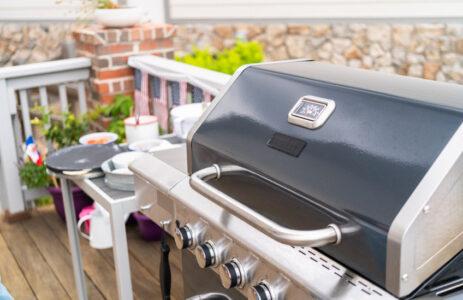
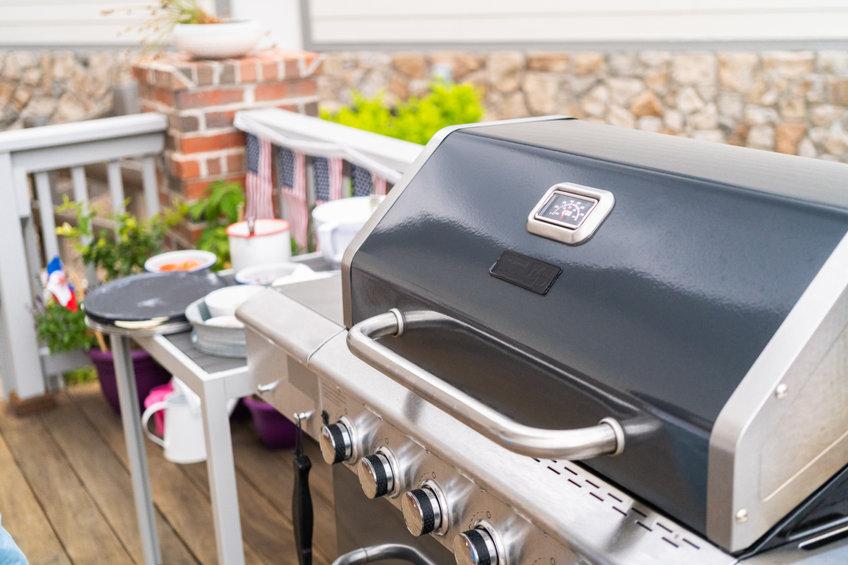
A gas grill can turn a fun cookout into a house fire if you place it too close to your home.
Most experts recommend keeping your gas grill at least 10 feet from your house, including walls, railings, and overhangs, as noted in guidance on the safest gas grill distance from houses and porches.
You might think grill placement is a small detail, but thoughtful gas grill placement plays a major role in fire safety and overall grill safety. Grease fires, gas leaks, and stray sparks can put your siding, deck, or roof at risk if your grill sits too close to the house. Maintaining the proper distance for propane grill safety protects your home and makes your outdoor cooking area safer for everyone nearby.
This guide explains the recommended clearance, why it matters, and how wind, wood siding, and covered patios can affect grill placement. Following smart grilling safety tips helps you avoid costly damage and enjoy outdoor cooking with greater peace of mind.
The Recommended Clearance: Use 10 Feet When Possible
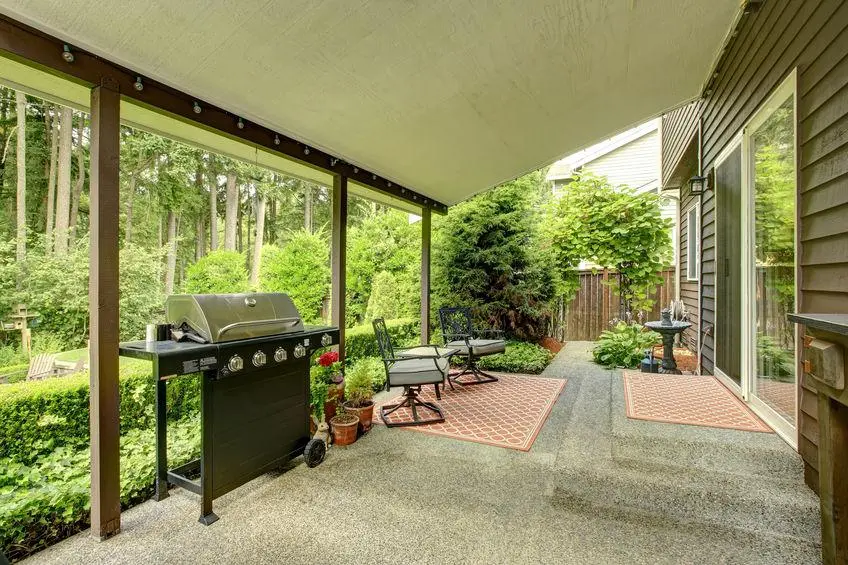 Ten feet is the distance many fire safety experts recommend between a gas grill and any structure. This includes house walls, fences, sheds, and other combustible materials. Keeping this space free of flammable materials prevents accidental ignitions from unexpected flare-ups.
People often position grills near outbuildings or detached sheds to keep them out of sight. However, wooden sheds can ignite quickly from stray embers, so they require the same clearance as your main residence.
Why the 10-Foot Rule Is the Safest Starting Point
The 10-foot rule provides a wide safety margin. Grills can produce flare-ups, sparks, and heat that travel farther than you might expect. A sudden gust of wind can push flames toward siding, deck railings, or nearby plants.
Keeping at least 10 feet of open space between your grill and your house or other buildings helps reduce the risk of fire spreading to nearby structures. The U.S. Consumer Product Safety Commission (CPSC) recommends using grills at least 10 feet away from a house or building and keeping them away from garages, porches, carports, and other surfaces that can burn.
This recommendation applies to charcoal and gas grills alike. Even if your yard is small, place the grill as far from your home as reasonably possible.
When Manufacturer Instructions Set Different Clearances
Not every grill requires 10 feet of space. Some manufacturers list smaller minimum clearances in their product manuals.
For example, Weber states that many gas and electric grill models need only two feet of clearance from combustible items such as RVs or walls. Clearance requirements vary by brand and model, so always check your owner’s manual first.
However, following the shortest permitted distance is not always the safest choice. Your local fire code and building codes may require more clearance than the manufacturer specifies.
When in doubt, follow the most cautious guideline. Combining the manufacturer’s instructions with your local fire code and the 10-foot recommendation provides stronger protection for your home.
Measuring From the Grill’s Widest Point
When measuring clearance, do not measure only from the grill’s body. Measure from its widest point, including open side tables, lids, and handles.
Some grills extend a foot or more when their side shelves are open. This added width can bring the grill closer to walls or fences than you realize. Position the grill as it will be used, then measure outward from every edge. Check clearance on all sides, not just the front.
Also look upward. Overhangs, patio roofs, and low tree branches count as potential hazards too, low-hanging eaves or overhanging branches can catch heat rising from the cooking surface.
Keep Clear of Walls, Rooflines, and Combustibles
 Your grill produces more than flame heat. Radiant heat and rising smoke can damage nearby surfaces even when nothing catches fire. Knowing what to keep clear and maintaining adequate distance protects your house and your grill.
Protecting Vinyl Siding, Windows, and Patio Doors
Vinyl siding can warp and melt at relatively low temperatures. If your grill sits too close to a wall, severe heat damage can leave a wavy or discolored patch that cannot be repaired easily.
Keep at least 10 feet between your grill and any wall, including the wall behind or beside your grilling area. Proper gas grill placement gives radiant heat room to disperse before causing costly heat damage to siding.
Windows and patio doors need similar clearance. Glass can crack from sudden heat, and ongoing smoke damage can stain glass surfaces over time. Grilling near an open window or door also allows smoke to drift into your house, where odors can linger for days.
Avoiding Eaves, Awnings, and Other Overhangs
Vertical clearance matters as much as side-to-side distance. Flames from flare-ups can rise a foot or more, putting anything above the grill at risk.
Eaves, awnings, and roof overhangs are often made from wood or other combustible materials. Grease and heat can scorch or ignite them if the grill sits underneath. Check the space above your grill before lighting it, not only the area around it.
A safe vertical clearance should generally match the horizontal clearance: maintain several feet of open air with no combustible material overhead. If your patio has a covered section, move the grill outside the covered area. Covered spaces trap heat and smoke, increasing the risk of fire and structural damage.
Managing Trees, Landscaping, and Outdoor Furniture
Overhanging branches are easy to overlook. Dry leaves and thin branches can catch a spark or scorch from prolonged heat, especially during dry summer weather.
Look up before setting up your grill. Trim back tree branches and any dry overhanging branches that hang within several feet of the cooking area.
Outdoor furniture, cushions, and rugs are combustible materials too. Keep these items, along with fences, mulch, and other flammable materials, outside the 10-foot clearance zone around your grill. Wood fences are especially vulnerable to heat and can scorch or discolor without direct flame contact.
Move propane tanks, cushions, and decorative items away from the cooking area before you start. Eliminating these common fire hazards lowers the risk of an accidental fire and helps protect your outdoor property.
Choose a Stable, Open-Air Cooking Location
 Your grill needs open air to burn fuel safely and disperse combustion gases. It also needs a flat, sturdy surface so it will not tip over or damage the area below it.
Why Ventilation Matters for Gas Grills
Gas grills burn propane or natural gas, and combustion requires a steady supply of fresh air. Without adequate airflow, combustion gases can accumulate around the grill instead of dispersing.
This increases the risk of carbon monoxide exposure. Carbon monoxide is an invisible, odorless gas, so you may not know it is present. Carbon monoxide poisoning can cause headaches, dizziness, and potentially life-threatening illness.
Never grill inside a garage, tent, or other enclosed space, even with the door open. Always keep your grill outdoors in an open area where air can circulate freely. Good ventilation carries fumes away from you and your home instead of allowing them to collect.
How Wind Direction Changes the Best Location
Wind direction affects where smoke, heat, and sparks travel after your grill is lit. If you set up on the wrong side of your yard, wind can push flames toward your house or blow smoke into windows and doors.
Before grilling, check which way the wind is blowing. Prevailing winds may follow a pattern in your area, but shifting wind patterns can quickly change direction while you cook.
Position the grill so local wind patterns carry smoke and heat away from your house, not toward it. You can check wind direction by watching which way tree leaves or smoke drift.
Deck, Patio, and Ground Surface Considerations
The surface under your grill matters as much as its distance from your house. Safe grill placement requires a level, fire-resistant surface that will not easily catch sparks.
Grilling on a wooden deck increases fire risk because heat, grease, and sparks can damage or ignite the wood. A dedicated grill mat creates a reliable shield against hot embers and grease drippings.
A grill mat can help protect a wooden deck or patio from grease stains and heat marks. Choosing a durable grill mat that extends past the edges catches falling grease and splatters. Even with a mat, check the area under and around your grill regularly for grease buildup.
Concrete or stone patios handle heat better than wood and reduce fire risk. If you have a built-in outdoor kitchen, make sure the surface around the grill is level, noncombustible, and free of clutter that could catch fire.
Extra Safety Steps Before Lighting the Burners
 Before turning on the burners, check your propane tank, clean away grease, and keep fire safety tools nearby. These steps lower fire risk and help you identify problems early.
Check Propane Tanks and Connections for Gas Leaks
Check your propane tank and hose connections every time before grilling. Gas leaks are among the most serious fire hazards and can be easy to miss without a close inspection.
Mix a small amount of dish soap with water, then apply it to the hose and connection points. If bubbles form, you have a gas leak and should not light the grill.
Turn off the propane tank and inspect all connections. Look for cracks, rust, or loose fittings.
You should also open the lid before you light the burners. This allows gas to escape instead of accumulating inside the grill, helping prevent a larger flare-up when you ignite it.
Control Grease Buildup and Prevent Flare-Ups
Grease buildup is a common cause of flare-ups and grease fires on gas grills. Fat and oil can collect in the grill’s trays, grates, and burner tubes over time.
Clean these parts often, especially after cooking fatty foods such as burgers or sausage. A dirty grill is more likely to flare up suddenly during normal use.
Check the grease tray before each use and empty it if needed. NFPA notes that clearing built-up grease from the grates and trays below the grill helps you remove grease or fat buildup that can fuel unwanted flames.
Keep the inside of the grill’s lid clean too. Grease can drip from the lid onto the burners and cause unexpected flare-ups.
Keep Fire-Response Equipment Within Reach
Always keep a fire extinguisher near your grill, not stored away in a garage or shed. If a grease fire or flare-up gets out of control, you need to act fast.
Choose a fire extinguisher rated for grease and gas fires, such as a multipurpose ABC extinguisher, rather than relying on a general-purpose model. Check the label to confirm that it is suitable for kitchen and outdoor cooking fires.
A bucket of sand or baking soda can also help control small flare-ups. Never use water on a grease fire, since it can cause the flames to spread.
Make sure everyone at your cookout knows where the fire extinguisher is and how to use it. Remembering these practical grilling safety tips supports fire prevention and strengthens overall grill safety in your yard.
Special Rules for Porches, Balconies, and Built-In Setups
 Standard clearance rules change when you add a roof, walls, or railings. Porches, apartment balconies, and built-in outdoor kitchens each come with specific risks and rules you need to check before you cook.
Why Enclosed and Covered Areas Are Unsafe
A grill needs open air to work safely. When you put it under a porch roof, awning, or other overhang, smoke and heat get trapped instead of rising away from your house.
This buildup creates two problems. First, trapped heat can scorch or ignite wood, vinyl siding, and other materials above and around the grill.
Second, it significantly increases your carbon monoxide risk, since gas grills burn fuel and release fumes into the air. In poorly ventilated spaces, breathing concentrated fumes can quickly result in carbon monoxide poisoning.
Many fire codes reflect this danger directly. Grills often cannot be used on a porch, balcony, or deck that has a roof, overhang, or wall other than the house itself. They may be permitted only on open first-floor porches, decks, or patios that meet clearance requirements, according to Mass.gov‘s grilling safety guidance.
Screened porches count as enclosed spaces too. Screens restrict airflow, so smoke and combustion gases can still build up inside.
Apartment and Condo Restrictions to Check First
If you live in an apartment or condo, don’t assume you can grill on your balcony. Many buildings ban grills on balconies entirely, regardless of the distance from the wall.
This is because apartment balconies sit close together and stack on top of each other. A fire on one balcony can spread quickly to units above, below, and beside it.
Some codes distinguish between fuel types. You can find guidance on the NFPA 10-foot rule and exceptions for certain listed electric grills on balconies. NFPA 1 generally restricts solid-fuel, gas, and liquid-fuel grills from balconies and from locations within 10 feet of a structure in applicable residential occupancies, while certain listed electric grills may be permitted under specified conditions.
Before you set up any grill outside, check three things:
- Your lease or condo association rules
- Your local fire code
- Your local building codes
Fines and eviction notices are real risks if you skip this step.
Built-In Grill Clearances and Heat Shields
Built-in grills need extra care because you can’t move them if they are installed too close to a wall. Manufacturers publish exact clearance requirements for the sides, back, and top of each unit, and these numbers vary by model.
A heat shield can help protect against heat exposure where a small gap exists between your grill and a combustible surface. This metal barrier reflects heat away from house walls, cabinets, and countertops in an outdoor kitchen.
Heat shields don’t replace proper clearance, though. They reduce risk but don’t eliminate it, so you still need to follow the manufacturer specifications and required clearance distances listed for your specific grill.
Also check for anything above your built-in setup. Overhangs, awnings, and roof eaves need adequate clearance, since heat rises straight up into them.
How Other Grill Types Affect Placement Decisions
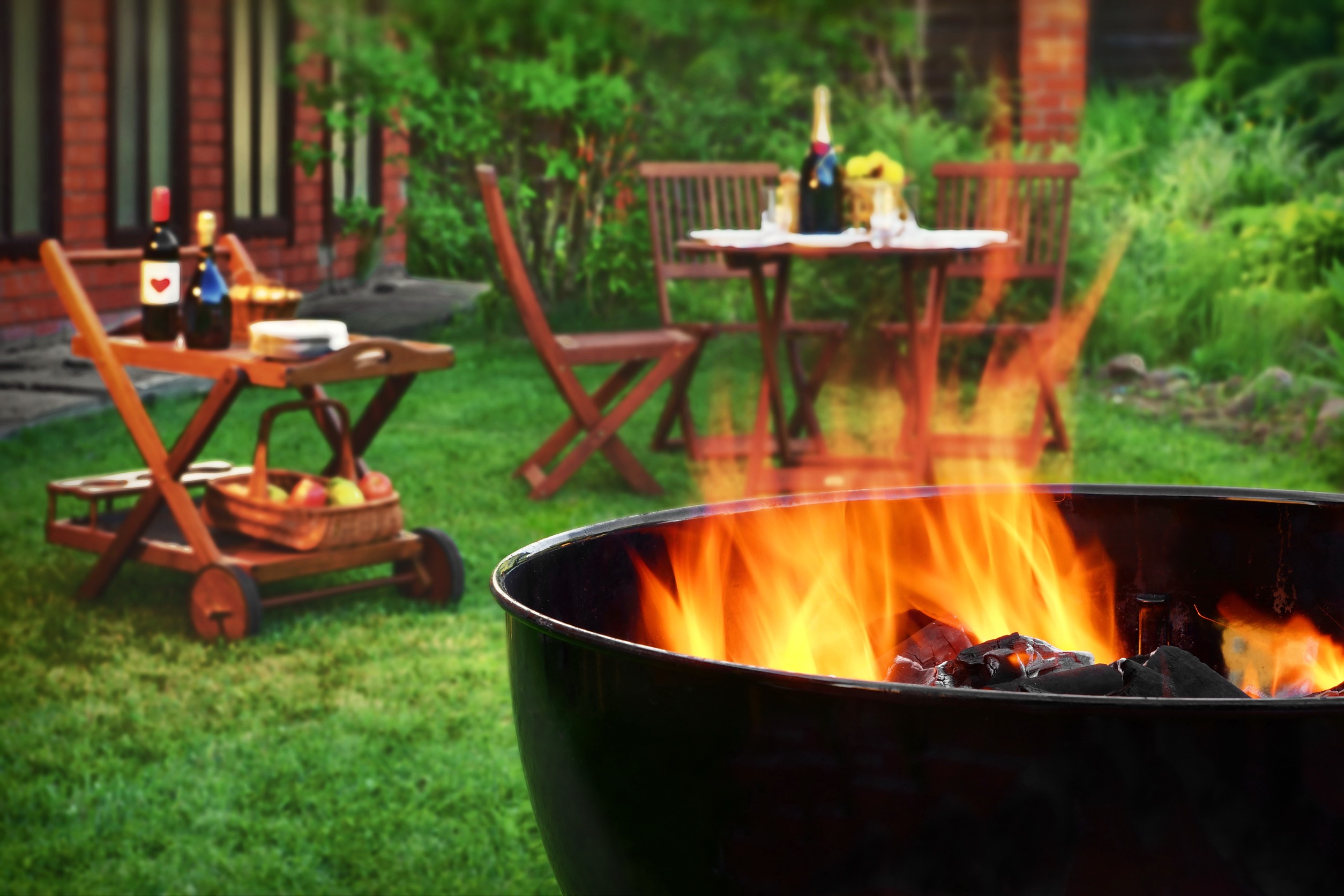
Not all grills have the same fire risk, so the recommended clearance from your home can vary depending on the type of grill you use. Charcoal, pellet, gas, and electric grills produce different levels of heat, flames, sparks, and hot materials, which can affect where you should safely place your grill.
Charcoal Grills and Hot-Coal Hazards
Charcoal grills require careful placement because they produce open flames, hot coals, and sparks. Charcoal can remain extremely hot for hours after cooking, even when there are no visible flames.
Lump charcoal can also pop and send hot sparks beyond the grill, which is why maintaining adequate clearance from your house, deck, railings, and other combustible materials is especially important.
You should keep charcoal grills at least 10 feet from your house, deck railings, and dry plants. This distance matters especially when you use direct heat for high-heat searing, such as cooking steak or burgers over an open flame.
Ash and embers can also blow in the wind. Never dump hot coals near your house or where wind can carry sparks toward siding or dry grass. This simple step significantly lowers the risk of fire.
Placing a fire-resistant grill mat underneath catches stray embers before they can scorch the ground.
Pellet Grills, Smoke, and Hopper Safety
Pellet grills work differently from gas or charcoal grills because they use a hopper that feeds wood pellets into a fire pot. This design makes them useful for smoking, but it also means they produce steady smoke during long cooking sessions.
When smoking ribs or brisket for several hours, constant exhaust needs plenty of room to disperse. You should place your pellet grill in an area with good airflow so smoke doesn’t build up near your house.
Smoke damage can stain siding, paint, or window screens if you grill too close to your home for extended periods.
The hopper itself can get hot, and some models have electrical parts that should stay dry and protected from moisture. Keep your pellet grill on a flat, stable surface with at least a few feet of open space on all sides for safe airflow and easy access.
How Far Does a Gas Grill Need to Be from the House? Expert Safety Guidance
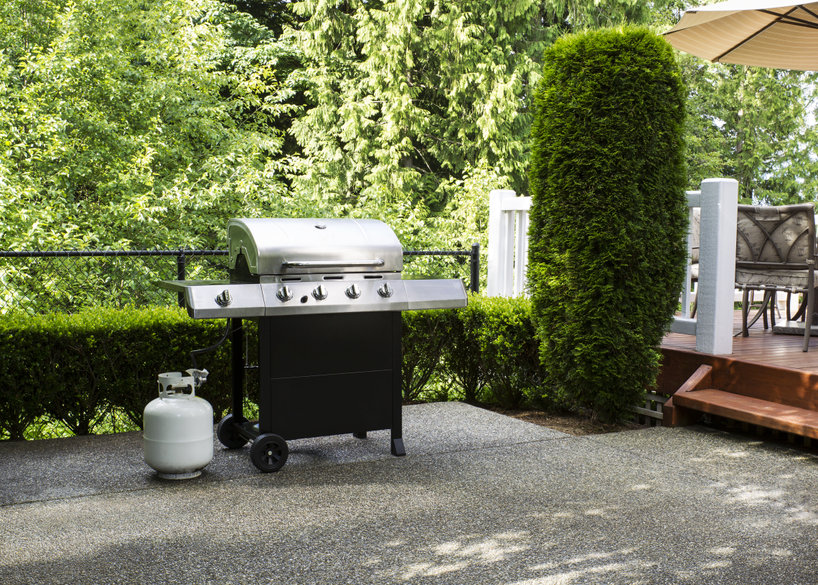 A gas grill should generally be placed at least 10 feet (3 metres) away from your house or any other building. This recommendation comes from the U.S. Consumer Product Safety Commission (CPSC), which advises keeping grills away from buildings and never using them in garages, breezeways, carports, porches, or beneath surfaces that could catch fire.
The U.S. Fire Administration (USFA) also recommends using propane and gas grills outdoors only, placing them well away from house siding, deck railings, eaves, and overhanging branches. The USFA advises maintaining a clear 3-foot safety zone around the grill to help keep children, pets, and combustible objects away from the flames and heat.
Why Does a Gas Grill Need to Be 10 Feet Away?
Gas grills produce high heat, open flames, and flammable vapours. Grease fires or flames from the grill can spread to nearby siding, wooden decks, railings, curtains, plants, or other combustible materials. Keeping the grill at least 10 feet from the house gives the heat and flames more space and reduces the risk of a fire spreading to the building.
The NFPA explains that fire-code requirements commonly restrict gas and charcoal grills from being used within 10 feet of structures in many settings, particularly multi-family housing and rental properties. NFPA guidance also highlights the need for adequate vertical clearance above the grill, meaning it should not be placed directly beneath a roof, balcony, awning, eave, or other overhanging structure.
Can You Put a Gas Grill on a Covered Patio?
A covered patio is not automatically safe. A grill should not be placed underneath a low roof, awning, balcony, or overhanging branch because heat and flames can damage the structure or ignite combustible materials. The USFA grill-safety guidance advises against storing or using grills on porches and balconies and recommends positioning them well away from siding, deck railings, eaves, and overhanging branches.
Place the grill on a stable, non-combustible surface, such as concrete or paving stones, rather than directly against the house or on an unstable surface. Before lighting it, open the lid, check the hose and connections for leaks, and make sure the cooking area is clear of children, pets, paper, dry leaves, and other flammable materials.
Always check the instructions supplied with your particular grill and local fire regulations. Local rules may require a greater distance, especially for apartments, balconies, shared housing, or properties in areas with a high wildfire risk.
Safety note: The 10-foot distance is a widely used safety recommendation, but it should not override stricter local regulations or the manufacturer’s instructions.
When an Electric Grill May Be the Practical Option
An electric grill produces less direct flame and fewer sparks than gas or charcoal grills. According to Weber’s clearance guidance, electric grills should be kept at least 2 feet from your house or deck. This shorter clearance makes electric grills a practical choice for a small balcony, patio, or apartment with limited outdoor space.
Electric grills still get hot enough for baking or cooking burgers, but they do not produce the same open-flame risk as gas or charcoal models. Avoid placing an electric grill under a covered area or near curtains, cushions, or other combustible materials that could ignite or become dangerously hot.
The George Foreman Indoor/Outdoor Electric Grill with Stand is a practical choice when you want to grill without propane or charcoal. Because it is an electric grill, it does not produce the open flames associated with gas or charcoal grilling, making it particularly useful for patios, balconies, and other smaller outdoor spaces where traditional grills may be less convenient.
The removable stand also gives you flexibility to use the grill outdoors or set it up on a suitable indoor surface, making it a versatile option for year-round grilling.
FAQ: How Far Does a Gas Grill Need to Be from the House?
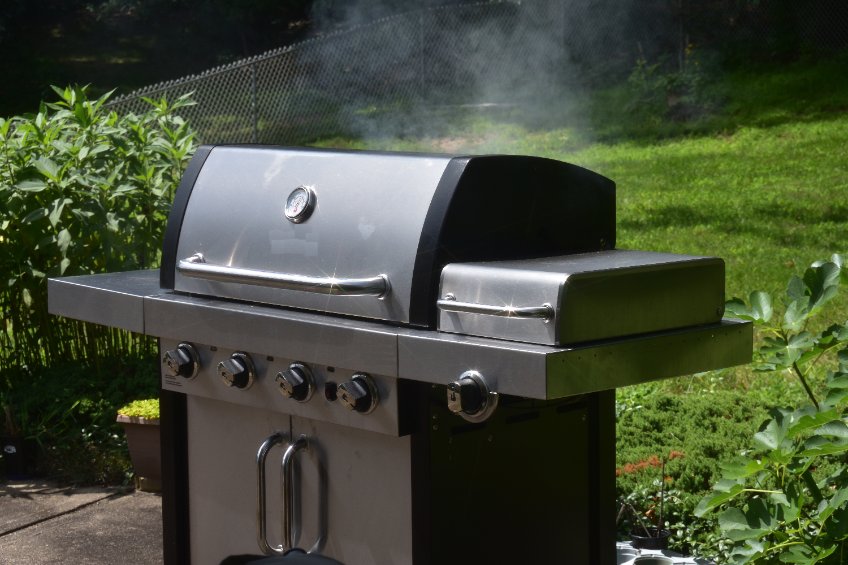 A gas grill should generally be positioned at least 10 feet away from the house and other combustible structures. This clearance helps reduce the risk of heat, flames, and grease fires reaching siding, walls, eaves, or other combustible materials.
Can You Put a Gas Grill Against the House?
No. A gas grill should not be placed directly against the house. Maintain the clearance recommended by the manufacturer and keep the grill away from combustible walls, doors, windows, and other structures.
Can You Use a Gas Grill on a Deck?
Yes, a gas grill can generally be used on a suitable deck, provided there is adequate clearance from the house and combustible materials. Keep the grill on a stable, level surface and follow the manufacturer’s placement requirements.
How Far Should a Gas Grill Be from a Fence?
Keep the grill away from combustible fences and follow the clearance specified by the manufacturer. A 10-foot separation is a commonly recommended safety guideline when positioning grills near structures.
Can a Gas Grill Be Under an Awning?
Only if the grill manufacturer specifically permits it and there is adequate ventilation and clearance. Never use a gas grill in an enclosed area, and keep it away from combustible overhead materials.
Why Does a Gas Grill Need to Be Away from the House?
Gas grills produce intense heat, flames, and hot grease that can ignite nearby combustible materials. Keeping the grill away from buildings provides additional space to reduce the risk of a grill fire spreading to the structure.