

 The Weber Summit Charcoal Grill commands a premium price that often surprises consumers browsing the grilling market.
While many charcoal grills are available for a fraction of the cost, Weber’s flagship model sits at the top of the price spectrum for good reason.
The Weber Summit Charcoal Grill is expensive because it combines premium materials like porcelain-enameled steel and cast iron construction with innovative features such as precision temperature control systems, superior heat distribution technology, and extensive cooking versatility that other grills simply cannot match.
This premium positioning reflects Weber’s decades-long reputation for durability and performance.
The company has built its brand on grills that last for years rather than seasons, using high-quality materials and engineering that justify the initial investment.
The Summit model represents the pinnacle of Weber’s charcoal grilling technology, incorporating features typically found only in commercial-grade equipment.
Understanding the pricing strategy behind the Weber Summit requires examining multiple factors that contribute to its cost structure.
From the manufacturing processes and material selection to market positioning and brand value, each element plays a role in determining why this grill costs significantly more than basic charcoal alternatives.
Positioning in the Market
Weber positions the Summit Charcoal as a premium lifestyle product targeting serious grilling enthusiasts.
The company leverages limited distribution and pricing strategies to maintain exclusivity against competitors like Big Green Egg and Kamado Joe.
Targeted Niche Audience
Weber markets the Summit Charcoal to affluent homeowners who view grilling as a serious hobby rather than basic cooking.
The grill appeals to consumers willing to spend $1,500-$2,000+ for advanced features and brand prestige.
This target demographic typically includes:
- Income bracket: Household incomes exceeding $75,000 annually
- Grilling frequency: Regular weekend entertainers and competition-level cooks
- Brand loyalty: Existing Weber customers upgrading from kettle grills
The positioning emphasizes craftsmanship and American manufacturing heritage.
Weber targets consumers who prioritize long-term durability over initial cost savings.
Marketing focuses on social media influencers and grilling communities.
The company sponsors barbecue competitions and maintains grilling academies to reinforce its premium positioning.
Comparison With Competitor Kamado Grills
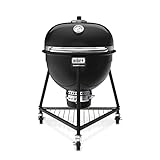 The Summit Charcoal competes directly with ceramic kamado grills like Big Green Egg and Kamado Joe.
These competitors typically range from $800-$3,000 depending on size and accessories.
Key competitive differences:
| Feature | Weber Summit | Kamado Competitors |
|---|---|---|
| Material | Steel construction | Ceramic shell |
| Heat retention | Good | Excellent |
| Price range | $1,500-$2,500 | $800-$3,000 |
| Warranty | 10 years | Lifetime (ceramic) |
Weber differentiates through familiar kettle-style cooking and extensive accessory compatibility.
Kamado grills offer superior heat retention but require different cooking techniques.
The Summit targets Weber loyalists hesitant to switch cooking styles.
Kamado brands attract customers seeking maximum versatility and fuel efficiency.
Limited Retail Availability
Weber restricts Summit Charcoal distribution to maintain premium positioning and dealer margins.
The grill appears primarily in specialty outdoor retailers and select home improvement stores.
This limited availability creates perceived scarcity.
Customers often must special order units rather than purchasing off showroom floors.
Distribution strategy includes:
- Authorized Weber dealers only
- Minimal big-box retailer presence
- Direct-to-consumer online sales
- Regional availability variations
Limited distribution supports higher retail margins for dealers.
Specialty retailers can provide expert consultation and justify premium pricing through service.
The strategy prevents price erosion common with mass-market distribution.
Weber maintains pricing discipline while competitors face pressure from discount retailers.
Premium Features and Design
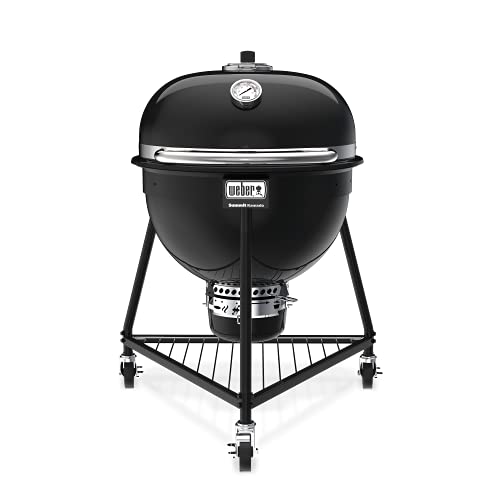 The Weber Summit Charcoal Grill commands its high price through distinctive engineering innovations and superior construction quality.
Its air-insulated design, dual-functionality systems, and premium materials create a professional-grade cooking experience that justifies the investment.
Innovative Air Insulation and Dual-Wall Construction
The Summit features air-insulated double-walled lid and bowl construction that sets it apart from standard charcoal grills.
This design creates a thermal barrier that keeps hot air contained while preventing cold air infiltration.
This insulation system enables the grill to maintain consistent temperatures for 10-12 hours on a single charcoal load.
The efficiency reduces fuel consumption significantly compared to single-wall grills.
Temperature control becomes more precise with the Rapidfire lid damper system.
The hinged damper design maximizes airflow to heat coals faster when higher temperatures are needed.
The double-wall construction also improves heat retention during cold weather conditions.
This feature makes the Summit functional year-round without performance degradation.
Versatility in Grilling and Smoking
The Summit incorporates multiple cooking methods through its two-position fuel grate system.
Users can adjust the grate position to switch between direct grilling and indirect smoking configurations.
A hinged diffuser plate deflects heat away from food during smoking operations.
This component maintains the low, consistent temperatures essential for proper smoking techniques.
The plate’s hinged design provides easy access for adding fuel or wood chips without disrupting the cooking process.
This convenience eliminates temperature fluctuations common with traditional smokers.
Snap-Jet gas ignition reduces startup time to just 20 minutes.
This feature combines charcoal flavor with gas grill convenience.
The Gourmet BBQ System hinged cooking grate includes a removable center section.
This design accommodates various cooking inserts for specialized techniques like pizza making or wok cooking.
High-Quality Materials and Craftsmanship
Weber constructs the Summit using heavy-gauge steel with porcelain-enamel coating.
This material combination resists rust, corrosion, and weather damage better than standard steel construction.
The grill’s components undergo precision manufacturing processes that ensure proper fit and function.
Tight tolerances prevent air leaks that would compromise temperature control.
Stainless steel hardware and reinforced joints provide structural integrity under high-heat conditions.
These materials maintain their properties through repeated heating and cooling cycles.
The porcelain-enamel finish requires minimal maintenance while retaining its appearance over years of use.
This durability reduces long-term replacement costs compared to lower-grade alternatives.
Cost Drivers Behind the Price
The Weber Summit Charcoal Grill’s premium pricing stems from three primary factors: extensive manufacturing complexity, specialized high-performance components, and substantial research and development investments.
These elements combine to create a product that commands significantly higher costs than standard kettle grills.
Complex Manufacturing Process
Weber manufactures the Summit using advanced welding techniques rather than simple fasteners or bolts.
This approach requires skilled technicians and specialized equipment, driving up labor costs considerably.
The porcelain-enameled steel construction involves multiple coating stages.
Each layer must be precisely applied and cured at specific temperatures.
This process takes significantly longer than basic paint finishes used on budget grills.
Key manufacturing complexities include:
- Multi-stage porcelain coating application
- Precision welding of all joints and seams
- Hand-assembled damper systems
- Quality control testing at multiple production stages
The company maintains strict tolerances for heat retention and airflow dynamics.
Every grill undergoes individual testing to ensure proper damper function and temperature control capabilities.
Specialized Components and Accessories
The Summit features a sophisticated damper system with precision-engineered vents.
These components are manufactured to exact specifications using high-grade materials that resist warping under extreme temperatures.
Cast iron cooking grates receive porcelain coating for enhanced durability and heat retention.
This specialized coating process adds substantial material and processing costs compared to standard steel grates.
The built-in thermometer uses commercial-grade components rated for high-temperature environments.
Weber sources these from specialized suppliers rather than using generic temperature gauges.
Premium components include:
- Hinged cooking grates – Allow easy charcoal access without removing food
- Rapidfire lid damper – Precision airflow control system
- Tuck-Away lid holder – Engineered mounting system
- One-Touch cleaning system – Integrated ash removal mechanism
Research and Development Investment
 Weber invested years developing the Summit’s advanced airflow management system.
The company conducted extensive testing to optimize the damper positioning and vent sizing for consistent temperature control.
Engineers analyzed heat distribution patterns using thermal imaging technology.
This research ensured even cooking temperatures across the entire grate surface, requiring multiple prototype iterations.
The company tested various steel compositions and coating formulations to achieve optimal durability.
These development costs are amortized across the product line, contributing to the higher retail price.
Weber maintains dedicated testing facilities where prototypes undergo accelerated aging tests.
These simulate years of use in controlled environments to validate the 10-year warranty coverage.
Perceived Value and Longevity

Weber Summit Charcoal grills command premium prices partly due to their reputation for lasting decades rather than years.
The brand’s established track record and comprehensive warranty coverage justify higher upfront costs for many buyers.
Long-Term Durability
Weber constructs the Summit Charcoal with materials designed to withstand extreme conditions.
The porcelain-enameled bowls and lids undergo firing at 1600°F to resist both intense heat and weather damage.
Heavy-grade stainless steel components replace cheaper alternatives found in budget grills.
These materials resist rust and corrosion that typically plague lower-priced units within 2-3 years.
The unique manufacturing process requires specialized equipment and techniques.
Weber uses large presses to form the distinctive kettle shape, which costs more than standard rectangular manufacturing methods.
Key durability features include:
- Porcelain enamel coating fired at extreme temperatures
- Stainless steel cooking grates
- Cast iron components with protective coatings
- Weather-resistant hardware and fasteners
Users report Summit Charcoal grills functioning effectively after 10-15 years of regular use.
This longevity contrasts sharply with cheaper alternatives that often require replacement every 3-5 years.
Brand Reputation and Warranty
Weber’s 60+ year history in grilling creates significant brand equity that supports premium pricing.
Professional reviewers consistently rate Weber products among top performers in comparative testing.
The company provides comprehensive warranty coverage that exceeds industry standards.
This warranty backing demonstrates confidence in build quality and reduces long-term ownership risks.
Weber’s reputation stems from:
- Consistent positive reviews from professional testing organizations
- Celebrity chef endorsements and recommendations
- Decades of reliable performance across product lines
- Strong customer service and parts availability
The perceived quality premium allows Weber to charge approximately 10% more than competitors simply for being American-manufactured.
Buyers often view higher prices as indicators of superior quality and craftsmanship.
Weber’s investment in research and development creates innovative features that justify cost differences.
Each new product undergoes extensive testing before market release, ensuring reliability standards remain high.
Comparison to Other Weber Grills
The Summit Charcoal commands a premium price point compared to Weber’s traditional charcoal options, with the basic Weber Kettle starting around $225 while the Summit Charcoal costs approximately $1,250.
This significant price difference reflects advanced features and construction methods not found in Weber’s entry-level models.
Summit Charcoal vs. Weber Kettle
The Summit Charcoal represents a substantial upgrade from Weber’s classic kettle design.
The most significant difference lies in the air-insulated double-walled construction, which allows for 10-12 hours of smoking on a single charcoal load.
The Weber Kettle uses single-wall porcelain-enameled steel construction.
This traditional design works well for basic grilling but lacks the temperature retention capabilities of the Summit.
Key Summit Advantages:
- Snap-Jet gas ignition system for 20-minute startup
- Hinged diffuser plate for consistent heat distribution
- Two-position fuel grate for versatile cooking methods
- Rapidfire lid damper with hinged operation
The kettle requires manual lighting and offers limited temperature control options.
Weber Kettle models typically cost between $150-$400 depending on size and features.
The Summit includes the Gourmet BBQ System cooking grate with removable center sections.
This allows compatibility with specialized inserts for different cooking applications.
Summit Charcoal vs. SmokeFire
The SmokeFire pellet grills represent Weber’s entry into automated wood pellet cooking.
These units typically range from $800-$1,400, placing them in similar price territory to the Summit Charcoal.
Fuel and Operation Differences:
- Summit uses traditional charcoal with manual fire management
- SmokeFire burns wood pellets with digital temperature control
- Summit offers authentic charcoal flavor profiles
- SmokeFire provides set-and-forget convenience
The SmokeFire features Wi-Fi connectivity and app-based controls.
Users can monitor and adjust temperatures remotely without manual intervention.
The Summit requires hands-on fire management but delivers traditional charcoal grilling experience.
The air-insulated design maintains steady temperatures for extended periods without electricity.
Construction Methods:
- Summit uses heavy-gauge steel with porcelain enamel finish
- SmokeFire employs lighter gauge steel with digital components
- Summit designed for decades of use with minimal maintenance
- SmokeFire includes electronic parts requiring eventual replacement
Market Dynamics and Pricing Strategy

Weber maintains consistent pricing across retailers while positioning the Summit Charcoal as a premium product in a competitive high-end market.
The company’s pricing strategy reflects both manufacturing realities and strategic positioning against luxury competitors.
Pricing Relative to Production Cost
Weber’s Summit Charcoal pricing includes significant markup beyond raw production costs.
The company invests heavily in research and development for innovative features like the Snap-Jet ignition system and hinged cooking grates.
Manufacturing costs include premium materials such as heavy-gauge steel and porcelain-enameled surfaces.
These materials cost substantially more than standard grill components but provide superior durability and heat retention.
Weber’s quality control processes add overhead expenses.
Each grill undergoes multiple inspection stages to maintain the brand’s reputation for reliability.
The company also factors in warranty coverage costs and customer service infrastructure.
Weber provides extensive replacement parts availability and technical support, which requires ongoing investment in service operations.
Influence of Competing High-End Grills
Weber prices the Summit Charcoal competitively against other premium charcoal grills in the $1,500-$2,000 range.
Big Green Egg and Kamado Joe occupy similar price points with ceramic construction.
The Summit Charcoal differentiates itself through traditional kettle design combined with high-end features.
This positioning allows Weber to maintain premium pricing while offering familiar cooking methods.
Luxury grill brands like Lynx and Fire Magic command higher prices for built-in models.
Weber positions the Summit Charcoal as accessible luxury compared to these ultra-premium options.
Market demand for high-performance charcoal grills supports Weber’s pricing strategy.
Serious grilling enthusiasts demonstrate willingness to pay premium prices for superior build quality and advanced features.