
 Picking the right grill size can be tricky. You want enough space to cook for your family, but you don’t want to pay for room you will never use.
For most families of two to five people, a 3-burner grill is big enough, since it can hold about 15 to 20 burgers at once and lets you set up different heat zones. That third burner also gives you more control for indirect cooking and searing than a smaller grill can.
Still, the best size depends on how you cook, how often you host guests, and how much patio space you have. Keep reading to see when a 3-burner grill fits your outdoor cooking needs and when you might want something bigger or smaller.
How Much Food Fits on a Three-Burner Grill?
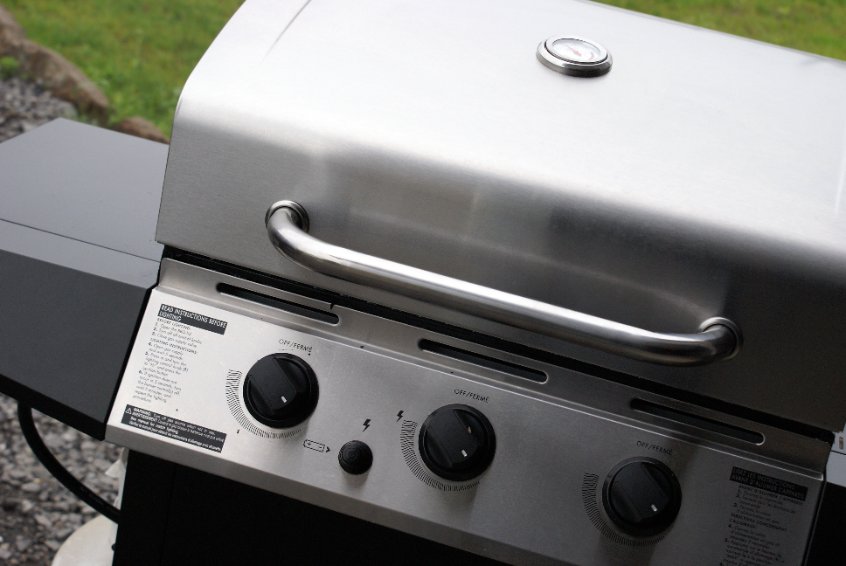 Most three-burner gas grills hold about 12 burgers or 6 steaks at once. The real number depends on the size of the main grate, how much room your side dishes need, and whether the listed size includes the warming rack.
Estimate Servings From the Primary Cooking Area
The primary cooking area is the main grate that sits right over the burners. This number tells you more than the burner count does. As one guide explains, primary cooking area predicts how much food fits, while burners only control how many heat zones you get.
Many three-burner grills have about 400 to 500 square inches of primary space. That range is often listed as a good cooking area for families of 4-5.
Here is what Weber says fits on its 3-burner Genesis E-325 gas grill, which lists 641 square inches of total cooking space:
| Food | Amount at One Time |
|---|---|
| Burgers | 20 |
| Bratwurst | 20 |
| Chicken pieces | 20 |
| Steaks | 8 |
These figures show that the Genesis E-325 has enough cooking capacity for family meals and larger gatherings. The 641 square inches of cooking space gives you room to cook several types of food at the same time, while the three burners allow you to create separate heat zones.
For example, you can use one area for high-heat searing, another for regular grilling, and a cooler section for food that needs more gentle cooking. The stated capacity is a useful maximum, but leaving some space between foods makes it easier to turn them and maintain consistent cooking temperatures.
Account for Sides, Large Cuts, and Space Between Foods
Serving counts assume the grate holds only one food. Real meals rarely work that way. If you add corn, peppers, or foil packets, your cooking capacity for meat goes down.
A medium grill has enough room for proteins, sides, and veggies in one round for many families.
Still, plan for these limits:
- Spacing: Leave about an inch between items so heat can move around them and you have room to flip.
- Large cuts: A whole chicken or pork shoulder needs indirect heat. You will often turn off one burner, which leaves about two-thirds of the grate for direct cooking.
- Thick steaks: Searing on one side and finishing on a cooler side takes up more room than cooking burgers in rows.
Distinguish Main Grate Space From Warming Rack Space
Brands often list total cooking surface area. This number usually adds the warming rack to the main grate. The warming rack sits higher up and away from direct flame.
That rack is useful for:
- Toasting buns
- Keeping cooked food warm
- Heating bread or small side dishes
It is not good for searing or fully cooking raw meat. Because of this, compare grills by their main grate size. One buying guide suggests a 3-burner grill with 400-500 square inches of primary area and a width of 30 to 36 inches for weeknight meals for 2 to 4 people.
If a listing shows only one number, check the spec sheet for a separate primary figure. This gives you a clearer view of your usable cooking space.
What Three Burners Let You Cook at Once
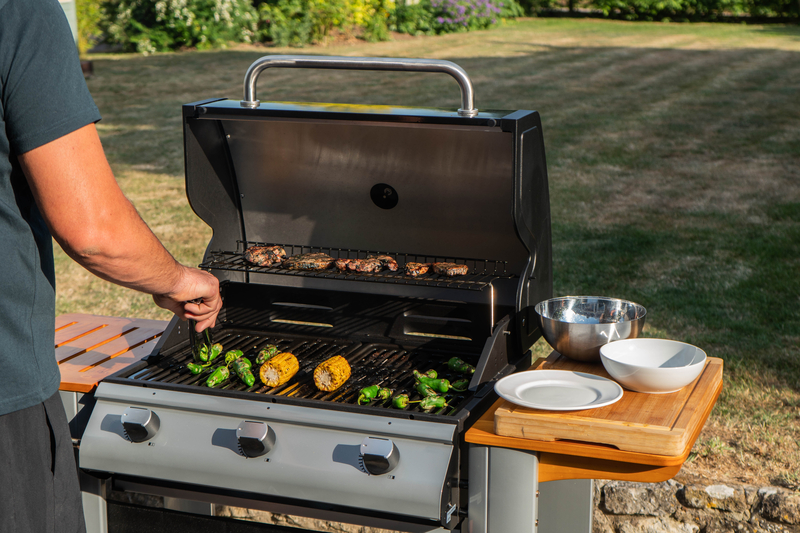 A 3-burner gas grill lets you run hot, medium, and low heat at the same time, so meat and vegetables can cook side by side. You can also turn off one burner to roast food slowly, and the way the burners are spaced decides where the hot and cool spots fall.
Set Up Heat Zones for Foods That Cook at Different Rates
Each burner has its own knob. That means you can set up hot, medium, and low cooking zones across one grate.
This matters because foods cook at different speeds. A thin steak needs high heat for a few minutes. Sliced zucchini or peppers do better over medium heat.
Here is a simple setup many cooks use:
| Burner | Heat Level | Good For |
|---|---|---|
| Left | High | Steaks, burgers, grill marks |
| Center | Medium | Chicken pieces, thick pork chops |
| Right | Low | Vegetables, melting cheese, keeping food warm |
With only two burners, you get just two heat zones. The third burner gives you a middle step, so you can move food to gentler heat instead of taking it off the grill.
Use Direct Cooking for Searing and Indirect Cooking for Roasting
Direct cooking means the food sits right over a lit burner. Use it for food that cooks in under 20 minutes, like burgers, hot dogs, shrimp, and steaks.
Indirect cooking means the food sits over a burner that is turned off. The lit burners heat the air under the closed lid, and the grill works more like an oven.
On a 3-burner grill, you have two common indirect setups:
- Outer burners on, center off: Place a whole chicken or pork roast in the middle.
- One side on, two off: Use this for lower heat with ribs or thick cuts.
You can also mix both methods. Sear a thick steak over direct heat first. Then move it to the unlit side to finish cooking without burning the outside.
How Burner Layout Affects Heat Distribution
Most 3-burner grills run their burners from front to back. They are spaced evenly under the grates. This layout spreads heat from left to right, but the front edge and back corners often run cooler than the center.
Total heat output matters too. Each burner on most models puts out about 8,000 to 15,000 BTUs. Higher numbers do not always mean better cooking, since lid fit and grate material also affect how well the grill holds heat.
Some grills add a side burner, like a 3+1 burner setup. That extra burner sits outside the main box. You can use it to heat sauces or cook side dishes in a pan while all three main burners stay free for grilling.
To find hot spots on your own grill, try this:
- Preheat all burners on medium for 10 minutes.
- Cover the grate with slices of white bread.
- Check which slices brown fastest.
When Two or Four Burners Make More Sense
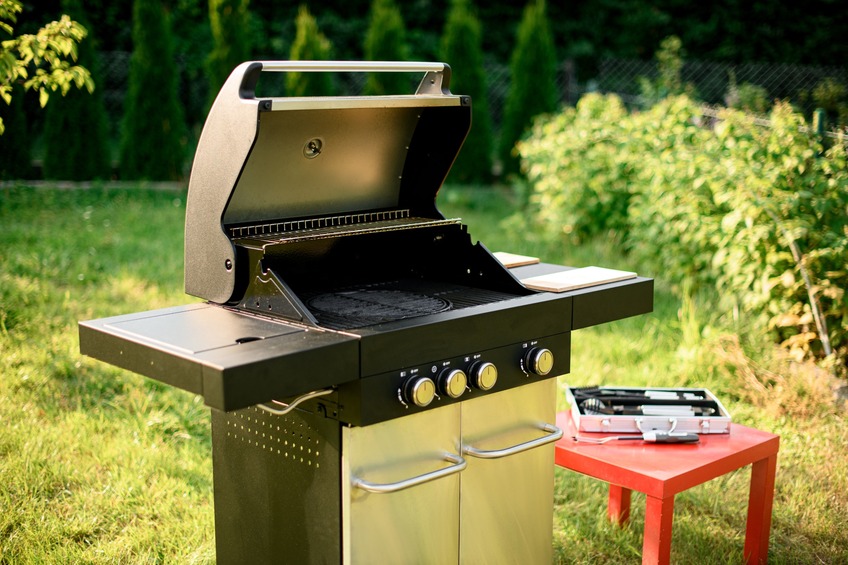
A 2-burner grill fits small households and tight spaces, while a 4-burner grill suits people who often cook for six or more. The number of burners is only a starting point, because grate area is a better measure of cooking capacity.
Choose Two Burners for Smaller Meals and Tight Spaces
A 2-burner grill is a good fit if you cook for 1 to 4 people and mostly grill burgers, chicken, and vegetables. These grills usually offer about 300 to 400 square inches of cooking area.
Space matters too. On a small balcony, a bigger grill may not fit. As one guide points out, a three-burner grill will not fix a six-foot balcony.
A 2-burner grill makes sense when you:
- Cook for one to four people most nights
- Have a balcony or very small patio
- Want a lower price and easier storage
- Rarely cook roasts or whole chickens that need indirect heat
The main tradeoff is that two burners give you only two heat zones.
This Char-Broil Performance Series 2-Burner Gas Grill is a compact option for smaller households and everyday grilling. Its two-burner design provides enough cooking space for burgers, steaks, chicken, and other essentials without taking up as much room as a larger three- or four-burner grill.
Choose Four Burners for Frequent Large Gatherings
A 4-burner grill usually provides 500 to 700 square inches of cooking space. It can serve about six to eight people at once. If you host cookouts often or have a large family, the added heat zones of a 4-burner grill can help.
Each burner can be set to its own temperature. That means a 4-burner grill gives you four different temperature zones instead of three. You can sear steaks, cook chicken, and warm buns at the same time.
Keep these costs in mind:
| Factor | 4-Burner Grill |
|---|---|
| Outdoor space | Needs more room |
| Fuel use | Higher than a 3-burner grill |
| Price | Usually higher |
A 3-burner grill is typically more fuel-efficient, so only size up if you will use the extra space often.
This Weber Genesis S-415 Gas Grill is a four-burner propane grill with a stainless steel finish, offering plenty of cooking space for larger meals and gatherings. Its four-burner setup also makes it easier to create separate heat zones for cooking different foods at the same time.
Compare Grate Area, Not Burner Count Alone
Burner count does not tell you the full grill size. Two grills with three burners can have very different cooking areas. Always check the primary cooking area in square inches.
Watch for these details on product listings:
- Primary area: The main grates where food cooks over direct heat
- Warming rack: Extra space, often 100 to 200 square inches, that is not used for direct grilling
- Total area: Some brands add both numbers together, which can make a grill seem larger
As a rough guide, a 400-square-inch primary grate holds about 16 to 20 burger patties. Use this kind of number to judge cooking capacity for your real meals. A well-sized 3-burner grill can sometimes offer more usable space than a small 4-burner model.
Check the Grill Before You Buy
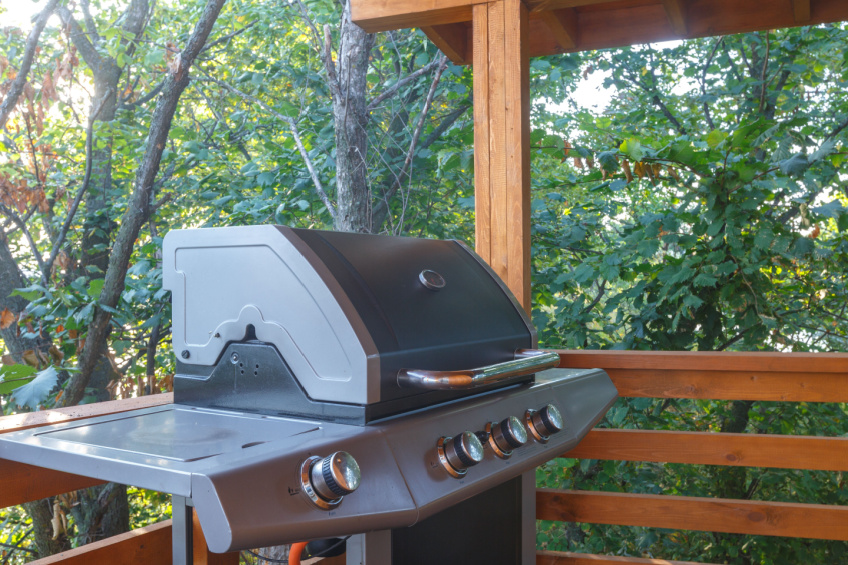 A 3-burner gas grill only works well if it fits your space, meets your cooking needs on paper, and has the features you will actually use. Measuring, comparing specs, and choosing extras ahead of time helps you avoid a costly mismatch.
Measure the Patio Footprint and Required Clearances
Start with a tape measure, not a product page. Many 3-burner grills are 30 to 36 inches wide for the firebox alone. Side tables can add another 15 to 20 inches.
Next, plan for safe space around the grill. Most gas grill manuals call for about 24 inches of clearance from walls, railings, and other combustible materials. Clearances vary by model, so read the manual before you buy. BBQGuys explains cooking area and clearances as part of choosing the right grill size.
Write down these numbers:
- Width with side tables folded and open
- Depth, including the lid when it opens
- Distance to the nearest wall, rail, or overhang
- Room for you to stand and move
If space is tight, a larger grill may not fit. As one guide notes, a three-burner grill will not fix a small balcony.
Compare Model Specifications, Including the Weber Spirit E-325
Burner count tells only part of the story. Compare the primary cooking area, total heat output, and build quality. For most families of 4 to 5, 400 to 500 square inches of cooking space is a common target.
The Weber Spirit E-325 is a useful benchmark for a 3-burner model:
| Feature | Weber Spirit E-325 |
|---|---|
| Burners | 3 main burners |
| Primary cooking area | About 424 sq in |
| Total area with warming rack | About 529 sq in |
| Main burner output | About 30,000 BTU per hour |
| Extra feature | Sear Zone for high-heat cooking |
Use these numbers to judge other grills. If a model has three burners but much less cooking area, it may feel smaller in daily use. Always confirm current specs on the maker’s page, since models change over time.
Decide Whether a Side Burner and Electronic Ignition Matter
A side burner lets you heat sauces, boil corn, or cook vegetables while the main grates stay busy. A side burner adds cooking options, but it also costs more and takes up more space.
Electronic ignition lights the burners with a button instead of a match or lighter. Most new gas grills include it.
Look for:
- Push-button or rotary igniters that light each burner
- Easy access to replace the battery, if the system uses one
- A manual lighting hole as a backup
Skip the side burner if you rarely cook sides outdoors. Keep reliable ignition on your must-have list.
Match the Grill to Your Usual Meals
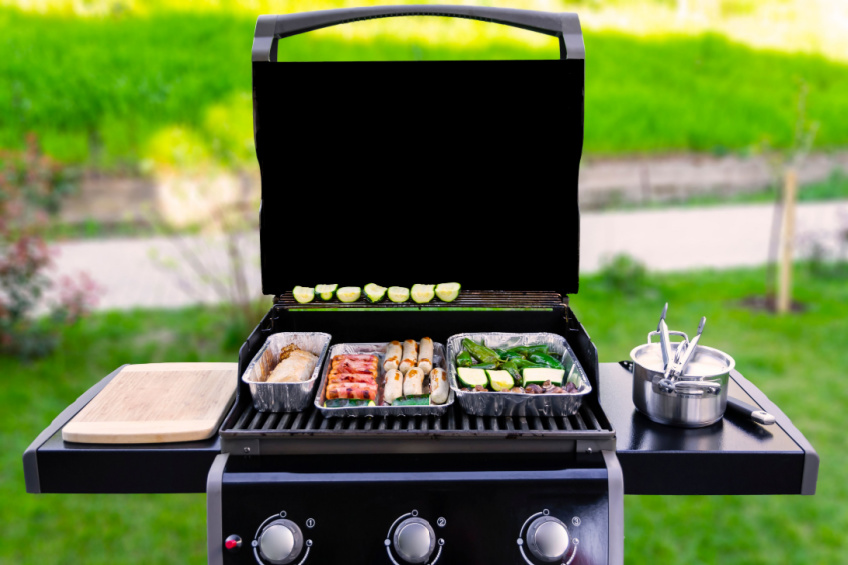 A 3-burner grill handles most weeknight dinners for a small family. You may need more cooking space if you often feed large groups or cook several items at once.
When Three Burners Are Enough
Plan around your typical meals, not the one big party you host each year. If you grill a few times a week for your household, three burners usually cover it.
A 3-burner model works well if you:
- Cook for a household of about 4 to 6 people, which is the range a 3-burner propane grill fits
- Grill burgers, chicken, steaks, and vegetables
- Want one burner off for indirect heat on ribs and whole chickens
For weeknight family grilling, look for about 400 to 500 square inches of main cooking area. That size fits a full meal for a small family. It also leaves room to keep food warm.
Signs You Will Need More Cooking Space
Your usual meals tell you when three burners fall short.
Watch for these signs:
| Sign | What It Means |
|---|---|
| You host 8 or more people most weekends | You will cook in batches, and food may get cold |
| You smoke large cuts like brisket | You need a wider indirect-heat zone |
| You cook meat and sides at the same time | A 3-burner grill gets crowded fast |
| You grill almost every day | Frequent use can justify a larger grill |
Outdoor cooking for big groups also takes more time on a smaller grill. If you often wait for space to open up, a 4- or 5-burner grill may suit you better.
A side burner can help too. It lets you cook sauces or corn without using grill space.
FAQ: Is a 3-Burner Grill Big Enough?
 Yes, a 3-burner grill is large enough for most families and everyday backyard cooking. It typically provides enough cooking space for several steaks, burgers, chicken pieces, or vegetables while allowing you to create separate heat zones.
How Many People Can a 3-Burner Grill Cook For?
A typical 3-burner grill can comfortably handle meals for 4 to 6 people, depending on the size of the cooking surface and what you are preparing. Larger three-burner models can also accommodate more food when entertaining.
Is a 3-Burner Grill Big Enough for a Family?
For most families, yes. Three burners provide a useful balance between cooking space and size, with enough room to cook the main food while leaving space for indirect or lower-temperature cooking.
Can You Use a 3-Burner Grill for Indirect Cooking?
Yes. A three-burner grill is well suited to two-zone cooking. You can leave one burner off while using the other two for heat, creating a cooler area for foods that need slower or indirect cooking.
Is a 3-Burner Grill Big Enough for Entertaining?
It can be, particularly if you choose a model with a generous primary cooking area. For frequent large gatherings, however, a four-burner grill may provide additional space and make it easier to cook different foods at the same time.
Is a 3-Burner Grill Better Than a 2-Burner Grill?
A three-burner grill generally provides more cooking space and greater flexibility for creating heat zones. The additional burner can also make indirect cooking easier while giving you more room to separate foods during a larger meal.