Choosing the right grill fuel can significantly impact your outdoor cooking experience, cost, and convenience.
Both propane and natural gas grills offer excellent grilling performance, but they differ in several key areas that matter to backyard barbecue enthusiasts.
The fundamental difference between propane and natural gas grills lies in their fuel delivery systems—propane uses portable tanks that offer mobility and independence, while natural gas connects directly to your home’s gas line for continuous fuel supply.
Propane grills provide the flexibility to grill anywhere and are ideal for those who want portability. Natural gas grills eliminate the need for tank refills and typically offer lower ongoing fuel costs.
Understanding these differences helps determine which option aligns with your grilling habits, budget, and setup preferences.
This comparison examines the practical aspects of fuel costs, installation requirements, cooking performance, and environmental impact to guide your decision between these two popular grill fuel options.
Understanding Propane and Natural Gas Grills

Both propane and natural gas serve as fuel sources for gas grills, but they differ significantly in their chemical composition, energy density, and delivery methods.
These fundamental differences affect everything from heating performance to cost and convenience.
What is Propane?
Propane (C₃H₈) is a hydrocarbon gas that belongs to the liquefied petroleum gas family.
It forms as a byproduct during natural gas processing and petroleum refining operations.
Key Properties:
- Energy density: 2,500 BTUs per cubic foot
- Storage: Compressed as liquid in portable tanks
- Weight: Heavier than air
- Ignition temperature: 920°F
Propane converts from liquid to gas when released from its pressurized container.
This characteristic allows for compact storage in tanks that can be easily transported and exchanged.
The higher energy density means propane grills heat up faster than natural gas models.
Most propane grills reach cooking temperatures within 10-15 minutes.
Propane operates at approximately 11 inches water column pressure.
This higher pressure, combined with greater energy content, requires smaller burner orifices compared to natural gas systems.
What is Natural Gas?
Natural gas consists primarily of methane (CH₄) and reaches homes through underground utility pipeline networks.
The same gas that powers home heating systems and kitchen appliances can fuel outdoor grills.
Key Properties:
- Energy density: 1,000 BTUs per cubic foot
- Storage: Delivered directly through gas lines
- Weight: Lighter than air
- Ignition temperature: 1,200°F
Natural gas disperses quickly if leaked due to its lighter-than-air properties.
This creates a safety advantage over propane, which can pool in low areas.
The lower energy density means natural gas grills typically require 15-20 minutes to reach cooking temperature.
Maximum temperatures usually peak around 500-550°F at the cooking surface.
Natural gas operates at approximately 4 inches water column pressure.
The lower pressure and energy content necessitate larger burner orifices to ensure proper gas flow and combustion.
Liquefied Petroleum Gas Overview
Liquefied petroleum gas encompasses propane and other hydrocarbon gases that can be compressed into liquid form for storage and transport.
Propane represents the most common type used for grilling applications.
LPG Characteristics:
- Stored under pressure as liquid
- Converts to gas when pressure releases
- Higher energy density than natural gas
- Requires specialized storage containers
The liquefaction process allows significant volume reduction, making portable fuel storage practical.
A standard 20-pound propane tank contains approximately 4.7 gallons of liquid propane.
LPG systems require pressure regulators to control gas flow from high-pressure storage to appropriate operating pressure.
This equipment ensures safe and consistent fuel delivery to grill burners.
Most residential propane grills use standard 20-pound tanks, though larger permanent installations may utilize bigger storage systems.
Key Differences Between Propane and Natural Gas Grills

Propane grills rely on portable tanks that connect directly to the appliance, while natural gas grills require a fixed gas line connection to your home’s utility system.
These fundamental differences in fuel delivery affect installation complexity, mobility options, and long-term convenience.
Fuel Source and Delivery
Propane grills use liquefied petroleum gas stored in refillable tanks.
Standard propane tanks weigh 20 pounds and provide approximately 18-20 hours of cooking time on high heat.
Users purchase these tanks at gas stations, hardware stores, or grocery stores.
The propane tank connects to the grill through a regulator and hose system.
Most propane grills include these connection components.
When the tank empties, owners must disconnect it and transport it for refilling or exchange.
Natural gas grills connect to the home’s existing natural gas line through underground utility pipes.
This connection provides continuous fuel supply without interruption.
The gas flows through a fixed line that connects directly to the grill’s burner system.
Natural gas burns at approximately 1,030 BTUs per cubic foot compared to propane’s 2,516 BTUs per cubic foot.
This means natural gas grills consume more than double the fuel volume to achieve the same heat output as propane grills.
Setup and Installation
Propane grill setup requires minimal installation effort.
Users simply attach the propane tank to the grill using the included regulator and hose.
This connection takes just a few minutes and requires no professional assistance.
The tank sits in a designated compartment beneath most propane grills.
Users turn the tank valve counterclockwise to open gas flow and follow standard ignition procedures to start cooking.
Natural gas grill installation involves more complex requirements.
Homes without existing gas lines need professional installation of underground utility connections.
This process often costs several hundred to over a thousand dollars depending on distance and local regulations.
Licensed plumbers typically handle gas line installations to ensure safety compliance.
The grill must be positioned within reach of the gas line connection point.
Most natural gas grills include connection kits for attaching to the home’s gas supply.
Portability and Flexibility
Propane grills offer maximum mobility and placement flexibility.
Users can move these grills anywhere within their outdoor space without restriction.
The portable tank design allows for easy transport to camping sites, tailgate events, or different areas of the backyard.
Freestanding propane grills work well for renters or homeowners who frequently relocate.
The tank disconnects quickly for moving or storage purposes.
Natural gas grills remain permanently fixed near the gas line connection point.
This stationary setup limits placement options but eliminates concerns about running out of fuel during cooking.
The continuous gas supply means uninterrupted cooking sessions.
Homeowners who prefer dedicated outdoor cooking stations often choose natural gas grills.
These units work well for built-in outdoor kitchen designs where mobility is not required.
Performance and Cooking Experience
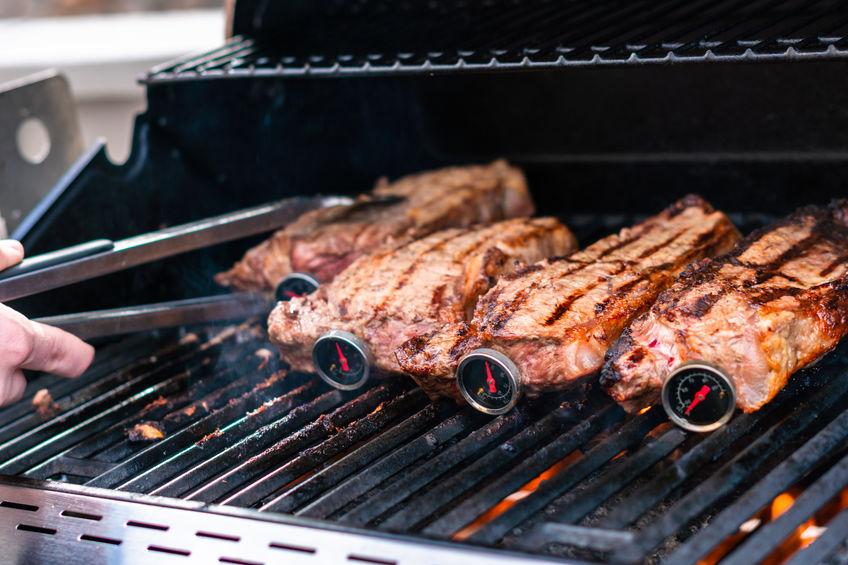
Both propane and natural gas grills deliver similar cooking performance, but subtle differences in BTU output, temperature management, and outdoor versatility can influence your grilling results.
BTU Output and Heat Levels
Natural gas delivers approximately 1,012 BTUs per cubic foot, while propane produces around 2,530 BTUs per cubic foot.
This means propane packs more than double the energy density of natural gas.
Despite this difference in energy content, both fuel types can reach maximum temperatures of 3,560 degrees Fahrenheit under optimal conditions.
For typical grilling and BBQ applications, both fuels easily exceed the 500-degree threshold needed for proper steak searing.
The higher energy density of propane means gas grills using this fuel consume less volume to achieve the same heat output.
Natural gas grills require significantly more fuel flow to match propane’s heating performance.
Both fuel types provide sufficient power for standard outdoor cooking tasks.
The BTU difference becomes more noticeable during extended cooking sessions or when maintaining high temperatures for long periods.
Temperature Control
Temperature regulation works identically between propane and natural gas models.
The main difference lies in the pressure regulators, which are calibrated specifically for each fuel type.
Gas grills using either fuel feature the same control knobs, burner designs, and heat distribution patterns.
Many manufacturers produce identical grill models that differ only in their gas connections and regulators.
Propane systems maintain more consistent pressure delivery, especially in colder weather conditions.
Natural gas pressure can fluctuate based on home supply demands and seasonal usage patterns.
Both fuel types offer precise temperature control for various cooking methods.
The learning curve remains the same regardless of which fuel powers the grill.
Outdoor Cooking Versatility
Propane gas grills excel in portability and location flexibility.
Users can easily transport these units for camping, tailgating, or moving around yard spaces without infrastructure constraints.
Natural gas grills require permanent installation with professional gas line connections.
This limitation restricts their placement to areas within reach of existing gas supply lines.
Propane tanks provide consistent fuel supply regardless of location or home gas usage.
Natural gas availability depends on municipal supply systems and home service connections.
For outdoor cooking enthusiasts who value mobility, propane offers clear advantages.
Fixed outdoor kitchen installations often favor natural gas for its continuous supply and lower ongoing fuel costs per BTU delivered.
Cost Comparison: Propane vs Natural Gas

Natural gas typically offers lower operating costs but requires higher upfront investment for installation.
Propane grills cost less initially but result in higher fuel expenses over time.
Initial Investment
Natural gas grills typically cost $100-$200 more than equivalent propane models.
The primary expense comes from professional gas line installation, which ranges from $300-$800 depending on the distance from existing gas lines and installation complexity.
Propane grills require minimal upfront investment beyond the grill purchase.
Users only need to buy a propane tank, which costs $20-$40 when filled.
No professional installation is required.
Initial Cost Breakdown:
- Natural Gas: Grill + $300-$800 installation
- Propane: Grill + $20-$40 tank
Homeowners without existing natural gas service face significantly higher installation costs.
Rural properties may require extensive line extensions, making propane the more practical choice.
Operating Costs
Natural gas provides substantial savings on fuel costs, typically 20-40% less expensive per BTU than propane.
A typical grilling session using natural gas costs approximately $0.50-$1.00, while the same cooking time with propane costs $1.50-$2.50.
Propane costs vary by region but average $3.50-$4.50 per gallon.
A standard 20-pound tank provides 18-20 hours of cooking time on medium heat.
Tank exchange fees add $2-$4 to each refill.
Annual Fuel Costs (100 hours of grilling):
- Natural Gas: $25-$50
- Propane: $75-$125
Frequent grillers reach cost break-even within 2-3 years when choosing natural gas.
Occasional users who grill less than 20 hours annually may never recover the higher installation costs.
Environmental Considerations
Natural gas produces fewer greenhouse gas emissions than propane, while both fuels burn cleaner than charcoal or wood alternatives.
The environmental impact varies based on production methods and transportation requirements for each fuel type.
Carbon Emissions
Natural gas generates approximately 25% fewer carbon dioxide emissions per BTU compared to propane during combustion.
This difference stems from natural gas having a higher hydrogen-to-carbon ratio in its molecular structure.
Propane produces about 139 pounds of CO2 per million BTUs burned.
Natural gas generates roughly 117 pounds of CO2 for the same energy output.
Transportation factors also affect the carbon footprint.
Propane requires trucking to distribution centers and retail locations.
Natural gas travels through existing pipeline infrastructure, reducing transportation-related emissions.
The production phase adds to the total carbon footprint.
Propane extraction and refining processes typically generate more emissions than natural gas extraction from wells.
Greenhouse Gases
Both fuels produce methane during extraction and processing, but natural gas operations release significantly more methane into the atmosphere.
Methane traps heat 25 times more effectively than carbon dioxide over a 100-year period.
Natural gas infrastructure experiences leakage throughout the distribution system.
Pipeline leaks and well site emissions contribute substantial methane releases before the fuel reaches consumers.
Propane storage and handling produces minimal methane emissions.
The fuel remains in liquid form under pressure, reducing opportunities for atmospheric release during transportation and storage.
Processing facilities for both fuels implement capture systems to reduce greenhouse gas releases.
Modern equipment has improved efficiency rates, but natural gas operations still show higher methane emissions overall.
Clean-Burning Fuel Impact
Both propane and natural gas qualify as clean-burning fuels compared to solid fuel alternatives.
They produce minimal particulate matter, sulfur compounds, or toxic emissions during combustion.
Natural gas burns with virtually no visible smoke or soot production.
The complete combustion process generates only water vapor and carbon dioxide as primary byproducts.
Propane also burns cleanly with proper air mixture ratios.
Well-maintained propane grills produce negligible amounts of harmful pollutants or particulate emissions.
Air quality benefits remain consistent for both fuel types.
Neither propane nor natural gas contributes to ground-level ozone formation or releases carcinogenic compounds during normal grilling operations.
Choosing the Right Grill for Your Needs

Natural gas and propane grills each offer distinct advantages depending on how and where you plan to install them, as well as on safety considerations.
Built-in natural gas options require a permanent gas connection, making them best suited for homes with an existing line to the patio or outdoor kitchen.
Propane models, on the other hand, offer portability and flexibility, since they run on refillable tanks and don’t require fixed plumbing.
Maintenance also differs: natural gas units generally involve a more complex setup up front but offer effortless long-term operation, while propane models demand ongoing attention to fuel levels and tank changes.
 If you’re considering a natural gas grill, the Weber SPIRIT 4-Burner Grill E-425 Natural Gas is a reliable choice.
It features Weber’s GS4 grilling system, four high-performance burners, and porcelain-enameled cast iron grates, making it perfect for everyday backyard cooking.
The natural gas hookup ensures you never run out of fuel mid-cook, though it does require professional installation.
 For propane enthusiasts, the Weber Genesis II E-325S Propane Grill is a powerhouse option.
With three burners, an additional sear zone, and a generous cooking surface, it’s perfect for entertaining or cooking multiple dishes at once.
Since it runs on standard propane tanks, you can place it anywhere in your yard or patio — just keep a spare cylinder handy to avoid interruptions.
Ultimately, the right choice comes down to your grilling style and setup: go with natural gas for convenience and continuous supply, or propane for flexibility and high-heat performance.
Either way, both Weber models are strong, dependable picks that make outdoor cooking a pleasure.
Built-In Grills and Outdoor Kitchens
Built-in grills transform outdoor spaces into permanent cooking stations, and natural gas models excel in this role since they connect directly to home gas lines.
Natural gas built-ins eliminate the need for tank storage or exchanges, offering a permanent connection that provides unlimited fuel supply for extended cooking sessions.
While installation does require a professional gas line extension and comes with upfront costs, it delivers unmatched convenience in the long run.
 A notable choice in this category is the Bull Outlaw 30-Inch Built-In Propane Grill (BG-26038), which boasts four 15,000 BTU burners, a total of 60,000 BTUs, and a 575-square-inch cooking area.
Constructed from 304 stainless steel, it ensures durability and even heat distribution, making it a reliable option for those seeking a high-performance grilling experience.
Propane built-ins, by contrast, offer more flexibility in placement since they don’t require gas line access.
They operate on larger propane tanks that can be concealed in outdoor cabinetry, allowing homeowners to relocate or reconfigure the setup if needed.
Tank exchanges are part of the routine, but this portability can be a real advantage.
A recommended choice here is the Weber Genesis E-325 Liquid Propane Gas Grill, which mirrors the premium features of its natural gas counterpart—including multiple burners, a sear zone, and side burners—while running on standard LP gas tanks that can be neatly hidden from view.
Designers often prefer natural gas models for their streamlined appearance, since no visible tanks or hoses interrupt the layout.
However, propane models are ideal where natural gas service isn’t available or when installation flexibility is a priority.
Both fuel types deliver essentially identical cooking performance, so the decision ultimately comes down to utilities, budget, and long-term usage plans.
Safety and Maintenance Factors
Safety considerations differ between propane and natural gas systems.
Both require regular inspection and proper handling procedures.
Propane safety focuses on tank storage and connections.
Tanks must be stored upright in ventilated areas away from heat sources.
Users should check connections with soapy water to detect leaks.
Proper transportation requires securing tanks upright and avoiding enclosed vehicles.
Natural gas safety centers on fixed line integrity. Professional installation ensures proper connections and pressure regulation.
Homeowners should know their gas shutoff location and watch for dead vegetation near gas lines, which can indicate leaks.
Maintenance requirements vary by fuel type. Propane grills need tank monitoring and regular exchanges.
Natural gas models require annual professional inspections of the gas line connection.
Both systems need routine grill cleaning and burner inspection.
Natural gas burns slightly cleaner, potentially reducing cleaning frequency.
However, both fuels produce similar maintenance schedules for the actual grill components.