

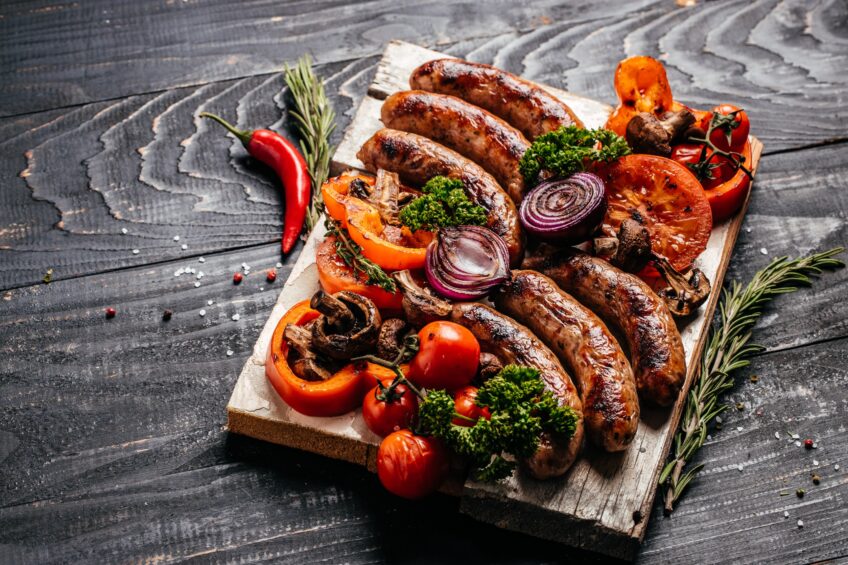
Gas grilling with wood chips transforms ordinary barbecue into restaurant-quality cuisine by infusing food with rich, smoky flavors that standard gas grilling cannot achieve.
Wood chips work on gas grills by creating aromatic smoke when heated in a smoker box or foil packet, allowing the smoke to penetrate and enhance the flavor of meats and vegetables.
Many grillers assume they need a charcoal or dedicated smoker setup to achieve authentic smoky taste, but gas grills offer a convenient and controlled way to incorporate wood smoke into cooking.
The process involves selecting appropriate wood varieties, properly preparing the chips, and understanding optimal placement techniques for consistent smoke production.
Different woods provide distinct flavor profiles, from mild apple and cherry to robust hickory and mesquite, allowing grillers to customize their cooking experience.
Success with wood chips on gas grills requires attention to temperature control, timing, and safety considerations to avoid common pitfalls like oversmoking or flare-ups.
Proper setup and technique ensure even smoke distribution while maintaining the convenience and precision that makes gas grilling popular among outdoor cooking enthusiasts.
Benefits of Using Woodchips on a Gas Grill

Woodchips transform gas grilling by introducing authentic smoky flavors that elevate ordinary meals into restaurant-quality dishes.
They provide consistent flavor enhancement across various proteins and vegetables while maintaining the convenience of gas cooking.
Enhancing Flavor
Woodchips infuse foods with complex flavor profiles that cannot be achieved through gas alone.
Different wood varieties contribute distinct taste characteristics to grilled items.
Popular wood types and their flavor contributions:
- Hickory: Strong, bacon-like flavor ideal for pork and beef
- Apple: Mild, sweet taste perfect for poultry and fish
- Mesquite: Bold, earthy flavor that complements red meats
- Cherry: Subtle fruity notes that enhance both meat and vegetables
The wood combustion process creates aromatic compounds that penetrate food surfaces.
These compounds develop deeper flavors as they interact with proteins and fats during cooking.
Gas grills maintain consistent temperatures while woodchips provide the flavor enhancement.
This combination delivers predictable results without the temperature fluctuations common in charcoal grilling.
Adding Smokiness to Food
Woodchips generate authentic smoke that mimics traditional barbecue methods.
The smoke particles adhere to food surfaces, creating the characteristic smoky taste associated with outdoor cooking.
Soaked woodchips produce longer-lasting smoke compared to dry chips.
The moisture content allows for slower burning and more consistent smoke production throughout the cooking process.
The smoke ring effect occurs when smoke compounds react with meat proteins.
This creates the pinkish coloration beneath the surface that indicates proper smoke penetration.
Different smoking intensities can be achieved by adjusting chip quantities and placement methods.
Light smoking requires fewer chips, while heavy smoking demands more chips and longer exposure times.
Versatility Across Different Foods
Woodchips work effectively with various protein types and cooking methods on gas grills.
Each food category responds differently to smoke exposure, allowing for customized flavor development.
Optimal wood pairings by food type:
| Food Category | Recommended Woods | Smoking Duration |
|---|---|---|
| Beef | Hickory, Oak, Mesquite | 30-45 minutes |
| Pork | Apple, Cherry, Hickory | 20-40 minutes |
| Poultry | Apple, Peach, Alder | 15-30 minutes |
| Fish | Cedar, Alder, Apple | 10-20 minutes |
| Vegetables | Fruit woods, Oak | 10-15 minutes |
Delicate foods like fish and vegetables require milder woods and shorter smoking periods.
Robust meats can handle stronger wood flavors and extended smoke exposure.
The versatility extends to different cuts and cooking styles.
Quick-cooking items benefit from pre-soaked chips that generate immediate smoke, while longer cooks allow for multiple chip additions throughout the process.
Selecting the Right Woodchips

Different wood varieties produce distinct flavor profiles that complement specific foods.
The intensity and type of smoke depend on wood selection, proper storage, and matching chips to cooking applications.
Types of Woodchips for Grilling
When it comes to wood chips for smoking, the type of wood you choose has a huge impact on flavor.
Below is an updated guide — plus real product ideas you can look up and experiment with yourself.
The Flavor Spectrum: From Mild to Bold
Fruit Woods – mild, sweet, beginner-friendly
-
Apple wood chips lend a soft, fruity sweetness that works beautifully with pork, poultry, and fish.
-
Cherry chips contribute a gentle flavor and help give meat a lovely reddish tint on the surface.
Hardwoods – stronger, robust smoke
-
Hickory delivers that classic “bacon-like” smokiness, perfect with pork ribs or brisket.
-
Oak offers a more moderate smokiness: strong enough to add depth across various meats, yet not so strong that it overpowers delicate proteins.
Specialty Woods – more character, use with caution
-
Mesquite gives an intense, earthy punch often prized in Southwestern barbecue—but it can swing bitter if overused.
-
Pecan delivers a rich, nutty sweetness reminiscent of hickory, but in gentler form.
Avoid Softwoods (pine, cedar, etc.)
These contain resins and sap that burn into off-flavors or even toxic smoke.
Always go for food-grade smoking wood chips or chunks intended for grilling/smoking.
Product Ideas You Can Try
Here are a few examples of wood chips / wood chip variety packs you might find.
Here are a few recommended products you can explore to experiment with different wood flavors and blends:
-
BBQ Wood Chips Variety Pack (Apple, Mesquite, Hickory, Cherry, etc.) — a convenient way to try multiple woods in one purchase.
-
All-Natural Oak Wood Chips (260 cu. in bag) — strong single-wood option for more robust smoking.
-
Boruit Wood Chips (Apple, Cherry, Pecan & Oak) — a multipack offering a mix of fruit and nut woods
Blending Woods: How & Why to Combine
Blending gives you control — you can mellow out bold wood, soften sharp woods, or craft a signature touch.
Here are some blending strategies:
| Goal | Suggested Blend | Why It Works |
|---|---|---|
| Light, fruity smoke for poultry / fish | Apple + Cherry (e.g. 70% apple, 30% cherry) | Apple’s sweetness with cherry coloration |
| Balanced “everyday BBQ” flavor | Oak + Hickory (e.g. 60% oak, 40% hickory) | Oak tempers hickory’s punch, still gives depth |
| Rich but not overpowering pork smoke | Hickory + Pecan (e.g. 50/50) | Hickory’s strength softened by nutty pecan |
| Bold, southwestern style for steaks | Mesquite + Oak (small mesquite portion) | Use mesquite sparingly against oak to avoid bitterness |
Blending tips:
-
Start with small ratios (e.g. 10–20% of the stronger wood) and adjust in later smokes.
-
Use separate “wood mix” containers so you can replicate your favorite mix later.
-
Monitor smoke — even a “good” wood overused will overwhelm.
Purchasing and Storing Woodchips
Purchase woodchips from reputable suppliers that guarantee food-grade quality.
Avoid chips treated with chemicals or additives that could contaminate food.
Hardware store wood chips often contain harmful substances unsuitable for cooking.
Storage Requirements include keeping chips in dry, ventilated areas away from moisture.
Damp woodchips create excessive steam rather than smoke and may develop mold.
Store chips in breathable containers or original packaging.
Quantity Planning suggests buying 1-2 pounds per grilling session for most applications.
Chips should appear uniform in size, typically ¼ to ½ inch pieces.
Larger chunks burn too slowly for gas grills, while sawdust burns too quickly.
Check expiration dates on packaged chips, as old wood loses flavor potency.
Fresh chips produce better smoke and more pronounced flavors than aged varieties.
Preparing Woodchips for Grilling

Proper woodchip preparation determines smoke quality and flavor intensity.
The soaking method, timing, and portion size directly impact the grilling results.
Soaking Versus Dry Woodchips
Soaked woodchips create longer-lasting smoke by burning more slowly.
The water content causes the chips to smolder rather than ignite quickly, producing steady smoke for 30-45 minutes.
Dry woodchips ignite faster and burn hotter.
They generate intense smoke initially but consume themselves within 15-20 minutes.
This method works well for shorter cooking times.
Most gas grill manufacturers recommend soaking to prevent flare-ups.
The moisture creates steam that mixes with smoke, adding humidity to the cooking environment.
Pros of soaking:
- Extended smoke duration
- Reduced fire risk
- More consistent temperature
Pros of dry chips:
- Immediate smoke production
- Stronger initial flavor
- No advance preparation needed
The choice depends on cooking time and desired smoke intensity.
Best Soaking Practices
Woodchips require 30 minutes to 2 hours of soaking time.
Longer soaking periods do not improve performance beyond 2 hours.
Use cold water to cover chips completely. Room temperature water works equally well.
Avoid hot water, which can extract natural flavors from the wood.
Wine, beer, or fruit juices can replace water for additional flavor complexity.
Apple juice pairs well with apple wood, while red wine complements oak chips.
Drain chips thoroughly before use.
Excess water creates excessive steam and delays smoke production.
Large chips need longer soaking times than small pieces.
Dense woods like oak require more time than softer woods like cedar.
Portion Sizing
Use 1-2 cups of woodchips for standard gas grills.
This amount provides 30-45 minutes of smoke for most cooking sessions.
Chip size matters for burn rate control.
Larger chunks last longer but take more time to start smoking. Smaller chips ignite faster but burn out quickly.
For cooking times under 30 minutes, use 1 cup of chips.
Extended cooking sessions requiring 1-2 hours need 2-3 cups with periodic additions.
Replace chips every 30-45 minutes for continuous smoke.
Add fresh chips when smoke production decreases noticeably.
Store unused soaked chips in the refrigerator for up to 24 hours.
Drain and re-soak if storing longer periods.
Setting Up Your Gas Grill for Woodchips

Gas grill setup for woodchips requires proper containment and positioning to generate consistent smoke.
The three main methods include using a dedicated smoker box, creating foil packets, or placing chips directly on burner covers.
Using a Smoker Box
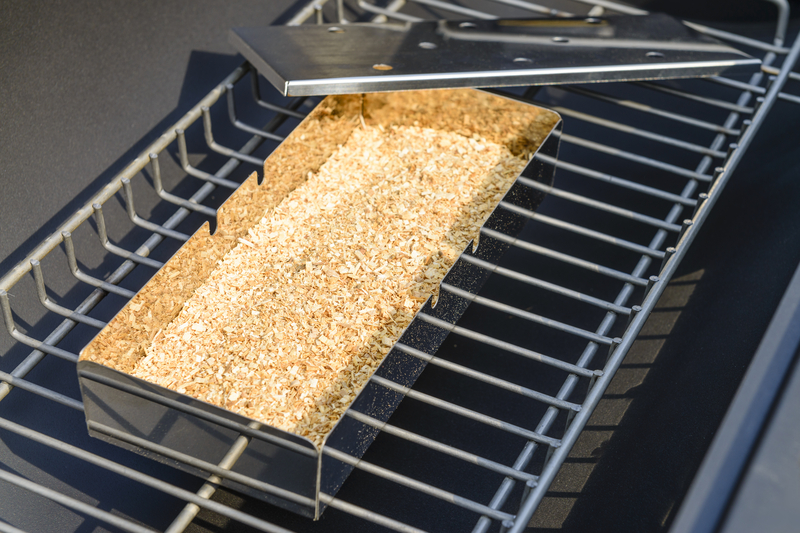
A smoker box provides the most controlled method for adding woodchips to gas grills.
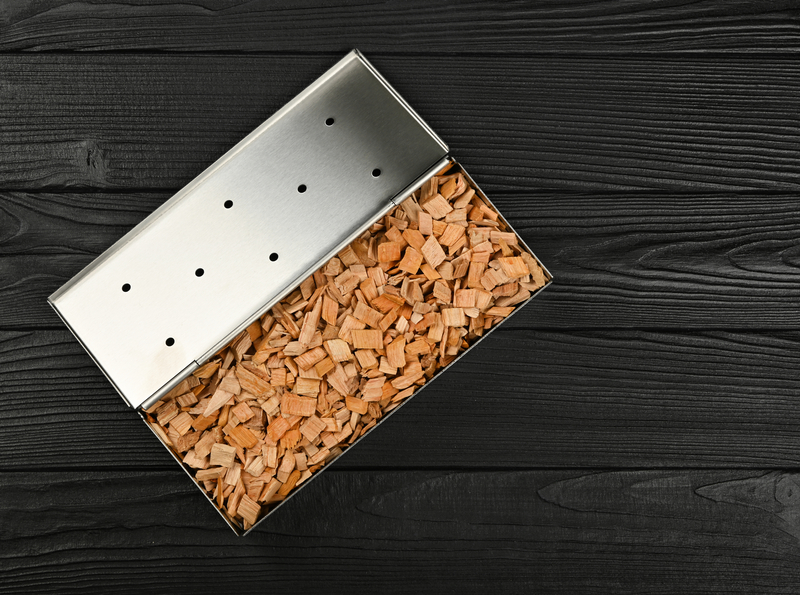
These metal containers feature perforated lids that allow smoke to escape while containing the chips.
Position the smoker box directly over the hottest burner or heat source.
This placement ensures the chips reach the optimal temperature of 500-700°F needed for smoke production.
Fill the smoker box with dry or soaked woodchips depending on preference.
Dry chips ignite faster and produce immediate smoke, while soaked chips burn slower and generate smoke for longer periods.
The user should preheat the grill with the smoker box in place.
This allows the box to heat up gradually and begin producing smoke before food placement.
Most smoker boxes accommodate 1-2 cups of woodchips.
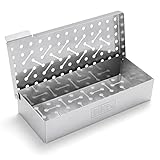 If you’re looking to bring that authentic smoky flavor to your gas grill, the Weber Universal Stainless Steel Smoker Box is a simple yet powerful upgrade.
Crafted from durable stainless steel, it holds up beautifully under high heat while infusing your food with rich, wood-fired aroma.
Refilling during cooking requires careful handling with heat-resistant gloves.
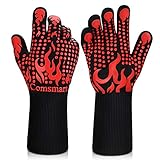 When it comes to backyard cooking, the right gear makes all the difference — and the Comsmart BBQ Gloves are a must-have for anyone who takes grilling seriously.
With heat resistance up to 1472°F, these gloves let you handle blazing-hot grates, turn skewers, adjust a smoker box, or move cast iron pans with total confidence.
Their non-slip silicone grip keeps your hold steady, even when working with tongs or meat forks, while the long cuff protects your wrists and forearms from flare-ups.
Whether you’re barbecuing, baking, or roasting over open flame, these gloves pair perfectly with your favorite grill accessories — from smoker boxes and rotisserie kits to skewers and griddle plates — making outdoor cooking safer, cleaner, and far more enjoyable.
Foil Packet Method
Creating foil packets offers a cost-effective alternative when smoker boxes aren’t available.
Heavy-duty aluminum foil works best to prevent tearing from heat exposure.
Place 1-2 cups of woodchips in the center of an 18-inch foil sheet.
Fold the foil to create a sealed packet, leaving some air space inside for expansion.
Pierce 10-15 holes in the top of the packet using a fork or knife.
These holes allow smoke to escape while preventing chips from scattering.
Position the foil packet directly on the flavorizer bars or heat tent above the burner.
This placement provides direct heat contact needed for smoke generation.
The packet should start smoking within 10-15 minutes of grill preheating.
Replace packets every 45-60 minutes during extended cooking sessions.
Multiple packets can be prepared in advance and stored until needed.
This preparation saves time during active grilling periods.
Placing Woodchips Directly on Burners
Direct placement works only with specific gas grill designs that feature solid heat diffusers or ceramic briquettes.
This method requires careful monitoring to prevent flare-ups.
Scatter a thin layer of woodchips directly onto the heat diffuser or ceramic elements.
Never place chips directly on gas burner tubes as this can damage the grill and create safety hazards.
The chips should cover approximately 25% of the heat diffuser surface.
Excessive amounts can block airflow and cause uneven heating.
This method produces the most immediate smoke but requires frequent replenishment.
Chips typically burn completely within 15-20 minutes.
Monitor the chips closely for excessive flames or ash buildup.
Remove any large pieces of charred wood that could affect gas flow or create bitter flavors.
Clean the heat diffusers thoroughly after each use to prevent residue buildup that could affect future cooking sessions.
Grilling Techniques With Woodchips

Two primary methods exist for using woodchips on gas grills: indirect and direct heat cooking.
Each technique requires specific temperature management and smoke output control to achieve optimal results.
Indirect Heat Method
The indirect heat method works best for larger cuts of meat and longer cooking sessions.
Preheat the gas grill with one side on medium-high heat while leaving the other side off.
Place soaked woodchips in a smoker box or aluminum foil pouch on the heated side.
Position the food on the unheated side of the grill.
This setup creates a convection environment where smoke circulates around the food.
The temperature should remain between 225°F and 275°F for most applications.
Close the lid to trap smoke and maintain consistent heat.
This method works perfectly for whole chickens, pork shoulders, and beef briskets that need extended cooking times.
Direct Heat Method
Direct heat grilling with woodchips suits smaller cuts and quick-cooking foods.
Turn all burners to medium heat and place the smoker box directly over one of the burners.
Position food directly over the grates above the heat source.
The woodchips will produce smoke that immediately contacts the food surface.
This technique works well for steaks, chops, and vegetables that cook in 15-20 minutes.
The high heat sears the food while the smoke adds flavor quickly.
Monitor the food closely since direct heat can cause rapid cooking.
Flip items once halfway through the cooking process to ensure even smoke exposure.
Temperature Control
Maintaining steady temperatures requires adjusting burner settings based on outside conditions and desired cooking zones.
Start with medium heat settings and adjust up or down as needed.
Use the grill’s built-in thermometer or an external probe thermometer for accuracy.
Most gas grills run 25-50°F hotter than their dial readings indicate.
Temperature Guidelines:
- Low and slow: 225-250°F
- Medium smoking: 275-300°F
- Hot smoking: 325-350°F
Open vents fully to maintain airflow and prevent temperature spikes.
Avoid lifting the lid frequently as this releases heat and smoke.
Managing Smoke Output
Fresh smoke production occurs during the first 30-45 minutes after adding woodchips.
Replace chips when smoke output diminishes noticeably.
Soak woodchips for 30 minutes before use to extend burning time and prevent flare-ups.
Drain excess water before placing chips in the smoker box.
Smoke Color Indicators:
- Thin blue smoke: Ideal for flavor
- White billowing smoke: Too much moisture
- No visible smoke: Chips need replacement
Control smoke intensity by adjusting the number of woodchips used.
Start with one cup of chips for mild smoke flavor and increase gradually for stronger taste.
Grilling Different Foods With Woodchips

Different foods require specific wood chip approaches to achieve optimal smoky flavors.
Meat proteins benefit from longer exposure to smoke, while vegetables and seafood need gentler treatment and shorter cooking times.
Smoking Meats
Beef pairs exceptionally well with hickory and oak chips.
These stronger woods complement the robust flavor of steaks, brisket, and burgers without overwhelming the meat’s natural taste.
Pork works best with apple, cherry, or maple wood chips.
The mild sweetness from fruit woods balances pork’s richness perfectly.
Hickory also creates classic barbecue flavors for ribs and chops.
Chicken and turkey respond well to mild woods like apple, cherry, or peach.
These delicate proteins absorb smoke quickly, so lighter woods prevent overpowering the meat’s subtle flavors.
Lamb benefits from stronger woods like mesquite or oak.
The gamey flavor of lamb can handle more intense smoke without becoming bitter.
Start adding wood chips 15-20 minutes before placing meat on the grill.
This allows the smoke to develop properly.
Add fresh chips every 30-45 minutes during longer cooking sessions to maintain consistent smoke production.
Grilling Vegetables and Seafood
Fish and shellfish require the mildest wood chips available.
Cedar, alder, or fruit woods like apple work best.
These proteins cook quickly and absorb smoke rapidly.
Soak wood chips for 30 minutes before use with seafood.
This creates gentler, cooler smoke that won’t overpower delicate flavors.
Vegetables benefit from mild to medium woods.
Apple, cherry, and oak enhance natural vegetable sweetness without masking their fresh flavors.
Wrap vegetables in foil packets with herbs when using wood chips.
This prevents over-smoking while still imparting subtle smoky notes.
Timing Guidelines
Thick cuts (steaks over 1 inch, whole chickens): Add chips at the beginning and refresh every 45 minutes.
Medium cuts (chicken breasts, pork chops): Add chips 10 minutes before cooking starts.
Thin cuts and seafood (fish fillets, shrimp): Add soaked chips just 5 minutes before cooking begins.
Remove wood chips during the final 10-15 minutes of cooking to prevent bitter flavors from developing.
Cleaning and Maintenance After Using Woodchips
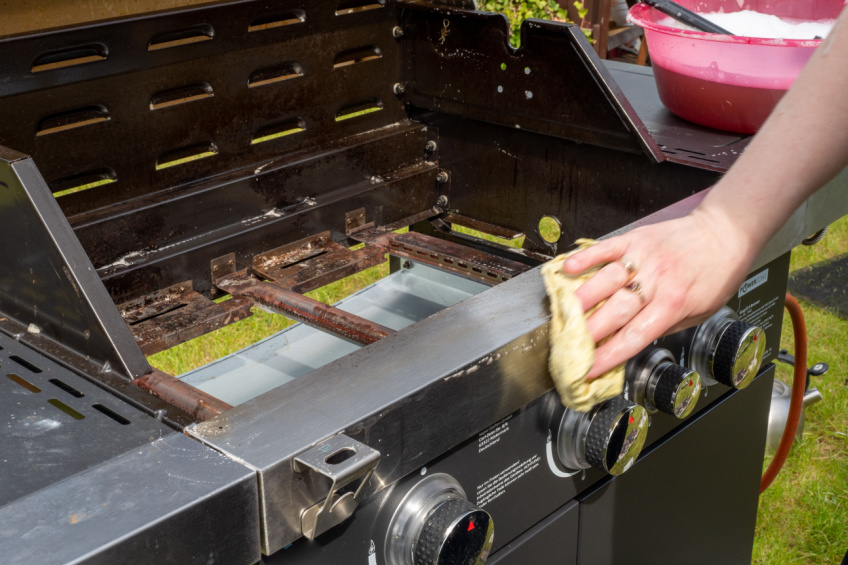
Proper cleanup after using woodchips prevents ash buildup and protects grill components from corrosive residue.
Regular maintenance extends grill life and ensures consistent performance for future smoking sessions.
Removing Ash and Residue
Wood ash accumulates in the smoker box, on grates, and around burner covers during the smoking process.
This residue contains moisture-retaining compounds that can cause rust if left untreated.
Remove the smoker box or foil pouch immediately after the grill cools to room temperature.
Empty all ash and unburned chip fragments into a metal container.
Grate Cleaning Steps:
- Remove cooking grates while still warm
- Scrub with a wire brush to remove ash particles
- Wash with warm soapy water if residue persists
- Dry completely before storage
Clean the firebox interior with a plastic scraper to remove stuck ash.
Wipe down surfaces with a damp cloth to eliminate fine ash particles that settle on internal components.
Protecting Grill Components
Woodchip ash contains acids that accelerate corrosion on metal surfaces.
Immediate cleaning prevents long-term damage to burners, heat deflectors, and interior walls.
Inspect burner covers and heat shields for ash accumulation.
Remove these components and wash them separately with mild detergent.
Check for clogs in burner ports where ash might block gas flow.
Component Protection Checklist:
- Apply food-safe grill spray to interior surfaces
- Check grease tray for ash contamination
- Inspect gas lines for ash blockages
- Replace drip pans if heavily soiled
Store the grill with all components completely dry.
Cover the grill to prevent moisture from combining with any remaining ash residue.
Troubleshooting Common Issues
Wood chip grilling on gas grills can present specific challenges that affect smoke production and cooking results.
The most frequent problems involve managing smoke levels, getting chips to ignite properly, and maintaining steady temperatures throughout the cooking process.
Excess Smoke Problems
Too much smoke can overpower food flavors and create bitter tastes.
This typically occurs when grillers use excessive amounts of wood chips or fail to control airflow properly.
Reducing Smoke Output:
- Use only 1-2 handfuls of wood chips at a time
- Space out chip additions every 30-45 minutes
- Ensure proper ventilation by opening grill vents partially
Dense white smoke indicates incomplete combustion and produces harsh flavors.
Thin, blue-gray smoke signals proper burning and delivers desirable smoky taste.
Airflow Management:
- Keep one vent slightly open for oxygen circulation
- Avoid sealing the grill completely
- Monitor smoke color and adjust gas settings accordingly
Wet wood chips can produce excessive steam and inconsistent smoke.
Soak chips for only 30 minutes maximum, or use dry chips for more predictable results.
Woodchips Not Smoking
Wood chips that fail to produce smoke frustrate many gas grill users.
This problem usually stems from insufficient heat, improper placement, or moisture issues.
Heat Requirements:
- Maintain grill temperature between 225-250°F for smoking
- Place smoker box directly over active burners
- Allow 10-15 minutes for chips to begin smoking
Placement Solutions:
- Position smoker box on flavorizer bars or grates
- Use aluminum foil pouches with holes if no smoker box available
- Keep chips close to heat source for consistent ignition
Some gas grills lack sufficient BTU output for effective wood chip smoking.
Increase gas flow temporarily to ignite chips, then reduce to desired cooking temperature.
Wood Chip Preparation:
- Use dry chips for immediate smoking
- Cut larger chunks into smaller pieces
- Avoid oversaturated wood that creates steam instead of smoke
Maintaining Consistent Heat
Temperature fluctuations affect both cooking results and smoke production.
Gas grills require careful monitoring and adjustment to maintain steady heat levels during wood chip cooking.
Temperature Control Methods:
- Use built-in thermometers and verify with probe thermometers
- Adjust burner settings gradually rather than making sudden changes
- Keep grill lid closed except when adding chips or checking food
Wind and outdoor temperature significantly impact gas grill performance.
Position the grill in sheltered areas when possible and adjust gas flow to compensate for weather conditions.
Monitoring Techniques:
- Check temperatures every 20-30 minutes
- Track fuel levels in propane tanks
- Note wind direction and strength effects
Regular maintenance ensures consistent heat distribution.
Clean burner tubes, check for gas leaks, and replace worn components that affect temperature control.
Safety Tips for Using Woodchips on a Gas Grill
Handle hot equipment with extreme caution when working with wood chips on gas grills.
The smoker box, foil packets, and wood chips become extremely hot during cooking.
Always use heat-resistant gloves or long-handled tongs when placing or removing wood chip containers.
Never touch these items with bare hands during or immediately after grilling.
Maintain proper ventilation around the grill area.
Wood smoke needs adequate airflow to prevent dangerous buildup in enclosed spaces.
Keep a fire extinguisher or water source nearby when using wood chips.
While rare, wood chips can sometimes ignite rather than smolder.
Monitor temperature levels closely throughout the cooking process.
Excessive heat can cause wood chips to catch fire instead of producing desired smoke.
Essential Safety Checklist:
- Use only food-grade wood chips
- Never leave the grill unattended while smoking
- Ensure stable grill placement on level surfaces
- Keep children and pets away from hot equipment
- Check gas connections before each use
Avoid these dangerous practices:
- Using treated or painted wood
- Overpacking smoker boxes with chips
- Adding wood chips to open flames
- Smoking in windy conditions without windshields
Store wood chips in a dry, cool location away from heat sources.
Wet wood chips stored improperly can develop mold or bacteria.
Always allow equipment to cool completely before cleaning or storing.
Hot wood chips and metal containers pose serious burn risks even after grilling ends.